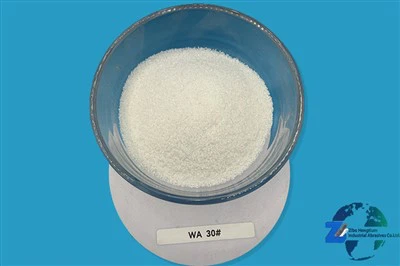
As a supplier of Chrome Corundum for Polishing, I often receive inquiries from customers about the various applications of our product. One question that comes up frequently is whether Chrome Corundum for Polishing can be used on porcelain. In this blog post, I will delve into this topic, exploring the properties of both Chrome Corundum and porcelain, and analyzing the feasibility and potential benefits of using Chrome Corundum for Polishing on porcelain.
Understanding Chrome Corundum for Polishing
Chrome Corundum is a type of synthetic abrasive material that is composed of aluminum oxide (Al₂O₃) with a small amount of chromium oxide (Cr₂O₃) added. The addition of chromium oxide gives Chrome Corundum its characteristic pink color and enhances its hardness and toughness compared to regular aluminum oxide abrasives. This makes Chrome Corundum an excellent choice for a wide range of polishing applications, where a high - quality finish and efficient material removal are required.
There are different types of Chrome Corundum products tailored to specific applications. For example, Chrome Corundum for Coating is designed to provide a smooth and durable coating on various surfaces, while Chrome Corundum for Special Material Processing is formulated to handle the unique challenges of processing special materials. Our Chrome Corundum for Processing is engineered for general machining and polishing tasks, offering a balance between cutting ability and surface finish quality.
Properties of Porcelain
Porcelain is a ceramic material that is made by heating materials, generally including clay in the form of kaolin, at high temperatures in a kiln. It is known for its hardness, translucency, and smooth surface. Porcelain has a relatively high Mohs hardness, typically ranging from 6 to 7, which means it is quite resistant to scratching and wear. It also has a low porosity, making it impervious to liquids and stains.
The surface of porcelain can vary depending on its manufacturing process and intended use. Some porcelain items have a glossy finish, while others may have a matte or textured surface. The hardness and smoothness of porcelain make it a popular choice for a variety of applications, including tableware, bathroom fixtures, and decorative items.
Feasibility of Using Chrome Corundum for Polishing on Porcelain
Advantages
- Hardness and Abrasion Resistance: Chrome Corundum's high hardness allows it to effectively remove small imperfections, scratches, and dullness from the porcelain surface. Since porcelain is also a hard material, a similarly hard abrasive like Chrome Corundum is required to achieve a significant polishing effect. The abrasion resistance of Chrome Corundum ensures that it can maintain its cutting edge during the polishing process, resulting in a more consistent and efficient polishing operation.
- Surface Finish Quality: Chrome Corundum can produce a high - quality surface finish on porcelain. It can smooth out rough areas and enhance the glossiness of the porcelain surface. This is particularly important for porcelain items that are used for decorative purposes or where a smooth and shiny appearance is desired.
- Versatility: Chrome Corundum can be used in different forms, such as abrasive wheels, belts, and powders. This versatility allows for different polishing techniques to be employed depending on the size, shape, and complexity of the porcelain item. For example, abrasive wheels can be used for larger, flat porcelain surfaces, while powders can be used for more delicate or intricate areas.
Challenges
- Risk of Over - Polishing: Due to the hardness of Chrome Corundum, there is a risk of over - polishing the porcelain surface if the polishing process is not carefully controlled. Over - polishing can lead to the removal of too much material, which may change the shape or dimensions of the porcelain item and affect its functionality or aesthetic appeal.
- Surface Damage: If the wrong grade or type of Chrome Corundum abrasive is used, it may cause micro - scratches or other forms of surface damage to the porcelain. For example, using an abrasive that is too coarse can leave visible scratches on the porcelain surface, which are difficult to remove.
Best Practices for Using Chrome Corundum for Polishing on Porcelain
Selecting the Right Abrasive
It is crucial to choose the appropriate grade of Chrome Corundum abrasive for the porcelain polishing task. For initial rough polishing to remove deep scratches or imperfections, a coarser grade of abrasive can be used. However, for final finishing and achieving a high - gloss finish, a finer grade of abrasive should be selected.
Polishing Techniques
- Controlled Pressure: Apply a consistent and moderate pressure during the polishing process. Excessive pressure can increase the risk of over - polishing and surface damage, while too little pressure may result in an ineffective polishing operation.
- Proper Lubrication: Using a lubricant during the polishing process can help reduce heat generation and friction. This not only protects the porcelain surface from thermal damage but also improves the cutting efficiency of the Chrome Corundum abrasive. Water or a specialized polishing lubricant can be used for this purpose.
- Sequential Polishing: Start with a coarser grade of abrasive and gradually move to finer grades. This sequential approach ensures that the surface is first smoothed out and then refined to achieve the desired finish.
Conclusion
In conclusion, Chrome Corundum for Polishing can be effectively used on porcelain, but it requires careful consideration and proper techniques. The hardness and abrasion resistance of Chrome Corundum make it a suitable abrasive for removing imperfections and enhancing the surface finish of porcelain. However, the risk of over - polishing and surface damage must be managed through the selection of the right abrasive grade and the application of appropriate polishing techniques.
If you are interested in using Chrome Corundum for Polishing on porcelain or have any other questions about our Chrome Corundum products, please feel free to contact us for more information and to discuss your specific requirements. We are committed to providing high - quality products and professional advice to help you achieve the best results in your polishing applications.


References
- ASTM International. (Year). Standard test methods for abrasives. ASTM publications.
- Ceramic Society of America. (Year). Handbook of ceramic materials. Ceramic Society of America Press.
- Technical literature on Chrome Corundum products from our company.