Hey there! As a supplier of White Corundum for Abrasives, I often get asked about the various properties of this amazing material. One question that's popped up recently is about its sound absorption property. So, let's dive right in and explore what makes white corundum tick in terms of sound absorption.


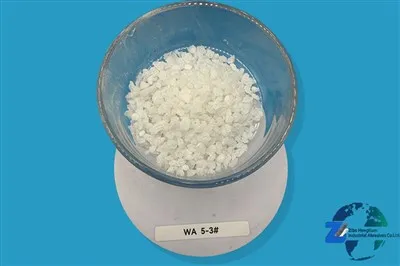
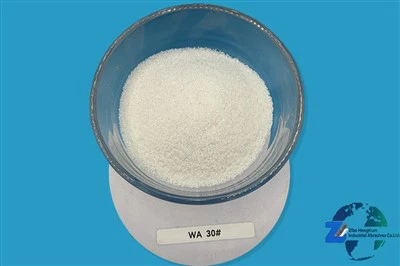
First off, what exactly is white corundum? It's a high - purity form of aluminum oxide (Al₂O₃). We make it by melting high - quality alumina powder in an electric arc furnace at super - high temperatures. The result is a tough, hard, and chemically stable material that's a go - to for abrasive applications. But its uses aren't just limited to abrasives. You can check out White Corundum for Other Applications, White Corundum for Electronics and Optics, and White Corundum for Medical Industry to see a broader range of its applications.
Now, let's talk about sound absorption. Sound absorption is all about how a material can take in sound energy and turn it into heat energy. When sound waves hit a material, some of the energy gets reflected, some gets transmitted through, and the rest is absorbed. The amount of absorption depends on a bunch of factors like the material's density, porosity, and surface texture.
In the case of white corundum, its density plays a key role. It's a dense material, which usually means it's not the best at absorbing sound on its own. Dense substances tend to reflect more sound waves because the molecules are packed closely together, and the sound waves bounce off rather than being absorbed. But don't write it off just yet.
The porosity of white corundum can be manipulated during the manufacturing process. If we create tiny pores or voids in the material, it can increase its sound - absorbing capabilities. These pores act like little traps for sound waves. When a sound wave enters a pore, it bounces around inside, losing energy with each bounce. This energy is then converted into heat, effectively absorbing the sound.
Another factor is the surface texture. A rough surface can scatter sound waves in different directions. When sound waves are scattered, they interact more with the material, increasing the chances of absorption. We can treat the surface of white corundum to make it rougher, which can enhance its sound - absorbing properties.
Let's look at some real - world scenarios where the sound absorption property of white corundum could come in handy. In abrasive applications, there's often a lot of noise generated. Think about sandblasting or grinding operations. If we use white corundum with improved sound absorption, it could help reduce the overall noise levels in the workplace. This is not only better for the workers' hearing but also for the surrounding environment.
In some high - precision manufacturing processes where white corundum is used for polishing or lapping, noise reduction can also be beneficial. It can create a more comfortable working environment and even improve the quality of the finished product by reducing vibrations caused by noise.
Now, I know what you're thinking. How can we measure the sound absorption of white corundum? Well, there are standard tests for this. One common method is the reverberation chamber test. In this test, the material is placed in a chamber, and a sound source is used to generate a specific sound. The decay of the sound in the chamber is measured. The faster the sound decays, the better the material is at absorbing sound.
We can also use the impedance tube method. This involves sending a sound wave through a tube with the material at one end. By measuring the incident and reflected sound waves, we can calculate the sound absorption coefficient of the material.
As a supplier, we're constantly working on improving the sound absorption property of our white corundum for abrasives. We're experimenting with different manufacturing techniques to increase porosity and create the right surface texture. We're also collaborating with researchers to understand the science behind sound absorption in white corundum better.
If you're in the market for white corundum for abrasives and are interested in its sound absorption properties, we'd love to talk to you. Whether you're looking to reduce noise in your workplace or improve the performance of your abrasive operations, our team of experts can help you find the right solution. We can provide samples for testing and work with you to customize the product to meet your specific needs.
In conclusion, while white corundum may not be a natural sound absorber due to its density, we can modify its properties to enhance its sound - absorbing capabilities. By adjusting porosity and surface texture, we can make it a valuable material for reducing noise in various applications. If you have any questions or want to start a conversation about purchasing our white corundum for abrasives, don't hesitate to reach out. Let's work together to find the best solution for your business.
References
- ASTM International. (Year). Standard test methods for measuring the absorption of sound by the reverberation - room method. ASTM E90.
- ISO. (Year). Acoustics - Determination of sound absorption coefficient and impedance in impedance tubes. ISO 10534.