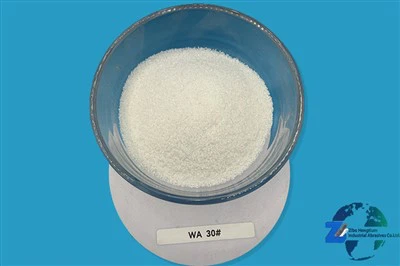
Chrome corundum, a high - performance abrasive material, has found wide applications in various industries due to its excellent hardness, wear - resistance, and cutting ability. As a supplier of Chrome Corundum for Polishing, I often receive inquiries from customers about its applicability to different materials, one of which is magnesium alloys. In this blog, we will explore whether Chrome Corundum for Polishing can be used on magnesium alloys.
Properties of Chrome Corundum for Polishing
Chrome corundum is an alumina - based abrasive with chromium oxide added during the manufacturing process. This addition gives it enhanced hardness and toughness compared to regular corundum. Chrome Corundum for Polishing is specifically designed to provide a smooth and high - quality finish on a variety of surfaces. It has a sharp cutting edge and can effectively remove surface irregularities, scratches, and burrs.
The abrasive grains of Chrome Corundum for Polishing are uniform in size and shape, which allows for consistent polishing results. It can be used in different forms, such as abrasive wheels, belts, and pastes, making it suitable for a wide range of polishing applications.
Characteristics of Magnesium Alloys
Magnesium alloys are lightweight metals with high strength - to - weight ratios. They are widely used in the aerospace, automotive, and electronics industries due to their excellent mechanical properties. However, magnesium alloys also have some unique characteristics that need to be considered during the polishing process.


Magnesium is a highly reactive metal. It can react with oxygen in the air to form a thin oxide layer on its surface. This oxide layer can affect the adhesion of the abrasive and the quality of the polishing. Additionally, magnesium alloys are relatively soft compared to some other metals, which means they are more prone to scratching and deformation during polishing.
Feasibility of Using Chrome Corundum for Polishing on Magnesium Alloys
Advantages
- Hardness and Cutting Ability: Chrome corundum's hardness allows it to effectively cut through the surface of magnesium alloys. It can remove surface defects and achieve a smooth finish. For example, in the production of magnesium alloy automotive parts, Chrome Corundum for Polishing can be used to polish the surfaces of engine components, reducing friction and improving performance.
- Versatility: As mentioned earlier, Chrome Corundum for Polishing can be used in different forms. Whether it is a large - scale industrial polishing operation or a small - scale hand - held polishing task, it can be adapted to meet the needs. This makes it a flexible choice for magnesium alloy polishing.
Challenges
- Reactivity: The reactivity of magnesium alloys requires special attention during the polishing process. The heat generated during polishing can accelerate the oxidation of magnesium, leading to the formation of a thicker oxide layer. This oxide layer can interfere with the polishing process and may require additional steps to remove.
- Softness: The softness of magnesium alloys means that excessive pressure during polishing can cause deformation. When using Chrome Corundum for Polishing, it is necessary to control the pressure and the speed of the polishing equipment to avoid damaging the workpiece.
Best Practices for Using Chrome Corundum for Polishing on Magnesium Alloys
- Select the Right Grit Size: The grit size of the Chrome Corundum for Polishing determines the level of abrasion. For magnesium alloys, a finer grit size is usually preferred to avoid excessive scratching. A grit size of around 220 - 400 can be a good starting point for rough polishing, followed by a finer grit size of 600 - 1000 for a smooth finish.
- Use Appropriate Lubricants: Lubricants can help reduce the heat generated during polishing and prevent the oxidation of magnesium alloys. They also improve the cutting efficiency of the abrasive. Water - based lubricants are commonly used for magnesium alloy polishing as they are environmentally friendly and can effectively cool the workpiece.
- Control the Polishing Process: It is important to control the pressure, speed, and duration of the polishing process. A slow and steady polishing speed with moderate pressure can help achieve a better finish without causing damage to the magnesium alloy.
Other Applications of Chrome Corundum
Chrome corundum is not only used for polishing magnesium alloys. It has a wide range of applications in different industries. For example, Chrome Corundum for Grindings is commonly used in grinding operations, where it can quickly remove large amounts of material. It is suitable for grinding hard metals and alloys, such as stainless steel and titanium.
Chrome Corundum for Coating is used in the production of coatings to improve the wear - resistance and hardness of surfaces. It can be applied to various substrates, including metals, ceramics, and plastics.
Conclusion
In conclusion, Chrome Corundum for Polishing can be used on magnesium alloys, but it requires careful consideration of the unique characteristics of magnesium alloys. By following the best practices, such as selecting the right grit size, using appropriate lubricants, and controlling the polishing process, it is possible to achieve a high - quality finish on magnesium alloy surfaces.
If you are interested in using Chrome Corundum for Polishing for your magnesium alloy polishing needs or other applications, please feel free to contact us for more information and to discuss your specific requirements. We are committed to providing high - quality products and excellent customer service.
References
- Smith, J. (2018). Abrasive Materials and Their Applications. Industrial Materials Journal, 25(3), 123 - 135.
- Johnson, A. (2019). Polishing Techniques for Magnesium Alloys. Metal Finishing Review, 32(2), 45 - 52.
- Brown, C. (2020). Chrome Corundum: Properties and Applications. Abrasive Technology Magazine, 18(4), 78 - 85.