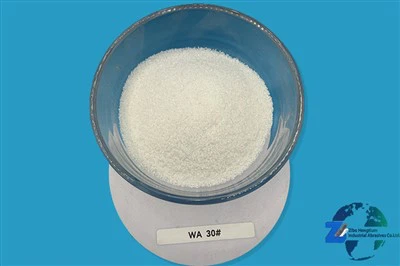
Hey there! As a white corundum supplier, I often get asked all sorts of questions about this amazing material. One question that pops up quite a bit is, "Can white corundum be used in water-based grinding fluids?" Well, let's dive right into it and find out.
First off, let's talk a bit about white corundum. It's a super hard and tough material made from high-purity alumina. It's got excellent wear resistance and a high melting point, which makes it a top choice for all kinds of abrasive applications. You can find it being used in stuff like White Corundum for Medical Industry, White Corundum for Electronics and Optics, and White Corundum for Abrasives.
Now, back to the main question. Can white corundum be used in water-based grinding fluids? The short answer is yes, it can! And there are actually quite a few good reasons for using it in this way.
One of the big advantages of using white corundum in water-based grinding fluids is its chemical stability. Water-based fluids are, well, mostly water. And water can sometimes react with certain materials, causing corrosion or other issues. But white corundum is pretty much inert when it comes to water. It doesn't dissolve or react with water, so it can stay stable in the fluid for a long time. This means you don't have to worry about the corundum breaking down and affecting the performance of the grinding fluid.
Another plus is its hardness. White corundum is really hard, with a Mohs hardness of around 9. That's just one step below diamond on the hardness scale! This hardness allows it to effectively remove material during the grinding process. When it's suspended in a water-based fluid, it can still do its job of cutting and abrading the workpiece. The water in the fluid helps to carry the corundum particles to the grinding surface and also helps to cool down the area, reducing the risk of overheating and damage to the workpiece.
The shape of white corundum particles also plays a role. The particles are usually angular, which gives them good cutting edges. When they're in the water-based fluid, these sharp edges can dig into the material being ground, making the grinding process more efficient. And because the particles are well-distributed in the fluid, they can provide a more uniform grinding action across the surface of the workpiece.
But it's not all sunshine and rainbows. There are a few things to keep in mind when using white corundum in water-based grinding fluids.


One issue is sedimentation. Since white corundum is denser than water, the particles will tend to sink to the bottom of the fluid over time. This can lead to uneven distribution of the corundum in the fluid, which might affect the grinding performance. To prevent this, you might need to use some kind of agitation system, like a pump or a stirrer, to keep the particles suspended in the fluid.
Another thing is the potential for clogging. If the white corundum particles are too large or if there are too many of them in the fluid, they can clog up the grinding wheel or other parts of the grinding equipment. You need to carefully control the particle size and concentration of the corundum in the fluid to avoid this problem.
The pH of the water-based fluid can also be important. While white corundum is generally stable in water, extreme pH levels could potentially have an impact on its performance. You want to make sure the pH of the fluid is within a reasonable range to keep the corundum and the fluid in good working condition.
So, how do you actually use white corundum in water-based grinding fluids?
First, you need to choose the right grade of white corundum. There are different particle sizes available, and you'll want to select the one that's appropriate for your specific grinding application. For example, if you're doing a fine finishing grind, you'll probably want a smaller particle size.
Next, you'll need to mix the white corundum with the water-based fluid. You can do this in a mixing tank or container. Make sure to add the corundum slowly while stirring to ensure it gets evenly distributed in the fluid.
Once the corundum is mixed in, you can start using the fluid in your grinding machine. Keep an eye on the performance of the grinding process and make any necessary adjustments to the fluid or the equipment.
If you're thinking about using white corundum in water-based grinding fluids for your business, I'd love to help. As a supplier, I've got a wide range of high-quality white corundum products to choose from. Whether you're in the medical industry, electronics and optics, or abrasive manufacturing, I can provide you with the right corundum for your needs. If you have any questions or want to discuss your specific requirements, just reach out. We can have a chat about how white corundum can improve your grinding process and get you the results you're looking for.
In conclusion, white corundum can definitely be used in water-based grinding fluids, and it offers some great benefits. But you need to be aware of the potential challenges and take the right steps to use it effectively. With the right approach, you can take advantage of the unique properties of white corundum to enhance your grinding operations.
References:
- "Abrasive Materials and Their Applications" - A general textbook on abrasive materials that provides information on the properties and uses of white corundum.
- Industry research papers on water-based grinding fluids and the use of abrasive particles in them. These papers offer in - depth studies on the performance and challenges of using white corundum in such fluids.