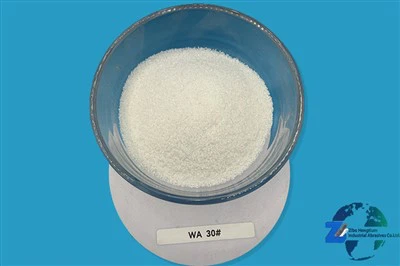
In the ever - evolving landscape of industrial manufacturing, guideway grinding wheels play a pivotal role in ensuring the precision and efficiency of various machining processes. As a dedicated supplier of Guideway Grinding Wheels, I've witnessed firsthand the dynamic changes and emerging trends in this field. In this blog, I'll delve into the future development directions of guideway grinding wheels, exploring technological advancements, market demands, and potential applications.
Technological Advancements in Abrasive Materials
One of the most significant trends in the future of guideway grinding wheels is the continuous improvement of abrasive materials. Traditional abrasives like aluminum oxide and silicon carbide have served the industry well, but new materials are emerging that offer superior performance.
For instance, cubic boron nitride (CBN) and diamond abrasives are becoming increasingly popular. CBN is known for its high hardness, thermal stability, and chemical inertness. It can withstand high grinding temperatures without losing its cutting ability, making it ideal for grinding hard materials such as hardened steels and superalloys. Diamond abrasives, on the other hand, are the hardest known material and are excellent for grinding non - ferrous metals, ceramics, and composites.
As a supplier, we are constantly researching and developing new abrasive formulations to enhance the cutting performance, wear resistance, and self - sharpening properties of our Guideway Grinding Wheel. By incorporating these advanced abrasives into our products, we can offer our customers longer wheel life, higher material removal rates, and better surface finish quality.
Intelligent and Automated Grinding Systems
The future of guideway grinding wheels is closely tied to the development of intelligent and automated grinding systems. With the advent of Industry 4.0, manufacturers are increasingly looking for ways to improve productivity, quality control, and process efficiency through automation and digitalization.
Intelligent grinding systems can monitor and adjust the grinding process in real - time based on various parameters such as grinding force, wheel wear, and surface finish. For example, sensors can be integrated into the grinding wheel to measure the temperature, vibration, and acoustic emissions during the grinding process. This data can then be analyzed by a control system to optimize the grinding parameters, such as feed rate, spindle speed, and depth of cut.
Automated grinding systems can also reduce the need for manual intervention, leading to higher consistency and repeatability in the grinding process. Robotic loading and unloading systems can handle workpieces more precisely and quickly, while automated wheel dressing systems can maintain the sharpness of the grinding wheel, ensuring consistent grinding performance over time.
As a supplier, we are committed to providing grinding wheels that are compatible with these intelligent and automated systems. We work closely with our customers to understand their specific requirements and develop customized solutions that can integrate seamlessly with their existing manufacturing processes.
Environmental Sustainability
In recent years, environmental sustainability has become a major concern in the manufacturing industry. Guideway grinding wheels are no exception. The production and use of grinding wheels can generate a significant amount of waste, including used wheels, abrasive dust, and coolant.
To address these environmental issues, the future development of guideway grinding wheels will focus on reducing waste and energy consumption. For example, manufacturers are exploring the use of recycled materials in the production of grinding wheels. By reusing waste abrasives and binders, we can reduce the demand for virgin materials and minimize the environmental impact of our manufacturing processes.
In addition, new coolant technologies are being developed to reduce the amount of coolant used in the grinding process and improve its recyclability. Dry grinding, which eliminates the need for coolant altogether, is also becoming more popular, especially for applications where coolant contamination is a concern.
As a responsible supplier, we are actively involved in promoting environmental sustainability in our products and manufacturing processes. We are constantly researching and developing new ways to reduce waste, energy consumption, and environmental impact, while still maintaining the high quality and performance of our Guideway Grinding Wheel.
Customization and Specialization
The demand for customized and specialized guideway grinding wheels is on the rise. Different industries and applications have unique requirements in terms of grinding performance, surface finish, and dimensional accuracy. For example, the aerospace industry requires grinding wheels that can achieve high precision and surface quality on complex - shaped components, while the automotive industry needs wheels that can handle high - volume production with consistent quality.
To meet these diverse requirements, we as a supplier are increasingly offering customized solutions. We work closely with our customers to understand their specific needs and develop grinding wheels with tailored abrasive formulations, bond types, and wheel geometries. This allows us to provide products that are optimized for their particular applications, resulting in improved productivity, quality, and cost - effectiveness.
In addition to customization, specialization is also a key trend. We are seeing a growing demand for grinding wheels that are designed for specific materials or processes. For example, Cutter Grinding Wheel are specialized for sharpening cutting tools, while Cylindrical and Surface Grinding Wheels are optimized for cylindrical and surface grinding operations. By focusing on specialization, we can provide our customers with more targeted solutions and better technical support.
New Application Areas
The future of guideway grinding wheels will also see the expansion into new application areas. As new materials and manufacturing processes are developed, there will be a growing need for grinding wheels that can handle these challenges.
For example, the increasing use of advanced composites in the aerospace, automotive, and renewable energy industries requires grinding wheels that can effectively machine these materials. Composites are often difficult to grind due to their heterogeneous nature and high strength - to - weight ratio. However, with the development of new abrasive materials and grinding techniques, we are now able to offer grinding wheels that can achieve high - quality surface finishes on composites with minimal damage.
Another emerging application area is the medical device industry. The manufacturing of medical devices, such as implants and surgical instruments, requires high precision and surface quality. Guideway grinding wheels can play a crucial role in achieving these requirements, especially for the grinding of small and complex - shaped components.
As a supplier, we are constantly exploring new application areas and developing products that can meet the specific needs of these industries. We invest in research and development to stay ahead of the curve and provide our customers with innovative solutions for their emerging grinding challenges.
Conclusion
In conclusion, the future development directions of guideway grinding wheels are multifaceted, driven by technological advancements, market demands, environmental concerns, and emerging application areas. As a supplier, we are committed to staying at the forefront of these trends and providing our customers with high - quality, innovative, and sustainable grinding solutions.


If you are interested in learning more about our guideway grinding wheels or have specific requirements for your grinding applications, we invite you to contact us for a detailed discussion. Our team of experts is ready to assist you in finding the best solutions for your manufacturing processes.
References
- Smith, J. (2020). Advances in Abrasive Technology for Grinding Wheels. Journal of Manufacturing Science and Technology.
- Johnson, A. (2019). Intelligent Grinding Systems: A Review of Current Trends and Future Developments. International Journal of Advanced Manufacturing Technology.
- Brown, C. (2021). Environmental Sustainability in the Grinding Industry. Proceedings of the International Conference on Sustainable Manufacturing.