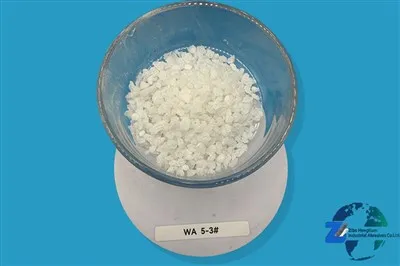
As a supplier of Brown Corundum for Water Treatment, I've had numerous in - depth discussions with clients about how this remarkable material interacts with organic matter during the water treatment process. In this blog, I'll delve into the science behind it, exploring the mechanisms, benefits, and implications of using brown corundum in water treatment.
Physical and Chemical Properties of Brown Corundum
Brown corundum, also known as brown fused alumina, is a synthetic abrasive material produced by fusing high - grade bauxite in an electric arc furnace at extremely high temperatures. It primarily consists of aluminum oxide (Al₂O₃), with small amounts of other oxides such as titanium dioxide (TiO₂), silicon dioxide (SiO₂), and iron oxide (Fe₂O₃). These impurities give brown corundum its characteristic brown color and unique physical and chemical properties.
The hardness of brown corundum is one of its most notable features. With a Mohs hardness of around 9, it is extremely hard and wear - resistant. This hardness allows it to be used in various abrasive applications, including water treatment. In addition, brown corundum has a high melting point (around 2050°C), good thermal conductivity, and chemical stability, making it suitable for use in harsh environments.
Interaction Mechanisms with Organic Matter in Water Treatment
Adsorption
One of the primary ways brown corundum interacts with organic matter in water is through adsorption. The surface of brown corundum particles has a certain degree of porosity and a large specific surface area. Organic molecules in water can adhere to the surface of these particles through physical and chemical forces.


Physical adsorption occurs due to van der Waals forces between the organic molecules and the surface of the brown corundum. These forces are relatively weak and are influenced by factors such as the temperature, the size of the organic molecules, and the surface properties of the brown corundum. Chemical adsorption, on the other hand, involves the formation of chemical bonds between the organic molecules and the surface functional groups of the brown corundum. For example, some organic acids may react with the metal oxides on the surface of brown corundum to form chemical complexes.
The adsorption capacity of brown corundum for organic matter depends on several factors. The particle size of brown corundum is crucial; smaller particles generally have a larger specific surface area, which means more adsorption sites. The nature of the organic matter also plays a role. Hydrophobic organic compounds are more likely to be adsorbed onto the non - polar surface of brown corundum compared to hydrophilic ones.
Filtration
Brown corundum is often used as a filtration medium in water treatment systems. When water containing organic matter passes through a bed of brown corundum, the physical structure of the filter bed traps the organic particles. The irregular shape and packing of the brown corundum particles create a tortuous path for the water flow. Organic matter, especially larger particles, can be mechanically retained within the filter bed.
During the filtration process, the size of the organic particles relative to the pore size of the brown corundum filter bed is important. Particles larger than the pore size are effectively blocked, while smaller particles may be adsorbed onto the surface of the brown corundum as they pass through. Over time, as more organic matter is trapped, the filter bed may become clogged, and backwashing is required to remove the accumulated impurities and restore the filtration efficiency.
Oxidation and Degradation
Although brown corundum itself is not a strong oxidizing agent, it can play a role in the oxidation and degradation of organic matter in water treatment when combined with other oxidizing agents. For example, in some advanced oxidation processes, brown corundum can act as a catalyst support. Oxidizing agents such as hydrogen peroxide or ozone can react with the organic matter on the surface of brown corundum.
The surface properties of brown corundum can enhance the catalytic activity of the oxidizing agents. The metal oxides on the surface of brown corundum can participate in redox reactions, promoting the generation of highly reactive radicals such as hydroxyl radicals (·OH). These radicals are powerful oxidants that can break down complex organic molecules into smaller, more easily biodegradable compounds.
Benefits of Using Brown Corundum in Water Treatment
High Efficiency
Due to its high adsorption capacity and effective filtration properties, brown corundum can remove a significant amount of organic matter from water in a relatively short time. This makes it an efficient choice for water treatment plants, especially those dealing with high - organic - load water sources.
Cost - Effectiveness
Brown corundum is relatively inexpensive compared to some other advanced water treatment materials. Its long - term durability and reusability also contribute to its cost - effectiveness. After backwashing, the brown corundum filter bed can be reused multiple times, reducing the overall cost of water treatment.
Environmental Friendliness
Brown corundum is a natural - derived material, and its production process is relatively environmentally friendly compared to some chemical - based water treatment methods. It does not introduce harmful chemicals into the water, which is beneficial for the environment and human health.
Other Applications of Brown Corundum
Apart from water treatment, brown corundum has a wide range of other applications. You can learn more about Brown Corundum for Ceramics and Glass. In the ceramics and glass industries, brown corundum is used as an abrasive for grinding, polishing, and shaping these materials. Its hardness and wear - resistance make it ideal for achieving smooth and precise surfaces.
Brown Corundum for Other Applications include use in refractory materials, where it can withstand high temperatures and chemical corrosion. It is also used in the manufacturing of cutting tools, sandblasting, and as a filler in some composite materials.
Conclusion and Call to Action
In conclusion, brown corundum is a versatile and effective material for water treatment, interacting with organic matter through adsorption, filtration, and in some cases, oxidation and degradation. Its unique physical and chemical properties make it a valuable asset in the water treatment industry.
If you are in the market for high - quality Brown Corundum for Water Treatment, we are here to provide you with the best products and solutions. Our brown corundum is carefully produced to meet the highest standards, ensuring optimal performance in your water treatment processes. Whether you are a small - scale water treatment facility or a large - scale industrial user, we can offer customized solutions to meet your specific needs. Contact us today to start a procurement discussion and discover how our brown corundum can improve your water treatment efficiency.
References
- Smith, J. (2018). "Advanced Materials for Water Treatment". Elsevier.
- Johnson, A. (2019). "Adsorption and Filtration Processes in Water Treatment". Springer.
- Brown, R. (2020). "Oxidation and Degradation of Organic Matter in Water". Wiley.