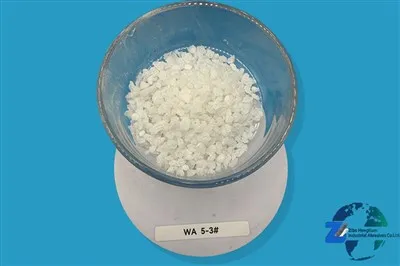
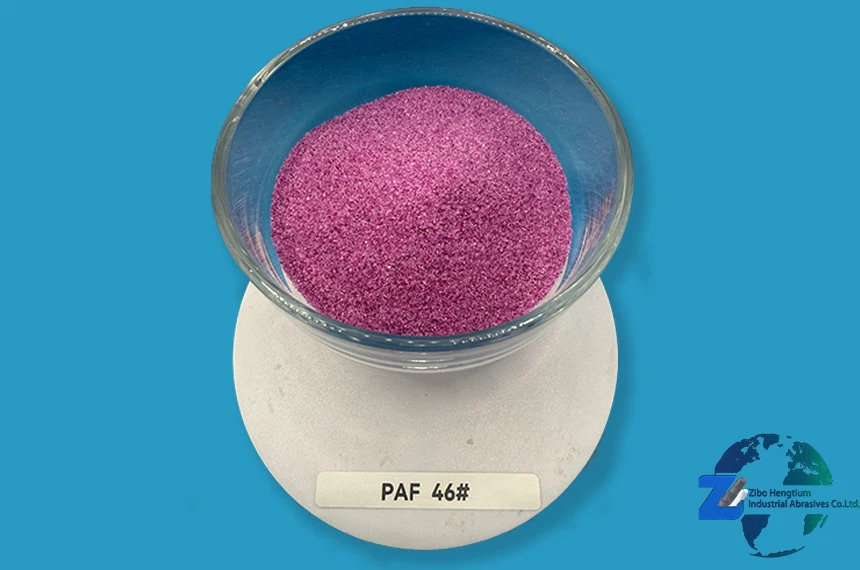
Brown corundum, a widely used abrasive and refractory material, has attracted significant attention in various industries due to its excellent physical and chemical properties. As a brown corundum supplier, I have witnessed its diverse applications and the importance of understanding its performance under different conditions. In this blog, we will explore how brown corundum performs in the presence of reducing agents, which is crucial for many industrial processes.
Composition and Properties of Brown Corundum
Brown corundum is mainly composed of aluminum oxide (Al₂O₃), with a content typically ranging from 94.5% to 97%. It also contains small amounts of other impurities such as titanium dioxide (TiO₂), silicon dioxide (SiO₂), and iron oxide (Fe₂O₃). The high content of aluminum oxide gives brown corundum high hardness, good wear resistance, and excellent thermal stability. Its hardness is second only to diamond, which makes it suitable for abrasive applications.
The crystal structure of brown corundum is hexagonal, and its density is about 3.9 - 4.0 g/cm³. These properties contribute to its excellent mechanical strength and resistance to chemical corrosion. In addition, brown corundum has good electrical insulation properties, which further expands its application scope.
Role of Reducing Agents in Industrial Processes
Reducing agents are substances that can donate electrons to other substances, causing a reduction reaction. In industrial processes, reducing agents are widely used in metallurgy, chemical synthesis, and environmental protection. For example, in the production of metals, reducing agents are used to reduce metal oxides to metals. In chemical synthesis, they can be used to control the oxidation state of reactants and products.
Common reducing agents include carbon, hydrogen, carbon monoxide, and some metal powders. The choice of reducing agent depends on the specific reaction conditions and the requirements of the product.
Performance of Brown Corundum in the Presence of Reducing Agents
Chemical Stability
Brown corundum generally shows good chemical stability in the presence of reducing agents. Aluminum oxide is a relatively stable compound, and under normal conditions, it does not react easily with common reducing agents. For example, when brown corundum is in contact with carbon at high temperatures, although carbon is a strong reducing agent, the reaction between carbon and aluminum oxide requires extremely high temperatures and specific reaction conditions.
However, at very high temperatures (above 2000°C), carbon can react with aluminum oxide to form aluminum carbide (Al₄C₃) and carbon monoxide. This reaction is usually not desirable in most industrial applications because aluminum carbide is a brittle and reactive compound that can affect the performance of brown corundum.
Physical Properties
The physical properties of brown corundum may change slightly in the presence of reducing agents. For example, if the reducing agent causes a partial reduction of impurities in brown corundum, the color and density of brown corundum may change. However, these changes are usually not significant and do not affect its overall performance in most cases.
In some high - temperature processes, the presence of reducing agents may cause a small amount of sintering or agglomeration of brown corundum particles. This can affect its flowability and dispersion in some applications, such as in abrasive slurries.
Application - Specific Performance
Abrasive Applications
In abrasive applications, the performance of brown corundum in the presence of reducing agents is generally stable. Since most abrasive processes occur at relatively low temperatures, the chemical reaction between brown corundum and reducing agents is negligible. Brown corundum can maintain its high hardness and wear resistance, effectively removing materials from the workpiece surface.
However, in some high - energy abrasive processes, such as grinding in a reducing atmosphere, the potential reaction between brown corundum and reducing agents should be considered. For example, if there is a reducing gas in the grinding environment, it may cause a change in the surface properties of brown corundum, which may affect the grinding efficiency and surface quality of the workpiece.
Refractory Applications
In refractory applications, the stability of brown corundum in the presence of reducing agents is crucial. In high - temperature furnaces, reducing agents may be present in the form of fuel combustion products or reducing atmospheres. Brown corundum - based refractories need to maintain their structural integrity and thermal insulation properties under these conditions.
At moderate temperatures, brown corundum can resist the action of reducing agents and maintain its refractory performance. However, at extremely high temperatures and in the presence of strong reducing agents, the refractory lining made of brown corundum may be damaged due to the formation of new compounds or the change of crystal structure.
Brown Corundum for Medical Industry
In the medical industry, brown corundum is used in some applications such as dental abrasives and medical device manufacturing. In these applications, the presence of reducing agents is usually not a major concern because the processing and use conditions are relatively mild. Brown corundum can provide the necessary hardness and abrasion resistance without being affected by reducing agents.
Brown Corundum for Other Applications
In other applications, such as in the production of ceramics and composites, the performance of brown corundum in the presence of reducing agents also needs to be considered. For example, in the sintering process of ceramic composites, if there are reducing agents in the raw materials or the sintering atmosphere, the reaction between brown corundum and reducing agents may affect the final properties of the composites.
Brown Corundum for Water Treatment
In water treatment applications, brown corundum is used as a filter medium. Although reducing agents are not commonly used in water treatment processes, in some cases, there may be reducing substances in the water, such as dissolved organic matter. Brown corundum can maintain its physical and chemical stability in the presence of these reducing substances, effectively filtering out impurities in the water.
Factors Affecting the Performance of Brown Corundum in the Presence of Reducing Agents
Temperature
Temperature is one of the most important factors affecting the reaction between brown corundum and reducing agents. As mentioned above, at low temperatures, the reaction is usually very slow or does not occur at all. However, as the temperature increases, the reaction rate increases significantly. Therefore, in high - temperature industrial processes, special attention should be paid to the potential reaction between brown corundum and reducing agents.
Concentration of Reducing Agents
The concentration of reducing agents also affects the performance of brown corundum. A higher concentration of reducing agents increases the probability of reaction with brown corundum. In addition, different reducing agents have different reactivities, and the concentration effect may vary depending on the type of reducing agent.
Reaction Time
The longer the reaction time between brown corundum and reducing agents, the more likely a reaction will occur. In continuous industrial processes, the reaction time should be carefully controlled to avoid unwanted reactions.
Conclusion
As a brown corundum supplier, understanding how brown corundum performs in the presence of reducing agents is essential for providing high - quality products to our customers. In general, brown corundum shows good chemical stability and physical performance in the presence of reducing agents under normal conditions. However, in high - temperature and high - concentration reducing environments, special attention should be paid to the potential reaction between brown corundum and reducing agents.
We offer a wide range of brown corundum products suitable for various applications, including those in the presence of reducing agents. If you are interested in our brown corundum products or have any questions about its performance in specific conditions, please feel free to contact us for procurement and further discussions.


References
- K. C. Mills, "Physical Chemistry of High - Temperature Technology", Oxford University Press, 1993.
- R. J. Brook, "Principles of Ceramics Processing", Wiley - Interscience, 1992.
- A. S. Nowick, "Introduction to Materials Science", McGraw - Hill, 1972.