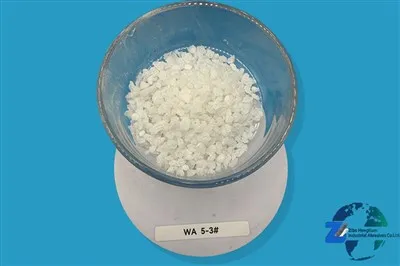
Hey there! As a supplier of white corundum powder, I often get asked how it stacks up against zirconia powder in various applications. So, I thought I'd break it down for you in this blog post.
Physical and Chemical Properties
Let's start with the basics. White corundum powder is made from high - purity alumina. It's got a super high hardness, second only to diamond in the mineral world. This hardness comes from its strong ionic bonds in the crystal structure. It's also got great chemical stability, which means it doesn't react easily with most chemicals. You can find it in a range of particle sizes, from really fine to a bit coarser, and it's usually white in color, giving it a clean and pure look.
On the other hand, zirconia powder is based on zirconium dioxide. It's also very hard, but its key feature is its high toughness. Zirconia can undergo a phase transformation under stress, which helps it absorb energy and resist cracking. It has good thermal insulation properties too, and can exist in different crystal phases depending on the temperature and additives.
Abrasive Applications
In the abrasive industry, both white corundum and zirconia powders are stars, but they play different roles.
White corundum powder is a top - choice for precision grinding. Its sharp edges and high hardness make it perfect for grinding hard materials like high - speed steel, alloy steel, and non - ferrous metals. When you're looking for a smooth finish on a metal surface, white corundum is your go - to. For example, in the manufacturing of precision tools, the fine particles of white corundum can be used in grinding wheels to create sharp cutting edges. It's also used in sandpaper for finishing wood and metal surfaces, giving them a polished look. Check out White Corundum Powder for Others for more details on its various abrasive uses.
Zirconia powder, however, shines in heavy - duty grinding. Its toughness allows it to withstand high - pressure grinding operations. In the automotive industry, for instance, zirconia - based grinding wheels are used to grind engine components. These components often have complex shapes and need to be ground with high efficiency. Zirconia can handle the heat and pressure generated during the grinding process without breaking down quickly. But if you're aiming for a super - fine finish, zirconia might not be as good as white corundum because its particles are a bit more rounded and less sharp.
Refractory Applications
When it comes to refractory applications, the heat resistance and chemical stability of these powders are crucial.
White corundum powder is a staple in the refractory industry. Its high melting point (around 2050°C) and excellent chemical inertness make it ideal for lining furnaces, kilns, and other high - temperature equipment. In steelmaking, white corundum bricks are used to line the walls of electric arc furnaces. These bricks can withstand the extreme heat and corrosive slag produced during the steel - making process. For more on its refractory uses, visit White Corundum Powder for Refractory.
Zirconia powder is also used in refractories, especially in applications where high thermal shock resistance is needed. In glass - melting furnaces, zirconia - containing refractories can handle the rapid temperature changes that occur during the melting and cooling cycles. However, zirconia is more expensive than white corundum, so it's often used in combination with other materials or in areas where its unique properties are absolutely necessary.
Medical Applications
In the medical field, both powders have their niches.
White corundum powder is used in dental applications. Its hardness and biocompatibility make it suitable for manufacturing dental implants and prosthetics. The fine particles can be used to create a smooth surface on dental crowns, which is not only aesthetically pleasing but also easy to clean. You can learn more about its medical uses at White Corundum Powder for Medical.


Zirconia powder has gained a lot of popularity in medical applications in recent years. Its high strength and biocompatibility make it a great material for dental implants. Zirconia implants are white in color, which is more aesthetically appealing compared to traditional titanium implants. It's also used in joint replacements because of its wear resistance and ability to mimic the mechanical properties of human bone.
Cost - effectiveness
Cost is always a factor when choosing between white corundum and zirconia powders. White corundum powder is generally more cost - effective. The raw materials for making white corundum are more abundant, and the production process is relatively simple. This means you can get a good amount of high - quality white corundum powder at a lower price, which is great for large - scale industrial applications.
Zirconia powder, on the other hand, is more expensive. The raw materials are less common, and the production process is more complex, especially when it comes to stabilizing the crystal phases. So, if cost is a major concern and the application doesn't require the unique properties of zirconia, white corundum is the better choice.
Conclusion
In summary, both white corundum and zirconia powders have their own strengths and weaknesses in different applications. White corundum is great for precision work, cost - effective applications, and where high hardness and chemical stability are needed. Zirconia, on the other hand, excels in applications that require high toughness, thermal shock resistance, and in some cases, aesthetic appeal.
If you're interested in learning more about white corundum powder or are thinking about making a purchase, feel free to reach out. We can have a chat about your specific needs and see how our white corundum powder can fit into your applications.
References
- "Industrial Ceramics: Properties, Processing, and Applications" by W. D. Kingery, H. K. Bowen, and D. R. Uhlmann.
- "Abrasive Technology" by M. C. Shaw.
- "Refractories Handbook" by R. N. Wright.