Is brown corundum suitable for treating brackish water?
As a supplier of brown corundum for water treatment, I've been often asked about the suitability of brown corundum in treating brackish water. Brackish water, which has a salt content between that of freshwater and seawater, poses unique challenges for treatment. In this blog, I'll delve into the properties of brown corundum and evaluate its potential for brackish - water treatment.
Properties of Brown Corundum
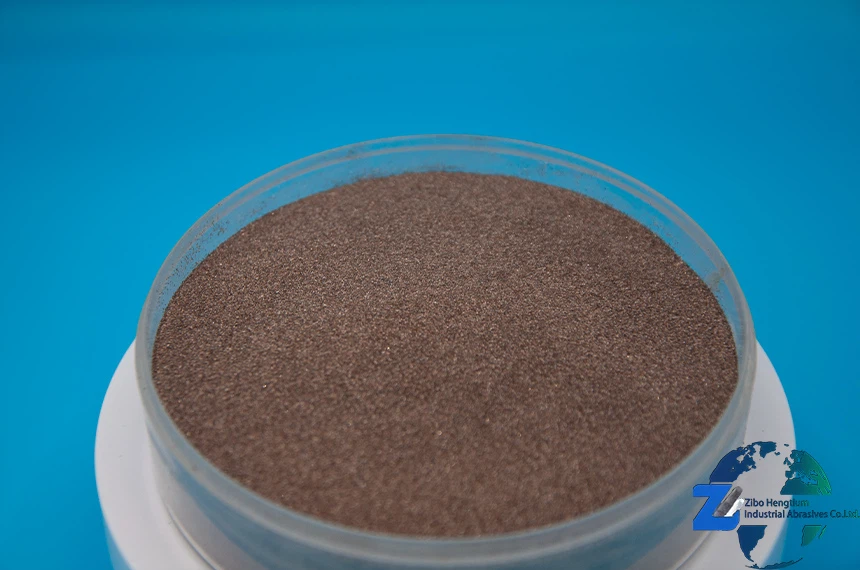
Brown corundum, also known as brown fused alumina, is a widely used abrasive and filtration material. It is produced by smelting bauxite in an electric arc furnace at high temperatures. The resulting product is a hard, dense, and durable material with the following key properties:
- Hardness: Brown corundum has a high hardness on the Mohs scale, typically around 9. This makes it resistant to wear and abrasion, allowing it to maintain its shape and structure during the water - treatment process.
- Chemical Stability: It is chemically stable and inert in most water environments. This means it won't react with the salts, minerals, or other substances commonly found in brackish water, ensuring that it doesn't introduce any unwanted contaminants into the treated water.
- Porosity: Brown corundum has a certain degree of porosity, which provides a large surface area for adsorption and filtration. This porosity allows it to trap suspended particles, colloids, and some dissolved substances in the water.
Mechanisms of Brackish - Water Treatment
When considering the treatment of brackish water, several key processes are involved:
- Filtration: One of the primary functions of brown corundum in water treatment is filtration. The porous structure of brown corundum can act as a physical barrier, trapping suspended solids such as sand, silt, and organic matter. As the brackish water passes through a bed of brown corundum, these particles are retained on the surface or within the pores of the material.
- Adsorption: Brown corundum can also adsorb certain dissolved substances in the water. For example, it may adsorb some heavy metals, such as lead, cadmium, and copper, through surface - chemical interactions. The large surface area provided by its porosity enhances the adsorption capacity.
- Ion Exchange: Although brown corundum is not a typical ion - exchange resin, it may have some limited ion - exchange capabilities. In brackish water, it could potentially exchange some ions on its surface with the ions in the water, which might help in reducing the concentration of certain unwanted ions to a certain extent.
Advantages of Using Brown Corundum in Brackish - Water Treatment
- Cost - Effectiveness: Compared to some specialized water - treatment materials, brown corundum is relatively inexpensive. This makes it an attractive option for large - scale brackish - water treatment projects, where cost is a significant consideration.
- Longevity: Due to its high hardness and chemical stability, brown corundum has a long service life. It can withstand the harsh conditions in brackish - water treatment systems without significant degradation, reducing the need for frequent replacement.
- Versatility: Brown corundum can be used in combination with other water - treatment media, such as activated carbon or sand. This allows for a more comprehensive treatment approach, targeting different types of contaminants in the brackish water.
Limitations of Using Brown Corundum in Brackish - Water Treatment
- Limited Desalination Ability: While brown corundum can remove suspended solids and some dissolved substances, it has limited ability to remove dissolved salts from brackish water. Desalination typically requires more advanced processes such as reverse osmosis or electrodialysis.
- Adsorption Saturation: Over time, the adsorption sites on the surface of brown corundum may become saturated. Once this happens, its adsorption efficiency will decrease, and it may need to be regenerated or replaced.
- Particle Size and Distribution: The effectiveness of brown corundum in filtration depends on its particle size and distribution. If the particle size is not properly selected, it may lead to either poor filtration efficiency or excessive pressure drop in the treatment system.
Comparison with Other Water - Treatment Materials
- Sand: Sand is a commonly used filtration material in water treatment. Brown corundum has a higher hardness than sand, which means it is more resistant to abrasion and can maintain its shape better over time. In addition, the porosity of brown corundum may provide better adsorption and filtration performance compared to sand.
- Activated Carbon: Activated carbon is excellent at adsorbing organic compounds and some dissolved substances. However, brown corundum is more suitable for removing suspended solids and has better mechanical strength. In some cases, a combination of brown corundum and activated carbon can be used to achieve a more comprehensive treatment effect.
Applications of Brown Corundum Beyond Brackish - Water Treatment
Brown corundum has a wide range of applications in different industries. For example, it is used in the Brown Corundum for Ceramics and Glass industry for grinding and polishing. In the Brown Corundum for Medical Industry, it can be used in the manufacturing of medical instruments. There are also many Brown Corundum for Other Applications, such as in the production of refractory materials and in the abrasive blasting industry.

Conclusion
In conclusion, brown corundum has both advantages and limitations when it comes to treating brackish water. It is a cost - effective and durable material that can effectively remove suspended solids and some dissolved substances through filtration and adsorption. However, it is not a standalone solution for desalination. For brackish - water treatment projects, brown corundum can be a valuable component in a multi - stage treatment system.
If you are considering using brown corundum for your brackish - water treatment needs or any other applications, I encourage you to reach out to discuss your specific requirements. Our team of experts can provide you with detailed information and customized solutions. We look forward to the opportunity to work with you and contribute to your water - treatment success.
References
- ASTM International. "Standard Specification for Brown Fused Alumina Abrasive Grains." ASTM D568 - 19.
- AWWA (American Water Works Association). "Water Treatment Principles and Design." McGraw - Hill, 2012.
- Wang, L., et al. "Application of Brown Corundum in Water Filtration Systems." Journal of Environmental Science and Technology, Vol. 25, No. 3, 2020.