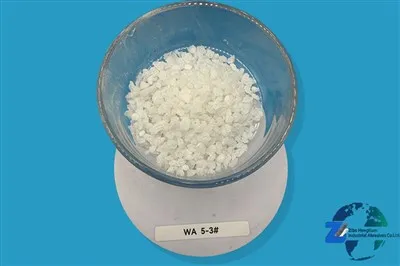
White corundum, a high - purity form of aluminum oxide (Al₂O₃), has long been recognized for its exceptional properties, making it a prime candidate for various industrial applications. As a supplier of White Corundum for Refractory, I've witnessed firsthand the significant role it plays in the refractory small - scale industrial furnace lining. In this blog, I'll explore the diverse applications of white corundum in this context.
1. Understanding White Corundum
White corundum is produced by fusing high - purity alumina powder in an electric arc furnace at extremely high temperatures. This process results in a product with a high content of alpha - alumina, typically over 99%. The material is characterized by its high hardness, excellent chemical stability, and good thermal shock resistance. These properties make it suitable for use in environments where materials are exposed to high temperatures, abrasion, and chemical attack.
2. Key Properties of White Corundum for Refractory Applications
- High Temperature Resistance: One of the most critical properties of white corundum is its ability to withstand high temperatures. It has a melting point of around 2050°C, which allows it to maintain its structural integrity in the harsh conditions of industrial furnaces. This high - temperature resistance ensures that the furnace lining remains stable, preventing premature failure and reducing the need for frequent repairs.
- Abrasion Resistance: In small - scale industrial furnaces, the lining is often subjected to mechanical wear due to the movement of materials inside the furnace. White corundum's high hardness (Mohs hardness of about 9) makes it highly resistant to abrasion. This property helps to extend the service life of the furnace lining, reducing downtime and maintenance costs.
- Chemical Stability: White corundum is chemically inert, which means it is resistant to the attack of most acids, alkalis, and molten metals. This chemical stability is crucial in industrial furnaces, where the lining may come into contact with various corrosive substances. By using white corundum in the furnace lining, the risk of chemical corrosion is minimized, ensuring the long - term performance of the lining.
3. Applications in Small - Scale Industrial Furnace Lining
- Lining for Melting Furnaces: In small - scale melting furnaces used for metals such as aluminum, copper, and brass, white corundum is often used as a lining material. The high - temperature resistance of white corundum allows it to withstand the extreme heat generated during the melting process. Additionally, its abrasion resistance protects the lining from the abrasive action of the molten metal and slag. For example, in an aluminum melting furnace, the white corundum lining helps to prevent the penetration of molten aluminum into the lining, which could lead to premature failure.
- Lining for Heat - Treatment Furnaces: Heat - treatment furnaces are used to modify the physical and mechanical properties of metals through processes such as annealing, quenching, and tempering. These furnaces operate at high temperatures and require a lining material that can maintain its stability over long periods. White corundum's high - temperature resistance and thermal shock resistance make it an ideal choice for heat - treatment furnace linings. It can withstand the rapid heating and cooling cycles associated with heat - treatment processes without cracking or spalling.
- Lining for Glass - Melting Furnaces: Small - scale glass - melting furnaces also benefit from the use of white corundum in their linings. Glass - melting processes involve high temperatures and the presence of corrosive fluxes. White corundum's chemical stability makes it resistant to the attack of these fluxes, while its high - temperature resistance ensures that the lining can withstand the heat required for glass melting. This helps to maintain the quality of the glass produced and reduces the risk of contamination from the lining material.
4. Advantages of Using White Corundum in Small - Scale Industrial Furnace Lining
- Longer Service Life: As mentioned earlier, the high - temperature resistance, abrasion resistance, and chemical stability of white corundum contribute to a longer service life of the furnace lining. This reduces the frequency of lining replacements, resulting in lower maintenance costs and less downtime for the industrial furnace.
- Improved Furnace Efficiency: A well - maintained furnace lining made of white corundum can improve the efficiency of the furnace. By providing better insulation and reducing heat loss, the furnace can operate more effectively, consuming less energy. This not only saves on energy costs but also reduces the environmental impact of the industrial process.
- Enhanced Product Quality: In industries such as metal melting and glass production, the quality of the final product can be affected by the performance of the furnace lining. White corundum's chemical stability and resistance to abrasion help to prevent contamination of the molten material, ensuring a higher - quality end product.
5. Other Applications of White Corundum
White corundum is not only limited to refractory applications in industrial furnace linings. It also has other important uses in different industries. For instance, it is used in the White Corundum for Medical Industry. In the medical field, its high purity and biocompatibility make it suitable for use in dental implants and other medical devices.


Moreover, white corundum finds applications in the White Corundum for Electronics and Optics. Its excellent electrical insulation properties and high hardness make it useful in the production of electronic components and optical lenses.
6. Conclusion and Call to Action
In conclusion, white corundum is an indispensable material for the refractory small - scale industrial furnace lining. Its unique properties, including high - temperature resistance, abrasion resistance, and chemical stability, make it an ideal choice for withstanding the harsh conditions of industrial furnaces. By using white corundum in furnace linings, industries can benefit from longer service life, improved furnace efficiency, and enhanced product quality.
If you are in need of high - quality White Corundum for Refractory for your small - scale industrial furnace lining, I encourage you to contact us for procurement and further discussion. We are committed to providing you with the best products and services to meet your specific requirements.
References
- Schneider, H., & Somers, J. (2002). Refractories Handbook. CRC Press.
- Kingery, W. D., Bowen, H. K., & Uhlmann, D. R. (1976). Introduction to Ceramics. Wiley.
- Reed, J. S. (1995). Principles of Ceramics Processing. Wiley.