

White corundum powder, a high - quality abrasive and refractory material, is well - known for its excellent corrosion - resistant properties. As a supplier of white corundum powder, I am delighted to share in - depth knowledge about its corrosion - resistant characteristics, applications, and the underlying scientific principles.
Chemical Composition and Structure
White corundum powder is mainly composed of aluminum oxide (Al₂O₃), with a purity typically above 99%. This high purity is one of the key factors contributing to its outstanding corrosion resistance. The crystal structure of aluminum oxide in white corundum is a close - packed arrangement of oxygen ions, with aluminum ions occupying the interstitial sites. This structure provides a stable and dense lattice, which acts as a physical barrier against corrosive agents.
The strong ionic bonds between aluminum and oxygen atoms make the material highly resistant to chemical reactions. These bonds are difficult to break under normal environmental conditions, preventing the penetration of corrosive substances such as acids, alkalis, and salts into the material's interior.
Resistance to Acidic Corrosion
One of the remarkable features of white corundum powder is its resistance to acidic environments. In many industrial processes where acids are used, such as metal pickling, chemical etching, and the production of certain chemicals, corrosion of equipment and materials is a major concern. White corundum powder, however, can withstand the attack of a wide range of acids.
For example, in dilute hydrochloric acid (HCl) and sulfuric acid (H₂SO₄) solutions, white corundum powder shows minimal degradation. The dense Al₂O₃ structure prevents the acid molecules from reaching the reactive centers within the grains. Even in relatively concentrated acid solutions at moderate temperatures, the corrosion rate of white corundum powder is extremely low. This property makes it an ideal material for lining acid - storage tanks, pipes, and reaction vessels in the chemical industry.
In the field of surface processing, white corundum powder is often used in acid - based polishing and cleaning operations. Its acid - resistant nature allows it to maintain its physical and chemical properties during these processes, ensuring consistent performance and high - quality surface finishes. You can find more about white corundum powder for surface processing at White Corundum Powder for Surface Processing.
Resistance to Alkaline Corrosion
Similar to its performance in acidic environments, white corundum powder also exhibits excellent resistance to alkaline corrosion. In alkaline solutions such as sodium hydroxide (NaOH) and potassium hydroxide (KOH), the material remains relatively stable. The strong ionic bonds in the Al₂O₃ structure are not easily disrupted by hydroxide ions.
In the manufacturing of refractory materials for alkaline - rich industrial furnaces, white corundum powder is a preferred choice. It can withstand the high - temperature and alkaline - rich environment inside the furnaces, preventing the erosion of the furnace lining. This not only extends the service life of the furnace but also reduces maintenance costs and production downtime.
In the medical field, where some sterilization and cleaning processes involve alkaline solutions, white corundum powder can be used in various medical devices and instruments due to its alkaline - resistant properties. To learn more about the application of white corundum powder in the medical field, visit White Corundum Powder for Medical.
Resistance to Corrosion by Salts
Salts are common corrosive agents in many natural and industrial environments. White corundum powder shows good resistance to corrosion by salts, including both soluble salts and those in the form of salt solutions.
In marine environments, where structures are exposed to seawater containing various salts such as sodium chloride (NaCl), magnesium sulfate (MgSO₄), and calcium carbonate (CaCO₃), white corundum - based coatings and materials can provide effective protection. The dense structure of white corundum powder prevents the penetration of salt ions, reducing the risk of corrosion and rusting of underlying metals.
In the industrial production of salts, white corundum powder can be used in equipment such as evaporators and crystallizers. Its salt - resistant property ensures the long - term stable operation of these devices, improving production efficiency and product quality. If you are interested in other applications of white corundum powder, please refer to White Corundum Powder for Others.
Influence of Temperature on Corrosion Resistance
Temperature is an important factor that can affect the corrosion resistance of white corundum powder. In general, as the temperature increases, the rate of chemical reactions also increases. However, white corundum powder still maintains good corrosion resistance at relatively high temperatures.
In high - temperature acidic or alkaline environments, the material's crystal structure remains stable up to a certain temperature limit. For example, in some high - temperature industrial furnaces operating at temperatures above 1000°C, white corundum - refractory materials can effectively resist corrosion by the acidic or alkaline gases and slags generated during the combustion and melting processes.
Factors Affecting Corrosion Resistance
Although white corundum powder has excellent corrosion - resistant properties, several factors can affect its performance. The particle size of the powder is one such factor. Finer particles have a larger surface area, which may increase the contact area with corrosive agents. However, in some cases, the smaller particle size can also lead to a more compact packing structure, enhancing the overall corrosion resistance.
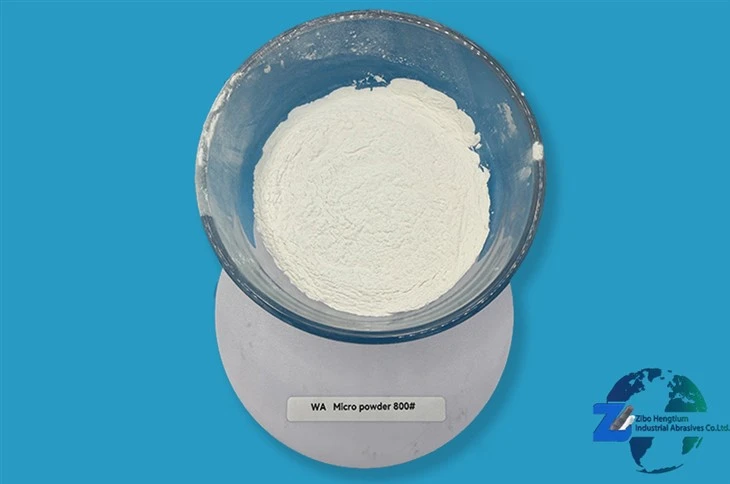

The purity of white corundum powder also plays a crucial role. Impurities in the powder can act as weak points, providing sites for corrosion to start. Therefore, high - purity white corundum powder is generally more corrosion - resistant than lower - purity counterparts.
Applications Based on Corrosion Resistance
The corrosion - resistant properties of white corundum powder have led to its wide range of applications in different industries.
In the aerospace industry, white corundum powder is used in the manufacturing of components that need to withstand harsh environmental conditions, such as high - temperature and corrosive gases. It can be used in the production of turbine blades, engine components, and thermal protection systems.
In the electronics industry, white corundum powder is used in the production of semiconductor wafers. Its corrosion resistance ensures the stability and reliability of the manufacturing process, preventing contamination and damage to the delicate electronic components.
Conclusion
In conclusion, white corundum powder's corrosion - resistant properties are the result of its high - purity chemical composition, stable crystal structure, and strong ionic bonds. It can resist corrosion from acids, alkalis, salts, and high - temperature environments, making it a versatile material in many industries.
If you are interested in purchasing white corundum powder for your specific applications, whether it is for surface processing, medical use, or other industrial needs, please feel free to contact us. We are committed to providing high - quality white corundum powder products and excellent customer service.
References
- Smith, J. (2018). "Advanced Ceramics: Properties and Applications". Elsevier.
- Johnson, R. (2019). "Corrosion Resistance of Inorganic Materials". Springer.
- Brown, A. (2020). "Industrial Applications of Aluminum Oxide". Wiley.


