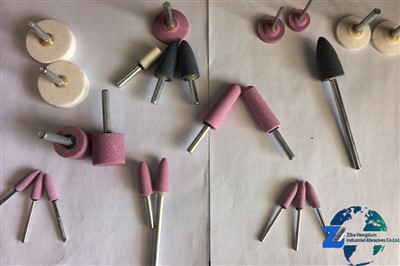
Hey there! As a supplier of green silicon carbide, I've been dealing with this amazing material for quite a while. One of the most crucial aspects that we often focus on is the particle size distribution of green silicon carbide. It can have a huge impact on the performance of the final product in various industries. So, let's dive into the factors that affect the particle size distribution of green silicon carbide.


Raw Material Quality
The quality of the raw materials used in producing green silicon carbide is a fundamental factor. High - quality raw materials usually lead to a more consistent particle size distribution. For example, if the silica and carbon sources we use have impurities, these impurities can interfere with the reaction during the production process. This interference can cause uneven growth of silicon carbide crystals, resulting in a wider particle size range.
When we source raw materials, we always look for suppliers who can provide us with materials of high purity. The purity of the silica and carbon affects how well the reaction occurs in the furnace. If the purity is low, there might be side reactions or incomplete reactions, which can create particles of different sizes. We've noticed that when we use top - notch raw materials, the particle size distribution of our green silicon carbide is much more predictable and within the desired range.
Production Process Conditions
Furnace Temperature
The temperature in the furnace during the production of green silicon carbide is a game - changer. Different temperatures can lead to different crystal growth rates. At higher temperatures, the silicon carbide crystals tend to grow faster. This can result in larger particles. On the other hand, lower temperatures slow down the crystal growth, leading to smaller particles.
We have to carefully control the furnace temperature throughout the production process. If the temperature fluctuates too much, we'll end up with a wide particle size distribution. For instance, if the temperature suddenly spikes during the reaction, some areas in the furnace will have much larger particles forming compared to other areas. We use advanced temperature control systems to keep the temperature as stable as possible. This helps us maintain a more uniform particle size distribution.
Reaction Time
The length of the reaction time also plays a significant role. A longer reaction time allows the silicon carbide crystals more time to grow. So, if we increase the reaction time, we're likely to get larger particles. However, if the reaction time is too short, the crystals won't have enough time to reach their full potential, and we'll end up with smaller particles.
We've done a lot of experiments to find the optimal reaction time for different grades of green silicon carbide. It's a balance between getting the right particle size and maintaining an efficient production process. If the reaction time is too long, it can increase the production cost, and if it's too short, the product quality might not meet the requirements of our customers.
Crushing and Grinding Processes
Crushing Equipment
After the initial production of green silicon carbide in the furnace, we often need to crush the large chunks into smaller pieces. The type of crushing equipment we use can affect the particle size distribution. For example, jaw crushers are great for breaking down large materials into smaller ones, but they might not produce a very narrow particle size distribution on their own.
We also use cone crushers and impact crushers. Each type of crusher has its own characteristics. Cone crushers can produce more uniformly sized particles compared to jaw crushers in some cases. Impact crushers, on the other hand, can break the particles in a more random way, which might lead to a wider particle size distribution. We usually combine different types of crushers to get the best results.
Grinding Parameters
Once the material is crushed, we move on to the grinding process. The grinding parameters, such as the speed of the grinding mill, the grinding media, and the grinding time, all affect the particle size distribution. A higher grinding speed can break the particles into smaller sizes more quickly. However, if the speed is too high, it might cause over - grinding, which can lead to a very fine and uneven particle size distribution.
The type of grinding media we use also matters. For example, using steel balls as grinding media can have a different effect compared to using ceramic balls. Steel balls are harder and can break the particles more aggressively, while ceramic balls are more gentle. We adjust the grinding time based on the desired particle size. If we want a finer particle size, we'll increase the grinding time, but we have to be careful not to over - grind.
Classification and Screening
Classification Methods
After grinding, we need to classify the particles to get the desired particle size distribution. There are different classification methods, such as air classification and sedimentation classification. Air classification uses the principle of different particle sizes having different settling velocities in an air stream. This method can separate the particles based on their size quite effectively.
Sedimentation classification, on the other hand, relies on the fact that particles of different sizes settle at different rates in a liquid. We choose the classification method based on the specific requirements of our customers. For some applications, air classification might be more suitable, while for others, sedimentation classification could be the better option.
Screening Equipment
Screening is another important step in controlling the particle size distribution. We use different types of screening equipment, such as vibrating screens. The mesh size of the screen determines which particles will pass through and which will be retained. If the mesh size is too large, larger particles will pass through, and if it's too small, we might lose a lot of the product.
We regularly check and maintain our screening equipment to ensure that it's working properly. Any damage or clogging in the screen can affect the particle size distribution of the final product.
Applications and Their Impact on Particle Size Requirements
Refractory Industry
In the refractory industry, Green Silicon Carbide for Refractory is widely used. The particle size distribution of green silicon carbide in this industry is crucial. Larger particles can provide better thermal conductivity and mechanical strength, while smaller particles can improve the packing density and the bonding between the refractory materials.
We need to adjust the particle size distribution based on the specific requirements of the refractory products. For example, for some high - temperature refractory linings, we might need a combination of larger and smaller particles to achieve the best performance.
Electronics and Optoelectronics
When it comes to the Electronics and Optoelectronics industry, the requirements for particle size distribution are very strict. In this industry, green silicon carbide is used in applications such as semiconductor manufacturing. Smaller and more uniformly sized particles are usually preferred because they can provide better electrical and optical properties.
We have to ensure that the particle size distribution of our green silicon carbide meets the high - precision requirements of this industry. Any deviation from the desired particle size can affect the performance of the electronic and optoelectronic devices.
Mechanical and Automotive Industry
In the Mechanical and Automotive Industry, green silicon carbide is used in various applications, such as abrasives and cutting tools. The particle size distribution affects the cutting efficiency and the surface finish of the materials being processed.
For abrasive applications, a wider particle size distribution might be acceptable in some cases, as it can provide a combination of coarse and fine abrasion. However, for high - precision cutting tools, a more narrow particle size distribution is usually required to ensure consistent performance.
Conclusion
As you can see, there are many factors that affect the particle size distribution of green silicon carbide. From the quality of the raw materials to the production process conditions, crushing and grinding, classification and screening, and the specific requirements of different industries, every step plays a crucial role.
At our company, we're constantly working on improving our processes to ensure that we can provide green silicon carbide with the best - possible particle size distribution for our customers. Whether you're in the refractory, electronics and optoelectronics, or mechanical and automotive industry, we've got the expertise to meet your needs.
If you're interested in purchasing green silicon carbide or have any questions about our products, feel free to reach out to us. We'd love to have a chat and discuss how we can work together to meet your specific requirements.
References
- Smith, J. (2018). "Particle Size Analysis in Industrial Materials." Industrial Materials Journal, 25(3), 45 - 52.
- Johnson, A. (2019). "Factors Affecting the Production of Silicon Carbide." Silicon Carbide Research, 12(4), 67 - 74.
- Brown, C. (2020). "Applications of Green Silicon Carbide in Different Industries." Industry Applications Review, 30(2), 89 - 96.