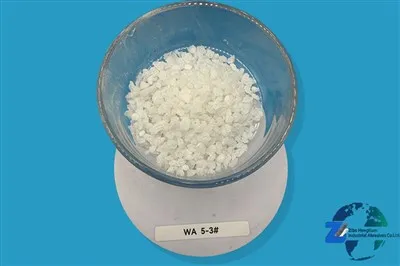
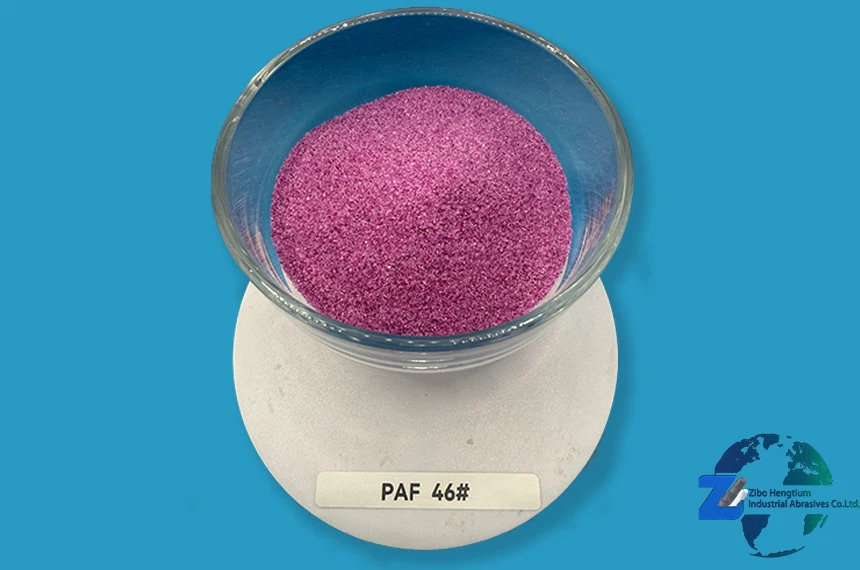
As a trusted white corundum supplier, I am often asked about the optical properties of this remarkable material. White corundum, also known as white fused alumina, is a synthetic abrasive and refractory material that has a wide range of applications due to its excellent physical and chemical properties. In this blog post, I will delve into the optical properties of white corundum, exploring its transparency, refractive index, and other characteristics that make it suitable for various optical and electronic applications.
Transparency
One of the most notable optical properties of white corundum is its high transparency in the visible and near - infrared regions of the electromagnetic spectrum. White corundum is composed mainly of aluminum oxide (Al₂O₃) with a very high purity level, typically above 99%. This high purity results in a material that is relatively free of impurities and defects, which are the main factors that can cause light absorption and scattering.
In the visible light range (approximately 400 - 700 nm), white corundum allows a significant amount of light to pass through. This transparency makes it an ideal candidate for applications where light transmission is crucial, such as in optical windows, lenses, and prisms. For example, in some high - precision optical instruments, white corundum can be used to manufacture windows that need to provide clear visibility while also withstanding harsh environmental conditions.
In the near - infrared region (700 - 2500 nm), white corundum also exhibits good transparency. This property is valuable in infrared optical systems, such as thermal imaging cameras and infrared communication devices. The ability to transmit infrared light enables these devices to function effectively, as they rely on the detection and manipulation of infrared radiation.
Refractive Index
The refractive index of a material is a measure of how much the speed of light is reduced when it passes through the material compared to its speed in a vacuum. White corundum has a relatively high refractive index, typically around 1.76 - 1.77 for visible light. This high refractive index gives white corundum the ability to bend light more effectively than many other materials.
The high refractive index of white corundum is beneficial in the design of optical lenses. Lenses made from white corundum can have a more compact design compared to lenses made from materials with lower refractive indices. This is because a higher refractive index allows the lens to achieve the same optical power (ability to focus light) with a smaller curvature. As a result, optical systems using white corundum lenses can be more lightweight and space - efficient.
In addition, the high refractive index also affects the reflectivity of white corundum. When light strikes the surface of white corundum, a certain percentage of the light is reflected. The amount of reflection depends on the angle of incidence and the refractive index of the material. Understanding the refractive index and reflectivity properties of white corundum is crucial for applications such as anti - reflection coatings, where the goal is to minimize the amount of reflected light and maximize the amount of transmitted light.
Absorption and Scattering
Although white corundum is highly transparent in the visible and near - infrared regions, it does exhibit some absorption and scattering of light. Absorption occurs when the energy of the light is absorbed by the material, causing the electrons in the material to transition to higher energy levels. Scattering, on the other hand, occurs when the light is redirected in different directions due to inhomogeneities in the material.
In white corundum, the absorption is relatively low, especially in the purest forms of the material. However, the presence of impurities or lattice defects can increase the absorption of light. For example, trace amounts of transition metal ions in the white corundum can absorb light at specific wavelengths, leading to a decrease in transparency in those regions.
Scattering in white corundum can be caused by factors such as grain boundaries, micro - cracks, or inclusions. These inhomogeneities can cause the light to scatter in different directions, reducing the clarity of the transmitted light. To minimize scattering, high - quality white corundum is produced using advanced manufacturing processes that ensure a uniform and defect - free structure.


Applications Based on Optical Properties
The unique optical properties of white corundum make it suitable for a wide range of applications in different industries.
Electronics and Optics
In the electronics and optics industry, white corundum is used in the manufacturing of components for optical communication systems, such as fiber optic connectors and optical isolators. Its high transparency and good mechanical properties make it an ideal material for these applications. You can find more information about White Corundum for Electronics and Optics.
Abrasives
Although not strictly an optical application, the optical properties of white corundum also play a role in its use as an abrasive material. The high hardness and transparency of white corundum allow it to be used in precision grinding and polishing operations. When used in abrasive tools, the transparency of white corundum can help operators to monitor the grinding or polishing process more accurately. For more details on White Corundum for Abrasives.
Refractory
In the refractory industry, the optical properties of white corundum can be important in applications where the material is exposed to high - temperature environments and needs to maintain its integrity. The transparency of white corundum can be an advantage in some cases, such as in high - temperature optical sensors or in applications where visual inspection of the refractory lining is required. Check out White Corundum for Refractory for more information.
Conclusion
In conclusion, the optical properties of white corundum, including its high transparency, relatively high refractive index, and low absorption and scattering, make it a versatile material with a wide range of applications in the optical, electronic, abrasive, and refractory industries. As a white corundum supplier, I am committed to providing high - quality white corundum products that meet the specific requirements of our customers.
If you are interested in purchasing white corundum for your specific application, I encourage you to contact us for a detailed discussion. We can provide you with samples, technical specifications, and pricing information to help you make an informed decision. Our team of experts is always ready to assist you in finding the best white corundum solution for your needs.
References
- Kittel, C. (1996). Introduction to Solid State Physics. John Wiley & Sons.
- Smith, W. J. (2007). Modern Optical Engineering: The Design of Optical Systems. McGraw - Hill.
- Ristic, M. (2007). Handbook of Advanced Ceramics: Materials, Applications, Processing. Elsevier.