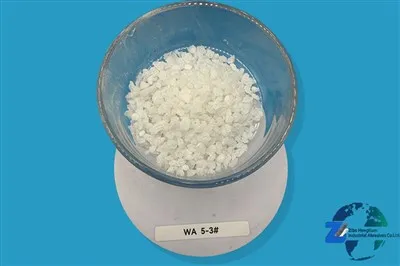
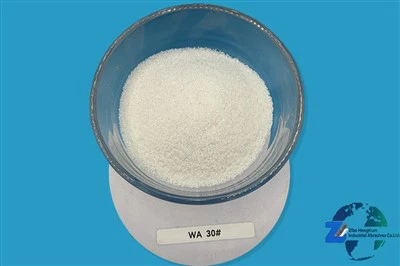
Hey there! As a supplier of brown corundum, I often get asked about the recycling processes for this versatile material. Brown corundum, also known as brown fused alumina, is a popular abrasive and refractory material due to its high hardness, good toughness, and excellent thermal stability. Recycling brown corundum not only helps in reducing waste but also cuts down on production costs. So, let's dive into the recycling processes for brown corundum!
Collection and Sorting
The first step in recycling brown corundum is collecting the used material. This can come from various sources such as industrial manufacturing plants, sandblasting operations, and refractory applications. Once collected, the brown corundum needs to be sorted. This is crucial because the recycled material may be mixed with other substances like dirt, metal particles, and other abrasives.
Sorting can be done through a combination of mechanical and manual methods. Mechanical sorting involves using sieves and screens to separate the brown corundum based on particle size. Manual sorting may be required to remove larger contaminants that can't be separated by mechanical means. This initial sorting process is essential as it ensures that the subsequent recycling steps are more efficient.
Cleaning
After sorting, the brown corundum goes through a cleaning process. The used material can be covered in grease, oil, and other residues from its previous applications. Cleaning helps to remove these impurities and restore the quality of the brown corundum.
One common cleaning method is using water and detergents. The brown corundum is soaked in a cleaning solution, and then agitated to loosen the dirt and residues. After soaking, it is rinsed thoroughly to remove the cleaning agents. In some cases, ultrasonic cleaning may be used for more stubborn contaminants. Ultrasonic waves create high - frequency vibrations in the cleaning solution, which helps to dislodge the impurities from the surface of the brown corundum particles.
Crushing and Grinding
Once the brown corundum is clean, it may need to be crushed and ground to the desired particle size. During its previous use, the brown corundum particles may have become larger or irregularly shaped. Crushing and grinding help to break down the particles into a more uniform size and shape.
Crushing can be done using crushers such as jaw crushers, cone crushers, or impact crushers. These machines apply mechanical force to break the larger particles into smaller ones. After crushing, the material is sent to a grinding mill. Ball mills are commonly used for grinding brown corundum. Inside the ball mill, the brown corundum is mixed with steel balls, and as the mill rotates, the balls collide with the particles, further reducing their size.
Classification
After crushing and grinding, the brown corundum needs to be classified according to particle size. This is important because different applications require different particle sizes of brown corundum. For example, in sandblasting, a coarser particle size may be preferred, while in polishing applications, a finer particle size is needed.
Classification can be achieved using various methods. One of the most common methods is using air classifiers. Air classifiers work by suspending the brown corundum particles in an air stream. The smaller particles are carried by the air and collected at one end, while the larger particles fall to the bottom. Another method is using sieves with different mesh sizes to separate the particles based on their size.
Quality Testing
Once the brown corundum has been recycled and classified, it is essential to test its quality. Quality testing ensures that the recycled brown corundum meets the required standards for its intended applications.
Some of the tests that can be conducted include hardness testing, particle size analysis, and chemical composition analysis. Hardness testing determines the ability of the brown corundum to withstand wear and abrasion. Particle size analysis verifies that the particles are within the desired size range. Chemical composition analysis checks for the presence of any unwanted elements that may affect the performance of the brown corundum.
Applications of Recycled Brown Corundum
Recycled brown corundum has a wide range of applications. It can be used in refractory applications, where it provides high - temperature resistance. You can learn more about Brown Corundum for Refractory.
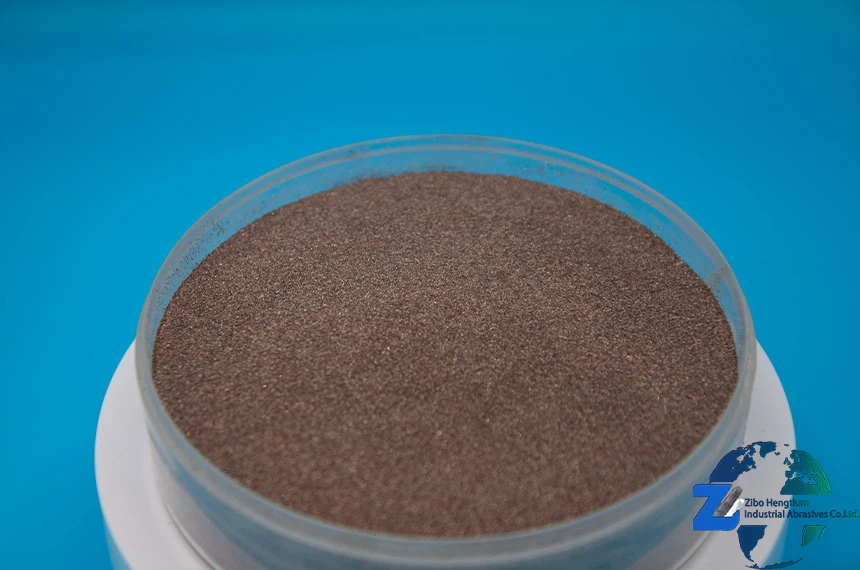

It is also used in water treatment processes. The high hardness and chemical stability of brown corundum make it suitable for filtering and purifying water. Check out Brown Corundum for Water Treatment for more details.
In addition, recycled brown corundum can be used in other applications such as sandblasting, polishing, and grinding. For more information on these applications, visit Brown Corundum for Other Applications.
Why Choose Our Recycled Brown Corundum?
As a supplier, we take pride in our recycled brown corundum. We follow strict quality control measures throughout the recycling process to ensure that our product meets the highest standards. Our recycled brown corundum offers the same performance as new brown corundum but at a more competitive price.
If you're in the market for brown corundum, whether for refractory applications, water treatment, or other uses, we'd love to hear from you. We can provide you with samples and discuss your specific requirements. Contact us to start a conversation about your brown corundum needs, and let's work together to find the best solution for your business.
References
- "Abrasive Materials and Their Applications" by John Smith
- "Recycling Technologies for Industrial Minerals" by Jane Doe
- Industry reports on brown corundum recycling and applications.