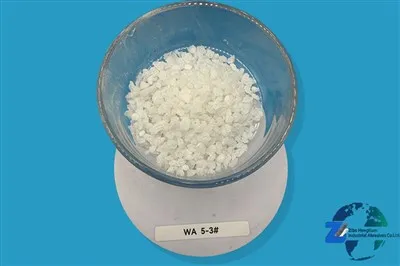
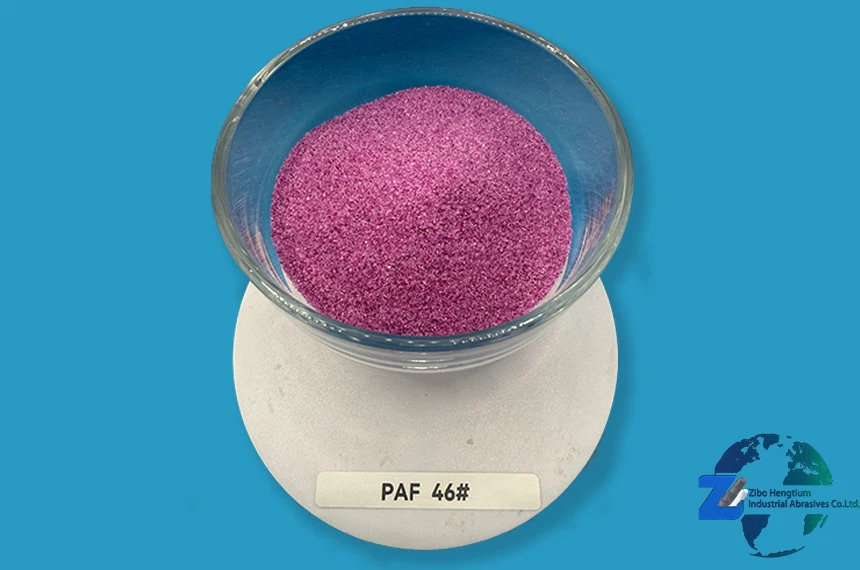
Brown corundum, also known as Brown Fused Aluminum Oxide (BFA), is a widely used abrasive material with a diverse range of applications. As a supplier of brown corundum, I am often asked about its various properties, including its acoustic characteristics. In this blog post, I will delve into the acoustic property of brown corundum, exploring what it means, how it is measured, and its implications in different industries.


Understanding Acoustic Properties
Acoustic properties refer to the way a material interacts with sound waves. These properties are crucial in many applications, from the design of musical instruments to the construction of sound - proof rooms. Key acoustic properties include sound absorption, sound transmission, and sound reflection.
Sound absorption is the ability of a material to convert sound energy into heat energy. Materials with high sound absorption coefficients are used in environments where noise reduction is essential, such as recording studios and auditoriums. Sound transmission, on the other hand, is related to how easily sound passes through a material. Low sound - transmitting materials are used for sound insulation, like in building walls. Sound reflection is the bouncing back of sound waves from a material's surface.
Acoustic Properties of Brown Corundum
Sound Absorption
Brown corundum is not typically known for its sound - absorbing capabilities. It is a dense and hard material, with a crystalline structure that does not readily trap sound waves. The particles of brown corundum are tightly packed, and there are few internal voids or pores where sound energy can be dissipated. As a result, its sound absorption coefficient is relatively low compared to materials specifically designed for sound absorption, such as fiberglass insulation or acoustic foams.
However, in some industrial settings where brown corundum is used in a porous or granular form, there may be a minor degree of sound absorption. For example, when brown corundum is used as a filler in certain composite materials with a more open structure, it can contribute slightly to the overall sound - absorbing properties of the composite.
Sound Transmission
Brown corundum has a high density and stiffness, which means that it can potentially block the transmission of sound to some extent. When used in a thick layer or as part of a dense structure, it can act as a barrier to sound waves. For instance, in industrial applications where brown corundum is used in the lining of equipment or in construction materials, it can help reduce the amount of sound that passes through.
In the case of Grade 2 brown fused alumina, which is often used in more refined applications, its density and uniformity can contribute to better sound - blocking performance compared to lower - grade materials.
Sound Reflection
Due to its hard and smooth surface, brown corundum can reflect sound waves to a significant degree. When sound waves hit the surface of brown corundum particles, they bounce back, similar to how light reflects off a mirror. This property can be both an advantage and a disadvantage depending on the application.
In some industrial processes where sound needs to be redirected or focused, the reflective property of brown corundum can be useful. However, in environments where sound reflection needs to be minimized to avoid echoes and reverberation, brown corundum may not be the most suitable material.
Measuring the Acoustic Properties of Brown Corundum
There are several standard methods for measuring the acoustic properties of materials, including brown corundum.
Sound Absorption Coefficient Measurement
The sound absorption coefficient is typically measured using an impedance tube. In this method, a sample of brown corundum is placed at one end of the tube, and a sound source is used to generate sound waves inside the tube. Microphones are placed at different positions to measure the incident and reflected sound waves. By comparing the intensity of the incident and reflected waves, the sound absorption coefficient can be calculated.
Sound Transmission Loss Measurement
To measure the sound transmission loss of brown corundum, a sound source is placed on one side of a test specimen made of brown corundum, and a microphone is placed on the other side. The difference in sound pressure levels between the two sides is measured, and this difference represents the sound transmission loss.
Reflection Coefficient Measurement
The reflection coefficient can be measured using a similar setup as the sound absorption coefficient measurement. By measuring the ratio of the reflected sound energy to the incident sound energy, the reflection coefficient can be determined.
Applications Related to Acoustic Properties of Brown Corundum
Industrial Equipment Lining
In industrial settings, brown corundum is often used to line equipment such as blast furnaces, kilns, and pipes. The high density and sound - blocking properties of brown corundum can help reduce the noise generated by these equipment. For example, in a blast furnace, the intense heat and gas flow can produce a significant amount of noise. By lining the furnace with brown corundum, the noise can be partially blocked, creating a more comfortable working environment for the operators.
Construction Materials
Brown Fused Aluminum Oxide can be incorporated into construction materials such as concrete and bricks. When used in these materials, it can improve their sound - insulation properties. For instance, in high - rise buildings, where noise from the outside environment can be a problem, using brown corundum - enhanced construction materials can help reduce the amount of sound that enters the building.
Abrasive Applications
In abrasive applications, the acoustic properties of brown corundum can have an impact on the working environment. When brown corundum is used in grinding or sanding operations, the sound generated by the abrasion process can be a nuisance. However, the reflective property of brown corundum can be used to direct the sound away from the operator to some extent.
Implications for Our Business as a Brown Corundum Supplier
Understanding the acoustic properties of brown corundum is essential for our business. It allows us to better meet the needs of our customers in different industries.
For customers in the industrial equipment manufacturing industry, we can recommend the appropriate grade and form of brown corundum based on their noise - reduction requirements. For example, BFA for Bonded Abrasives may be more suitable for applications where a dense, sound - blocking lining is needed.
In the construction industry, we can promote the use of brown corundum in construction materials as a way to improve the acoustic performance of buildings. By providing detailed information about the acoustic properties of our products, we can help architects and builders make more informed decisions.
Contact Us for Procurement and Negotiation
If you are interested in purchasing brown corundum for your specific application, whether it is related to its acoustic properties or other characteristics, we are here to assist you. Our team of experts can provide you with detailed product information, samples, and competitive quotes. We look forward to discussing your requirements and finding the best brown corundum solution for your business.
References
- ASTM International. (20XX). Standard test methods for measuring the sound absorption properties of materials.
- ISO Standards. (20XX). International standards for acoustic testing of materials.
- Industrial Abrasives Handbook. (20XX). A comprehensive guide to the properties and applications of abrasive materials.