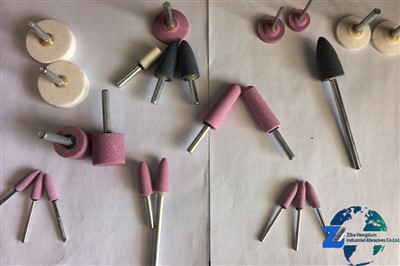
In the realm of precision machining, grinding wheels play a pivotal role in achieving the desired surface finish and dimensional accuracy of workpieces. Two common types of grinding wheels used in different stages of the machining process are those for super - finishing and semi - finishing. As a grinding wheel supplier, understanding the differences between these two types of wheels is crucial for providing the right products to our customers.
1. Purpose and Application
Super - finishing Grinding Wheels
Super - finishing is the final stage of the machining process, aiming to achieve an extremely smooth surface finish and high dimensional accuracy. Super - finishing grinding wheels are designed to remove a very small amount of material, typically in the range of a few micrometers. They are used in applications where the surface quality is of utmost importance, such as in the manufacturing of precision components like bearings, shafts, and automotive parts.
For example, in the production of high - end bearings, super - finishing is essential to reduce friction and wear, thereby improving the performance and lifespan of the bearings. The super - finishing grinding wheel helps to create a mirror - like surface finish, which is critical for the proper functioning of the bearing.
Semi - finishing Grinding Wheels
Semi - finishing is an intermediate stage between rough grinding and super - finishing. The main purpose of semi - finishing is to remove a relatively larger amount of material compared to super - finishing, while still maintaining a reasonable level of surface finish and dimensional accuracy. Semi - finishing grinding wheels are used to prepare the workpiece for the final super - finishing process.


In the manufacturing of gears, semi - finishing is often used to shape the gear teeth and remove most of the excess material. The semi - finishing grinding wheel helps to achieve a close approximation of the final dimensions and surface quality, reducing the workload of the subsequent super - finishing operation.
2. Abrasive Grain Characteristics
Super - finishing Grinding Wheels
The abrasive grains used in super - finishing grinding wheels are typically very fine. Fine grains are able to produce a smoother surface finish because they remove material in smaller increments. The most common abrasive materials used in super - finishing wheels include diamond and cubic boron nitride (CBN).
Diamond is known for its high hardness and excellent wear resistance, making it suitable for grinding hard materials such as carbide and ceramics. CBN, on the other hand, is also extremely hard and has good thermal stability, making it ideal for grinding ferrous materials.
The grain size of super - finishing grinding wheels is usually in the range of 200 - 600 mesh or even finer. This fine grain size allows for a high - precision material removal process, resulting in a smooth and accurate surface finish.
Semi - finishing Grinding Wheels
Semi - finishing grinding wheels use coarser abrasive grains compared to super - finishing wheels. Coarser grains are capable of removing material at a faster rate, which is necessary for the semi - finishing process where a larger amount of material needs to be removed.
Common abrasive materials for semi - finishing wheels include aluminum oxide and silicon carbide. Aluminum oxide is a versatile abrasive that can be used for grinding a wide range of materials, including steel, cast iron, and non - ferrous metals. Silicon carbide is harder than aluminum oxide and is often used for grinding hard and brittle materials such as ceramics and glass.
The grain size of semi - finishing grinding wheels typically ranges from 60 - 120 mesh. This coarser grain size enables efficient material removal while still maintaining a reasonable level of surface quality.
3. Bonding Material and Structure
Super - finishing Grinding Wheels
The bonding material used in super - finishing grinding wheels needs to hold the fine abrasive grains firmly in place to ensure consistent performance. Resin bonds are commonly used in super - finishing wheels because they provide good flexibility and can be formulated to have a high bond strength.
The structure of super - finishing grinding wheels is usually dense, with a high concentration of abrasive grains. This dense structure allows for a more controlled material removal process and helps to achieve a smooth surface finish.
Semi - finishing Grinding Wheels
Semi - finishing grinding wheels often use vitrified bonds. Vitrified bonds are hard and rigid, which is suitable for withstanding the higher forces involved in the semi - finishing process. They also have good thermal stability, which helps to prevent the wheel from overheating during grinding.
The structure of semi - finishing grinding wheels is less dense compared to super - finishing wheels. A more open structure allows for better chip evacuation, which is important for efficient material removal and preventing wheel clogging.
4. Wheel Shape and Design
Super - finishing Grinding Wheels
Super - finishing grinding wheels are often designed with a precise shape to match the specific requirements of the workpiece. For example, in the grinding of cylindrical workpieces, super - finishing wheels may have a cylindrical shape with a very high degree of roundness and concentricity.
The design of super - finishing wheels also takes into account the need for uniform material removal. Specialized wheel profiles may be used to ensure that the entire surface of the workpiece is finished evenly.
Semi - finishing Grinding Wheels
Semi - finishing grinding wheels are designed to be more versatile in terms of shape and application. They can have various shapes, such as straight, cup, or dish - shaped, depending on the type of grinding operation.
The design of semi - finishing wheels focuses on maximizing the material removal rate while maintaining a reasonable level of accuracy. For example, some semi - finishing wheels may have a serrated edge to improve chip evacuation and cutting efficiency.
5. Performance and Cost
Super - finishing Grinding Wheels
Super - finishing grinding wheels offer high - precision performance, resulting in an excellent surface finish and dimensional accuracy. However, they are generally more expensive due to the use of high - quality abrasive materials and the precise manufacturing process.
The cost of super - finishing wheels is also influenced by the complexity of the wheel design and the need for strict quality control. Despite the higher cost, the benefits of using super - finishing wheels in applications where surface quality is critical often outweigh the cost.
Semi - finishing Grinding Wheels
Semi - finishing grinding wheels are more cost - effective compared to super - finishing wheels. They are designed to provide a good balance between material removal rate and surface quality. The lower cost of semi - finishing wheels makes them a practical choice for the intermediate stage of the machining process.
6. Our Product Offerings
As a grinding wheel supplier, we offer a wide range of grinding wheels for both super - finishing and semi - finishing applications. Our Guideway Grinding Wheel is designed for high - precision grinding of guideways, providing excellent surface finish and dimensional accuracy. Our Worm Grinding Wheel is suitable for semi - finishing and finishing of worm gears, with a high material removal rate and good surface quality. And our High - Precision Gear Grinding Wheel is specifically designed for the grinding of gears, ensuring high - precision and efficient machining.
If you are in need of grinding wheels for your machining operations, whether it is for super - finishing or semi - finishing, we are here to provide you with the right solutions. Our team of experts can help you select the most suitable grinding wheels based on your specific requirements. Contact us to discuss your procurement needs and start a successful cooperation.
References
- "Grinding Technology: Theory and Applications of Machining with Abrasives" by Malkin, S.
- "Modern Grinding Technology" by Byrne, G., et al.
- "Handbook of Machining with Grinding Wheels" by Shaw, M. C.