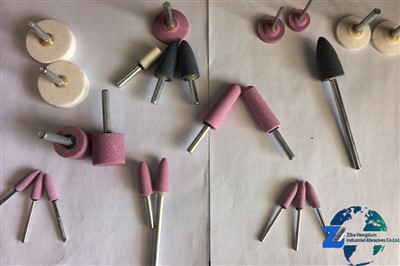
A grinding wheel is a crucial tool in the manufacturing and machining industries, renowned for its versatility and efficiency in material removal and surface finishing. As a dedicated grinding wheel supplier, I've witnessed firsthand the wide - ranging functions and applications of these remarkable tools. In this blog, I'll delve into the various functions of a grinding wheel and explore how they contribute to different industrial processes.
Material Removal
One of the primary functions of a grinding wheel is material removal. Whether it's removing large amounts of stock from a workpiece or performing precision finishing operations, grinding wheels are designed to cut through various materials with ease. The abrasive grains on the surface of the wheel act as tiny cutting tools, chipping away at the material as the wheel rotates at high speeds.
For instance, in the automotive industry, grinding wheels are used to machine engine components such as crankshafts and camshafts. These components are typically made of hardened steel, and the grinding process is essential for achieving the precise dimensions and surface finishes required for optimal performance. The grinding wheel efficiently removes excess material, ensuring that the components meet the strict tolerances specified by the manufacturer.
In the aerospace industry, grinding wheels are employed to shape and finish turbine blades. These blades are made from high - strength alloys that are difficult to machine using traditional methods. The grinding process allows for the precise shaping of the blades, improving their aerodynamic performance and reducing fuel consumption. The ability of grinding wheels to remove material accurately and efficiently is crucial in these high - precision applications.
Surface Finishing
In addition to material removal, grinding wheels are also used for surface finishing. A smooth and uniform surface finish is often required for components to function properly and to enhance their aesthetic appeal. Grinding wheels can be used to achieve a variety of surface finishes, from rough grinding to fine polishing.
For example, in the medical device industry, grinding wheels are used to finish surgical instruments. These instruments need to have a smooth surface to prevent tissue damage during surgery and to facilitate easy cleaning and sterilization. The grinding process can remove any burrs or rough edges from the instruments, leaving them with a polished finish.
In the jewelry industry, grinding wheels are used to shape and polish precious metals and gemstones. The ability to achieve a high - quality surface finish is essential in creating beautiful and valuable pieces of jewelry. Different types of grinding wheels can be used depending on the material being worked on and the desired finish, allowing jewelers to create intricate designs with precision.
Sharpening Tools
Grinding wheels are also commonly used for sharpening tools. Whether it's a woodworking chisel, a metal - cutting saw blade, or a drill bit, a sharp tool is essential for efficient and accurate work. The abrasive action of the grinding wheel can restore the cutting edge of a tool, improving its performance and extending its lifespan.
For example, a Cutter Grinding Wheel is specifically designed for sharpening cutting tools. These wheels are made with high - quality abrasives that can quickly and effectively remove material from the tool's edge, creating a sharp and durable cutting surface. By regularly sharpening their tools using a grinding wheel, craftsmen and machinists can ensure that their tools are always in top condition, resulting in better - quality work and increased productivity.


Precision Grinding
Precision grinding is a specialized application of grinding wheels that requires extremely high levels of accuracy and control. This type of grinding is used in industries such as electronics, optics, and precision engineering, where components need to be manufactured to very tight tolerances.
In the electronics industry, for example, grinding wheels are used to machine semiconductor wafers. These wafers are the building blocks of electronic devices, and any deviation from the specified dimensions can result in defective products. Precision grinding wheels are used to achieve the flatness and smoothness required for the wafers, ensuring that they can be processed further to create high - performance electronic components.
A High - Precision Gear Grinding Wheel is another example of a precision grinding tool. Gears are critical components in many mechanical systems, and their performance depends on the accuracy of their teeth profiles. Precision grinding wheels can be used to shape the gear teeth with high precision, improving the gear's efficiency, reducing noise, and increasing its service life.
Cylindrical and Surface Grinding
Cylindrical and surface grinding are two common grinding operations that are used to machine cylindrical and flat surfaces, respectively. Cylindrical and Surface Grinding Wheels are designed specifically for these applications.
In cylindrical grinding, the workpiece is rotated while the grinding wheel moves along its axis. This process is used to machine shafts, rods, and other cylindrical components. The grinding wheel can be used to remove material from the outer diameter of the workpiece, achieving the desired diameter and surface finish.
Surface grinding, on the other hand, is used to machine flat surfaces. The workpiece is held on a magnetic chuck or a fixture, and the grinding wheel moves across the surface of the workpiece. This process is commonly used to machine machine tool tables, dies, and other flat components. The ability of cylindrical and surface grinding wheels to produce accurate and smooth surfaces is essential in many manufacturing processes.
Conclusion
In conclusion, the functions of a grinding wheel are diverse and essential in a wide range of industries. From material removal and surface finishing to tool sharpening and precision grinding, grinding wheels play a vital role in the manufacturing and machining processes. As a grinding wheel supplier, I understand the importance of providing high - quality products that meet the specific needs of our customers.
If you're in the market for grinding wheels for your industrial applications, I encourage you to reach out to us. We offer a wide range of grinding wheels, including High - Precision Gear Grinding Wheel, Cylindrical and Surface Grinding Wheels, and Cutter Grinding Wheel. Our team of experts can help you select the right grinding wheel for your specific requirements and provide you with professional advice and support. Contact us today to start a discussion about your grinding wheel needs and explore how we can help you achieve your manufacturing goals.
References
- Kalpakjian, S., & Schmid, S. R. (2009). Manufacturing Engineering and Technology. Pearson Prentice Hall.
- Trent, E. M., & Wright, P. K. (2000). Metal Cutting. Butterworth - Heinemann.
- Shaw, M. C. (2005). Metal Cutting Principles. Oxford University Press.