

In grinding, the performance of the grinding wheel directly determines the processing efficiency, quality, and cost. Many users are often confused when faced with a dazzling array of grinding wheel products: what factors truly determine the overall performance of a grinding wheel? In fact, choosing a grinding wheel is not complicated; its core performance is mainly determined by five key elements: abrasive, grit size, hardness, microstructure, and bonding agent. Understanding these five core elements will help you make more informed choices in your work, achieving improved quality and efficiency in grinding processes.
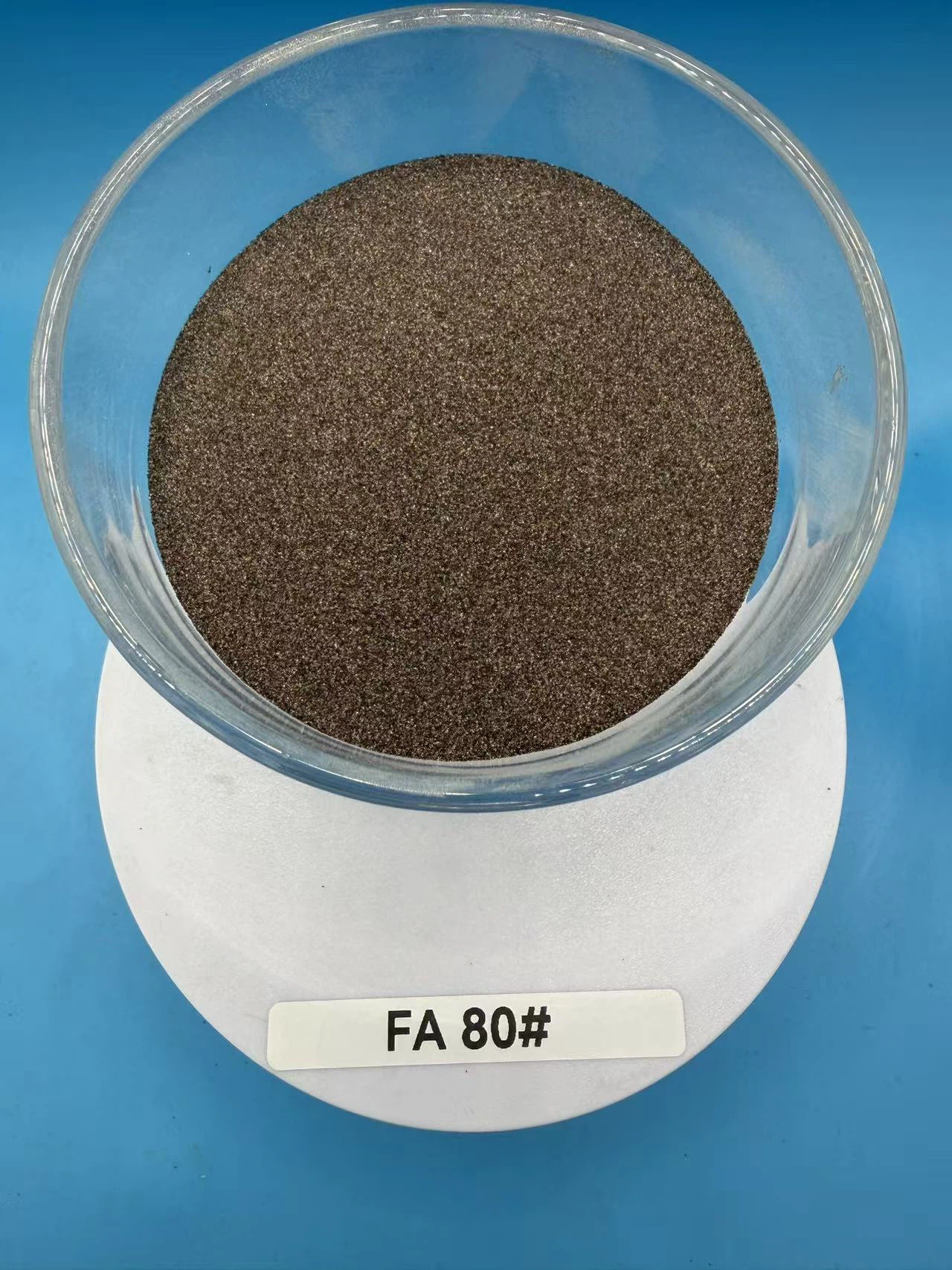
Abrasive Selection
Abrasives are fundamental to grinding wheel cutting, acting as the "teeth" of the wheel. Choosing the right abrasive is essential for ensuring optimal machining results.
Common abrasives are mainly divided into three categories:
Corundum: Suitable for machining various types of steel. Brown corundum is the most economical and versatile, while white corundum has higher hardness and is suitable for precision grinding.
Silicon Carbide: Used for machining non-ferrous materials that are hard, brittle, or soft and tough, such as cemented carbide, ceramics, glass, cast iron, and non-ferrous metals.
Diamond: The hardest natural substance, specifically used for machining hard and brittle materials, such as cemented carbide, ceramics, glass, stone, and semiconductors.
CBN (Cubic Boron Nitride): Second only to diamond in hardness, specifically used for machining high-hardness ferrous metals, such as hardened steel, tool steel, die steel, and heat-resistant alloys.
Grit Size Control
Grit size refers to the size of the abrasive grains, expressed numerically. A larger number indicates finer grains. Grit size primarily affects the surface roughness and cutting efficiency.
Coarse grit (e.g., 24#, 36#): Large abrasive grains, strong cutting force, fast material removal, but rougher surface finish. Suitable for roughing, deburring, and other applications requiring high efficiency.
Medium grit (e.g., 60#, 80#): Balances cutting efficiency and surface quality, making it the most widely used choice. Most semi-finishing processes can use this grit range.
Fine grit (e.g., 100#, 120#, 150#): Small abrasive grains, smooth surface finish, but lower cutting efficiency. Suitable for finishing and processes requiring high surface quality.
Hardness Grade: The hardness referred to here is not the hardness of the abrasive grain itself, but rather the strength with which the bonding agent adheres the abrasive grains to the grinding wheel. Hardness grades are indicated by letters (G to Z) from softest to hardest.
Soft Grinding Wheels (G-K grades): Abrasive grains easily detach, continuously exposing new sharp cutting edges. Suitable for grinding hard materials, as hard materials easily dull the abrasive grains, requiring the grinding wheel to have good self-sharpening properties. Medium-hard grinding wheels (L-P grade): Best versatility, suitable for most routine machining operations.
Hard grinding wheels (Q-Z grade): Abrasive grains adhere firmly and are not easily detached. Suitable for grinding soft materials (such as aluminum and copper) and profile grinding, as the grinding wheel needs to maintain its shape for a long time.
Remember a simple principle: use soft grinding wheels for hard materials and hard grinding wheels for soft materials. Furthermore, the larger the contact area between the grinding wheel and the workpiece, the softer the grinding wheel should generally be selected.
Microstructure: Microstructure refers to the ratio of abrasive grains, bonding agent, and porosity in the grinding wheel. Microstructure numbers range from 0 to 14, with higher numbers indicating a more porous and less porous wheel.
Compact microstructure (lower microstructure number, such as #3): High abrasive grain count, low porosity, resulting in a dense grinding wheel. This type of wheel is wear-resistant, maintains its shape well, and is suitable for finish grinding and profile grinding.
Medium microstructure (medium microstructure number, such as #5): The most commonly used type, offering a balanced performance across the board.
Loose Structure
(Higher structure number, e.g., No. 8): More pores, relatively fewer abrasive grains. This type of grinding wheel has a large chip space and good heat dissipation, suitable for high-cutting-volume grinding and machining materials prone to wheel sticking, such as stainless steel and titanium alloys.
When machining materials prone to "sticking," choosing a loose structure grinding wheel is key to preventing clogging and burning.
Bond Type
The bond is the material that binds countless abrasive grains together to form the grinding wheel as a whole. It determines the basic characteristics of the grinding wheel.
Ceramic Bond
(Code V): Most widely used, high temperature resistant, good rigidity, but relatively brittle. Suitable for most grinding processes.
Resin Bond
(Code B): Has a certain degree of elasticity, can absorb vibration, suitable for manufacturing cutting discs, polishing wheels, and for fine grinding processes.
Metal Bond
(Code M): Highest bonding strength, mainly used for manufacturing diamond, CBN, and other superhard abrasive wheels, with long service life.
How to Use in Combination
The five elements need to work together to achieve the best results. Taking the processing of common ferrous metals as an example, here are some common combination approaches:
For high-efficiency roughing:
A combination of brown fused alumina (abrasive), 46# grit, K grade (softer hardness), and 7-8 grit (loose structure) can be chosen, focusing on rapid material removal.
For high-quality finishing:
A combination of white fused alumina (abrasive), 120# grit (fine grit), N grade (harder hardness), and 3-4 grit (dense structure) can be chosen, focusing on obtaining a smooth surface and precise shape.
For machining difficult-to-grind materials (such as stainless steel):
Focusing on heat dissipation and anti-clogging, single-crystal fused alumina (abrasive), 60# grit, a relatively soft hardness, and a loose structure (such as 8 grit) should be chosen.
Practical suggestions for users:
Start with a general solution:
If unsure, you can try the general combination of "brown fused alumina, 80# grit, L grade hardness, 5 grit structure, and ceramic binder," which can solve a significant portion of common machining problems.
Establish a connection between problems and adjustments:
For workpiece burns, try reducing the grinding wheel hardness or using a more porous structure.
For grinding wheel wear that is too rapid, try increasing the grinding wheel hardness.
For rough surfaces, try using a finer grit or dress the grinding wheel promptly.
Consider economics: Don't blindly pursue a perfect finish. While meeting the requirements for a smooth surface, choose the coarsest possible grit to improve grinding efficiency.
Choosing a grinding wheel essentially involves finding the optimal combination of five core elements: abrasive, grit size, hardness, microstructure, and bonding agent, based on your workpiece material, processing requirements, and equipment conditions. Understand the meaning and function of each element and grasp the basic logic of their combinations. Remember, there is no "one-size-fits-all" grinding wheel, only the "most suitable" grinding wheel under specific conditions.
We are a manufacturer from China producing brown and white corundum abrasives. We can solve your abrasive wheel cutting needs, mainly for ceramic and resin-based abrasive wheels. Welcome to discuss cooperation. If you have any needs, please contact us, and we will provide you with products more suitable for your requirements, helping you reduce costs and improve efficiency.


