

"Hard is easy. Stable is hard."
--Why green silicon carbide is more than just a hardness number?
Engineers often describe green silicon carbide (Green SiC) by its extreme hardness-second only to diamond. But in real industrial use, hardness alone explains very little.
What truly differentiates Green Silicon Carbide for Abrasive Materials and G-SiC for Refractory is how the crystal structure behaves under stress, heat, and chemical exposure.The same base material can either cut aggressively at room temperature or remain dimensionally stable inside a furnace above 1,500°C-depending on how it is processed and applied.
"Sharp tools need sharp crystals,Heat reveals character."
--Under what processing conditions is G-SiC generally considered unusual?
In abrasive engineering, Green Silicon Carbide for Abrasive is chosen for one key reason:its extremely sharp, angular crystal morphology.
Compared with aluminum oxide abrasive material,green-SiC grits:
- Fracture more sharply
- Penetrate hard, brittle materials with less force
- Maintain cutting efficiency on glass, ceramics, and non-ferrous metals
This makes green SiC ideal for precision grinding, lapping, and surface finishing, especially where minimal subsurface damage is required.
When engineers select G-SiC for Refractory, cutting sharpness becomes irrelevant. What matters instead is:
- Thermal stability
- Oxidation resistance
- Structural integrity at elevated temperatures
In refractory linings, kiln furniture, and high-temperature wear zones, green SiC acts as a structural ceramic, not an abrasive. Its low thermal expansion and high thermal conductivity help reduce thermal shock and cracking.
This dual personality-abrasive at ambient conditions, structural at extreme heat-is what makes green SiC uniquely valuable.
"Purity decides performance."
--Why chemistry control matters more for green SiC than most engineers expect?
Unlike black silicon carbide, green silicon carbide requires much higher purity control during production. Trace impurities can dramatically affect:
- Grain brittleness in abrasive use
- Oxidation resistance in refractory use
- Electrical and thermal conductivity
Speaking to Green Silicon Carbide grains for Abrasive Materials, excessive impurities dull cutting edges prematurely.
But in Green Silicon Carbide for Refractory, they can accelerate oxidation and structural degradation.
This is why experienced buyers look beyond particle size and focus on SiC content, free carbon, and impurity thresholds.

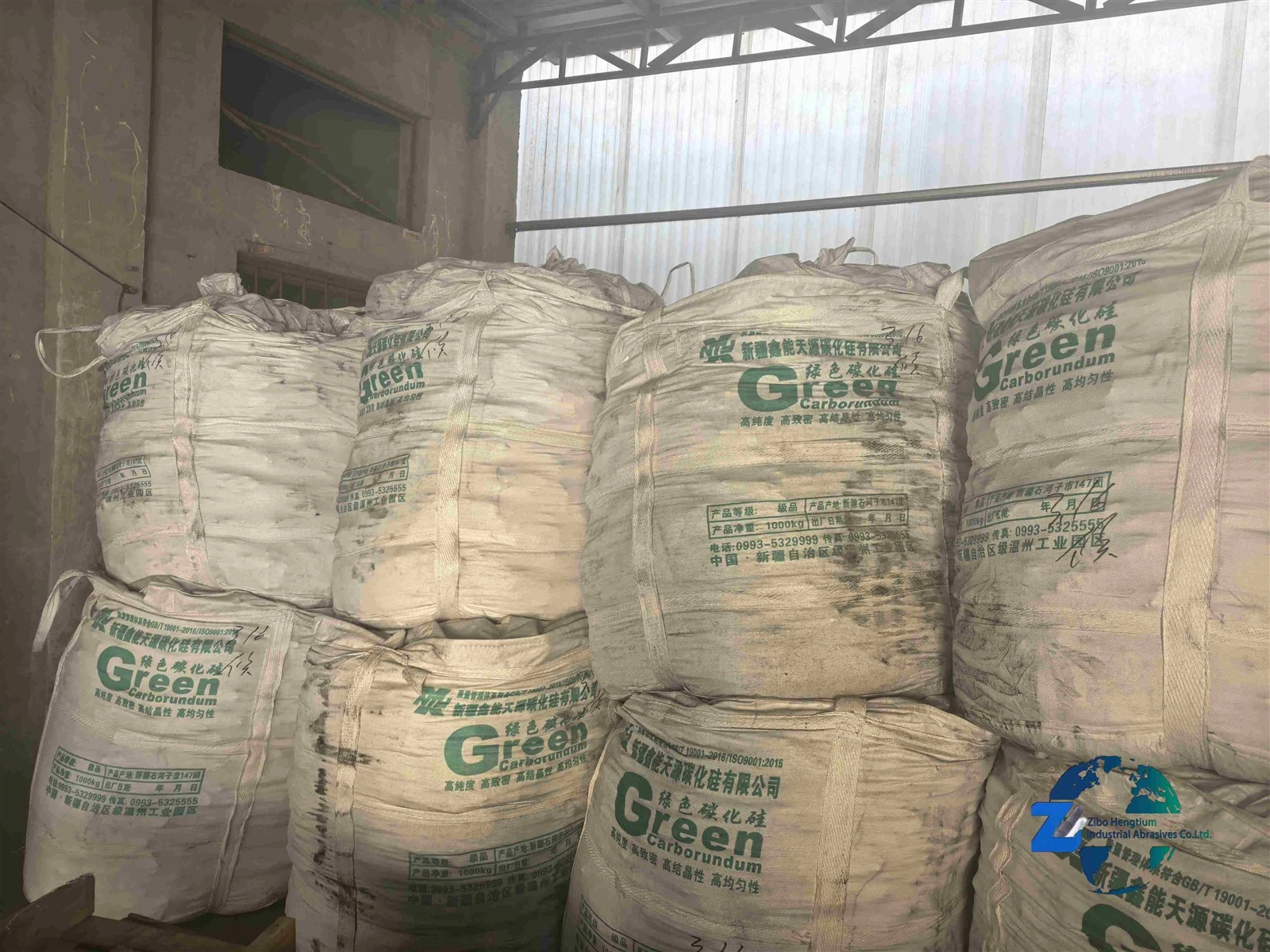
"The same grain, two stress worlds."
--Mechanical vs thermal stress: abrasive and refractory perspectives.
From an engineering standpoint:
- Abrasive raw materials fields expose green SiC to cyclic mechanical stress
- Refractory applications expose it to constant thermal and chemical stress
In abrasives, controlled micro-fracture maintains sharpness.
In refractories, excessive fracture is failure.
Understanding this contrast helps engineers avoid misapplication-such as using abrasive-grade SiC where refractory-grade stability is required.
"Consistency is a design parameter."
--Why particle size distribution matters in both applications
Whether used for grinding wheels or refractory castables, particle size distribution (PSD) directly influences performance.
In abrasives: tight PSD ensures predictable cutting and surface finish
In refractories: graded particles improve packing density and thermal stability
A qualified green silicon carbide manufacturer in China must tailor crushing, milling, and classification processes differently for abrasive and refractory markets-even when the raw crystal looks identical.
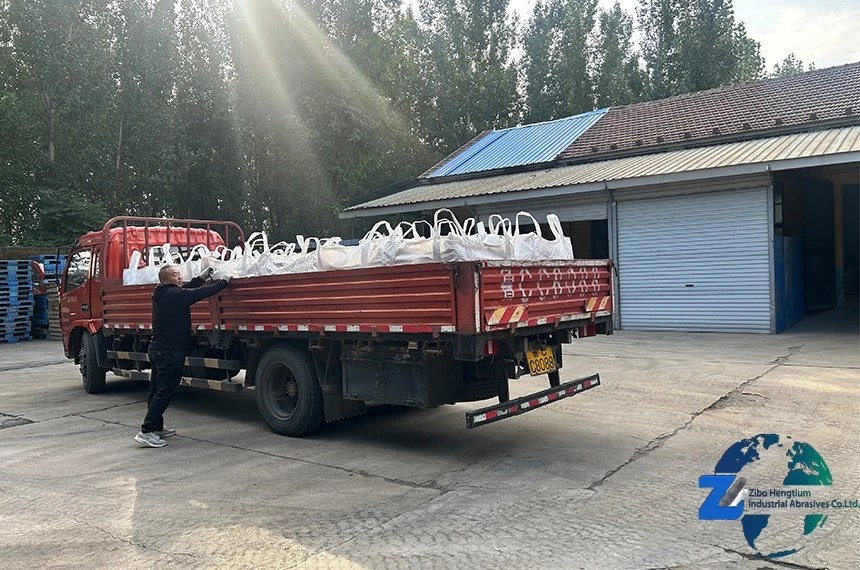
"Engineering starts where catalogs end."
--How experienced users combine abrasive and refractory thinking?
Advanced manufacturers increasingly blur the line between abrasive and refractory usage:
Wear-resistant refractory linings designed with abrasive-grade sharpness
Grinding tools engineered for high-temperature stability
This cross-disciplinary thinking allows green SiC to solve problems beyond traditional definitions.
Engineers who understand both abrasive mechanics and refractory thermodynamics extract the full value of green silicon carbide.
If you are sourcing green silicon carbide, specify not only grit size, but also purity level, thermal exposure, and mechanical load conditions.Please Contact ME Now !!!


