Brown corundum, a well - known abrasive and refractory raw material, has long been in the spotlight due to its excellent physical and chemical properties. As a supplier of Brown Corundum for Refractory, I've witnessed firsthand the significant role it plays in enhancing the performance of refractory materials, especially in terms of slag penetration resistance.
1. Introduction to Brown Corundum
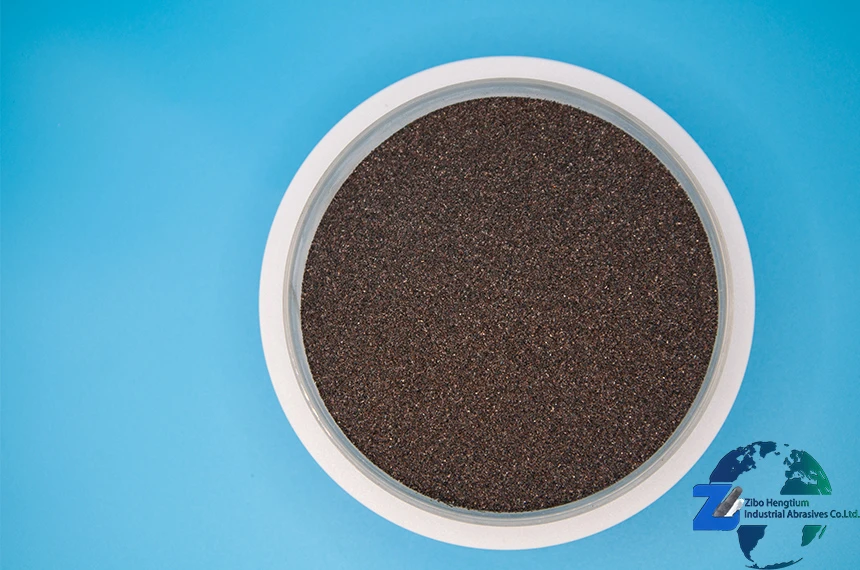
Brown corundum is an artificial abrasive made by smelting bauxite, anthracite, and iron filings in an electric arc furnace at high temperatures. The main component of brown corundum is alumina ($Al_2O_3$), usually with a content ranging from 94.5% to 97%. It also contains small amounts of titanium oxide, silicon oxide, and other impurities. This unique chemical composition endows brown corundum with high hardness, good thermal stability, and wear - resistance. These properties are also the key factors that make it a valuable additive in refractory materials.
2. The Mechanism of Slag Penetration in Refractory Materials
Slag penetration is a common and troublesome problem in refractory applications, especially in high - temperature industrial processes such as steelmaking, non - ferrous metal smelting, and cement production. When refractory materials are in contact with molten slag at high temperatures, the slag can penetrate into the pores and cracks of the refractory due to capillary action, chemical reactions, and thermal stress. This penetration can lead to a series of negative effects, including the weakening of the refractory's structure, the reduction of its mechanical strength, and the shortening of its service life.

The driving force for slag penetration mainly comes from capillary pressure. The molten slag has a certain surface tension, and when it comes into contact with the porous refractory, it will flow into the pores to reduce the surface energy. The rate of slag penetration is related to many factors, such as the viscosity of the slag, the pore size and distribution of the refractory, and the wettability between the slag and the refractory.
3. How Brown Corundum Affects the Slag Penetration Resistance of Refractory
3.1. Physical Filling Effect
One of the primary ways brown corundum affects the slag penetration resistance of refractory is through its physical filling effect. The granular brown corundum can fill the pores and voids in the refractory matrix. When brown corundum is added to the refractory raw materials, it can reduce the porosity of the refractory and make the structure more compact. A lower porosity means that there are fewer channels for the molten slag to penetrate. For example, in a refractory brick, the fine - grained brown corundum particles can fill the gaps between the larger aggregates, blocking the paths for the slag to flow in. This physical barrier significantly reduces the capillary force that drives the slag penetration, thus enhancing the refractory's ability to resist slag penetration.
3.2. Chemical Inertness
Brown corundum has good chemical inertness at high temperatures. The high - alumina content in brown corundum makes it relatively stable in the face of most molten slags. It does not easily react with the components in the slag, such as calcium oxide, magnesium oxide, and iron oxide. This chemical stability prevents the formation of low - melting - point compounds that could promote slag penetration. For instance, in a steel - making ladle lining, the brown corundum - containing refractory can maintain its integrity when in contact with the high - temperature steel slag, because it does not participate in the chemical reactions that would otherwise break down the refractory structure and allow the slag to penetrate more easily.
3.3. Formation of a Protective Layer
Under certain conditions, brown corundum can participate in the formation of a protective layer on the surface of the refractory. When the refractory is in contact with the molten slag, a thin layer of reaction products may form on the surface due to the interaction between brown corundum and the slag components. This protective layer can act as a barrier to prevent further slag penetration. For example, in some cases, the alumina in brown corundum can react with the silica in the slag to form a high - melting - point compound such as mullite. This mullite layer has good thermal stability and can resist the erosion and penetration of the slag.
3.4. Improvement of Thermal Stability
Brown corundum has high thermal stability, which can also contribute to the slag penetration resistance of the refractory. In high - temperature environments, thermal stress is one of the factors that can cause cracks in the refractory, providing channels for slag penetration. The addition of brown corundum can improve the thermal shock resistance of the refractory, reducing the formation of cracks due to temperature fluctuations. For example, in a blast furnace, the refractory lining with brown corundum can better withstand the rapid temperature changes during the iron - making process, maintaining its structure and reducing the risk of slag penetration.
4. Applications of Brown Corundum in Different Refractory Systems
4.1. Steel - making Refractories
In the steel - making industry, brown corundum is widely used in ladle linings, tundish linings, and furnace walls. In ladle linings, the addition of brown corundum can improve the slag penetration resistance, allowing the ladle to hold the molten steel for a longer time without being severely damaged by the slag. In tundish linings, the use of brown corundum - based refractories can ensure the smooth flow of molten steel and prevent the slag from contaminating the steel.
4.2. Non - ferrous Metal Smelting Refractories
In non - ferrous metal smelting processes, such as copper, aluminum, and zinc smelting, the refractories are also subject to severe slag attack. Brown corundum can be added to the refractory materials to enhance their slag penetration resistance. For example, in a copper - smelting furnace, the brown corundum - containing refractory can resist the penetration of copper slag, improving the efficiency and service life of the furnace.
4.3. Other High - Temperature Industries
Brown corundum also has applications in other high - temperature industries, such as cement production and glass manufacturing. In cement kilns, the refractory materials with brown corundum can resist the penetration of cement clinker and alkaline slag. In glass - melting furnaces, brown corundum can be used to improve the slag penetration resistance of the refractory lining, ensuring the quality of the glass production.
5. Other Applications of Brown Corundum
Apart from its use in refractories, brown corundum has a wide range of other applications. You can learn more about them through the following links: Brown Corundum for Ceramics and Glass, Brown Corundum for Water Treatment, Brown Corundum for Other Applications.
6. Conclusion and Call to Action
In conclusion, brown corundum plays a crucial role in enhancing the slag penetration resistance of refractory materials. Its physical filling effect, chemical inertness, ability to form a protective layer, and improvement of thermal stability all contribute to this improvement. As a supplier of Brown Corundum for Refractory, I am committed to providing high - quality brown corundum products to meet the needs of different industries. If you are looking for reliable brown corundum for your refractory applications or want to learn more about its performance and usage, please feel free to contact us for procurement and further discussion. We are always ready to offer you professional advice and solutions.
References
- Zhang, Y., & Li, H. (2018). Influence of brown corundum on the properties of high - alumina refractory castables. Journal of Refractories, 42(3), 198 - 202.
- Guo, X., & Wang, Z. (2019). Study on the slag penetration resistance of brown corundum - based refractories in steel - making process. Metallurgical Industry, 56(6), 89 - 94.
- Xu, J., & Chen, S. (2020). The role of brown corundum in improving the thermal shock and slag penetration resistance of refractories. International Journal of High - Temperature Materials and Processes, 38(2), 123 - 130.