

Hey there! I'm a supplier of white corundum for abrasives, and today I want to talk about how hardness variation affects this awesome material.
White corundum is a super popular choice in the abrasive industry. It's known for its high hardness, good chemical stability, and excellent cutting performance. But here's the thing - the hardness of white corundum can vary, and this variation can have a big impact on how it works as an abrasive.
Let's start by understanding what hardness really means in the context of white corundum. Hardness is basically a measure of how resistant a material is to being scratched or deformed. In the case of white corundum, a higher hardness generally means better cutting ability and longer service life.
When the hardness of white corundum increases, it becomes more effective at removing material from the workpiece. This is because a harder abrasive can dig deeper into the surface, cutting through tough materials more easily. For example, if you're using white corundum to grind metal, a harder grade will be able to remove more metal in less time, which is great for efficiency.
On the other hand, if the hardness is too high, it can also cause some problems. A very hard white corundum might be too aggressive, leading to excessive wear on the workpiece or even causing damage. It could also make the grinding process more difficult to control, as the abrasive might cut too deeply or unevenly.
So, finding the right balance of hardness is crucial. That's where we, as suppliers, come in. We have to understand the specific needs of our customers and provide them with the right grade of white corundum for their applications.
For different applications, the ideal hardness of white corundum can vary. For instance, in White fused alumina sandblasting, a medium to high hardness is often preferred. This allows the abrasive to effectively clean and prepare surfaces without causing too much damage. The high - speed impact of the sandblasting process requires an abrasive that can hold up well and cut through dirt, rust, and other contaminants.
In the case of WA for Bonded Abrasives, the hardness needs to be carefully selected based on the type of bonding material and the intended use. A softer grade might be used for more delicate applications where a gentle touch is required, while a harder grade can be used for heavy - duty grinding tasks.
Another important factor to consider is the particle size of the white corundum. The hardness and particle size work together to determine the overall performance of the abrasive. Smaller particles with higher hardness can provide a smoother finish, while larger particles are better for rough grinding and material removal.
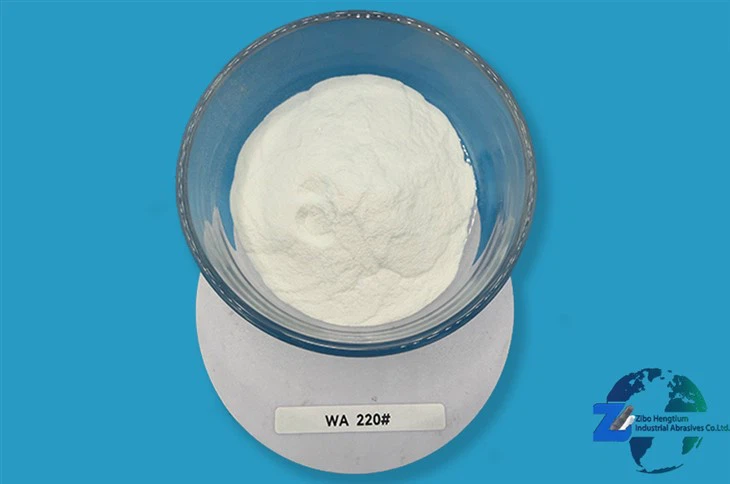

Now, let's talk about how we control the hardness of white corundum. During the manufacturing process, we can adjust various parameters to achieve the desired hardness. This includes the raw materials used, the temperature and time of the smelting process, and the cooling rate. By carefully controlling these factors, we can produce white corundum with a consistent and appropriate hardness for different applications.
One of the benefits of our white corundum is its wide range of hardness options. Whether you need a soft abrasive for a precision job or a hard one for heavy - duty work, we've got you covered. Our White Fused Alumina Micropowder is a great example. It offers a high level of hardness while also being suitable for applications that require a fine finish, such as in the medical industry.
When it comes to choosing the right white corundum for your abrasive needs, it's important to do your research. Consider the type of material you'll be working on, the desired finish, and the specific requirements of your process. If you're not sure which grade is best for you, don't hesitate to reach out to us. We have a team of experts who can help you make the right decision.
In conclusion, the hardness variation of white corundum has a significant impact on its performance as an abrasive. By understanding how hardness affects cutting ability, surface finish, and other factors, you can make a more informed choice when selecting white corundum for your applications. Whether you're in the sandblasting, bonded abrasives, or other industries, finding the right hardness is key to achieving the best results.
If you're interested in purchasing white corundum for your abrasive needs, we'd love to have a chat with you. We can discuss your specific requirements and provide you with samples and detailed information. Let's work together to find the perfect solution for your business.
References:
- Industry research on abrasive materials
- Technical data on white corundum manufacturing processes


