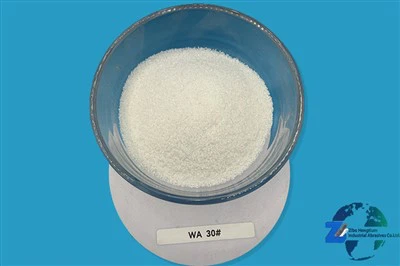
As a long - time supplier of White Corundum for Refractory, I've witnessed and analyzed the intricate dance of its price fluctuations over time. In this post, I'll delve into the factors that drive these price changes, how they've evolved through different market cycles, and what the future might hold for this essential industrial material.
The Basics of White Corundum for Refractory
White corundum, also known as white fused alumina, is a high - purity form of aluminum oxide. For the refractory industry, it's highly valued due to its excellent heat resistance, high mechanical strength, and good chemical stability. These properties make it a key component in refractory products used in environments with extreme temperatures, such as in steelmaking, glass manufacturing, and cement production.
When we talk about the refractory applications, white corundum can be used in the production of refractory bricks, castables, and ceramics. Its ability to withstand high - temperature environments without significant deformation or chemical degradation ensures the long - term performance of these refractory materials.


Early Market Trends and Stability
In the early days of its significant industry use, the price of white corundum for refractory was relatively stable. Global demand was limited to a few key industries, and production was also concentrated in a handful of regions. As a supplier, we faced predictable production costs and a relatively stable customer base. The cost of raw materials, mainly bauxite and other aluminum - rich ores, was the primary factor influencing the price. Since mining operations were well - established and the production process was standardized, price fluctuations were minimal.
However, as the global economy started to expand, the refractory industry grew in tandem. New steel mills, glass factories, and cement plants sprung up around the world, increasing the demand for white corundum. This initial surge in demand led to a slight increase in price as suppliers struggled to keep up with the growing orders.
The Influence of Global Economic Growth and Industrial Expansion
The period of rapid industrialization in emerging economies, especially in Asia, had a profound impact on the price of white corundum for refractory. Countries like China and India witnessed a massive boom in their infrastructure and manufacturing sectors. The construction of new steel plants, in particular, drove up the demand for refractory materials made with white corundum.
During this time, as a supplier, we saw a significant increase in orders. The sudden spike in demand outpaced the supply, leading to a sharp increase in prices. Production facilities were operating at full capacity, and new plants were being built to meet the growing need. However, the expansion of production capacity took time, and in the short - term, prices remained high.
On the other hand, economic recessions had the opposite effect. When the global economy faced downturns, industries scaled back their production. Steel mills reduced their output, glass factories cut back on production lines, and cement plants decreased their production volumes. This led to a decrease in the demand for refractory materials and, subsequently, a drop in the price of white corundum. As a supplier, we had to adjust our production levels and find ways to manage our inventory during these challenging times.
Raw Material Costs and Supply Chain Disruptions
The cost of raw materials is a major determinant of the price of white corundum for refractory. Bauxite, the primary raw material for producing white corundum, is subject to price fluctuations in the global market. Changes in mining regulations, political instability in major bauxite - producing regions, and variations in transportation costs can all impact the cost of bauxite.
For example, if there are labor strikes or natural disasters in bauxite - mining areas, the supply of this raw material can be disrupted. This disruption leads to an increase in the cost of bauxite, which in turn raises the production cost of white corundum. As a supplier, we have to pass on some of these increased costs to our customers, resulting in higher prices for white corundum for refractory.
In addition to raw materials, the energy cost associated with the production process is also a significant factor. The production of white corundum requires a substantial amount of electricity, and changes in electricity prices can have a direct impact on the final price of the product. Fluctuations in energy markets, influenced by factors such as oil prices, government energy policies, and the development of renewable energy sources, can cause the price of white corundum to vary.
Technological Advancements and Their Impact
Technological advancements in the production of white corundum have also played a role in price fluctuations. Over the years, new methods and technologies have been developed to improve the efficiency of the production process, reduce energy consumption, and increase the quality of the final product.
When new and more efficient production technologies are introduced, the production cost per unit of white corundum decreases. As a supplier, we can afford to lower the price of our products to gain a competitive edge in the market. This leads to a downward pressure on prices in the short - term. However, in the long - term, these technological advancements can also attract more customers and expand the market for white corundum for refractory, driving up demand and potentially increasing prices again.
Environmental Regulations and Their Consequences
In recent years, environmental regulations have become a significant factor in the price of white corundum for refractory. The production of white corundum involves high - energy consumption and the emission of certain pollutants. As governments around the world tighten environmental standards, manufacturers have to invest in pollution - control equipment and cleaner production technologies.
These additional environmental compliance costs are passed on to the price of white corundum. For example, installing advanced air - pollution control systems in production facilities or implementing wastewater treatment processes adds to the production cost. As a supplier, we have to balance the need for environmental protection with the affordability of our products for customers. This has led to a gradual increase in the price of white corundum for refractory in many regions.
Market Competition and Pricing Strategies
The level of competition in the white corundum for refractory market also affects price fluctuations. As the market has grown, more suppliers have entered the arena, leading to increased competition. Some suppliers may adopt a low - price strategy to gain market share, especially in regions with high production capacity and relatively low demand.
On the other hand, suppliers with a reputation for high - quality products may charge a premium price. As a supplier, we focus on providing high - quality white corundum with excellent heat - resistance, purity, and consistent performance. We target customers who are willing to pay a higher price for a reliable product. This balance between competition and quality - based pricing strategies can result in price variations across different market segments.
The Future of Price Fluctuations
Looking ahead, the price of white corundum for refractory will continue to be influenced by a complex set of factors. The growth of emerging economies will likely drive up demand in the long - term, but global economic uncertainties and potential recessions could lead to short - term drops in demand.
Raw material costs will remain a key factor, and any disruptions in the supply of bauxite or changes in energy prices will have a direct impact on the price. Technological advancements may help to mitigate some of the cost increases, but environmental regulations will likely continue to add to the production cost.
As a supplier, we are constantly monitoring these factors to anticipate price changes. We work closely with our customers to understand their needs and provide them with the best - possible pricing and product quality.
Conclusion and Call to Action
In conclusion, the price of white corundum for refractory is a dynamic variable that is affected by a multitude of factors, including global economic trends, raw material costs, technological advancements, environmental regulations, and market competition. Understanding these factors is crucial for both suppliers and customers in the refractory industry.
If you are in the market for high - quality White Corundum for Refractory, we are here to serve you. Our years of experience as a reliable supplier ensure that you will receive a product that meets your specific requirements. We also offer white corundum for other industries, such as White Corundum for Medical Industry and White Corundum for Abrasives.
Contact us to discuss your procurement needs and let's start a mutually beneficial business relationship. We are ready to provide you with detailed product information, competitive pricing, and excellent customer service.
References
- "Handbook of Refractory Materials", John Wiley & Sons
- Industry Reports on Global Aluminum Oxide Market
- Research Papers on Environmental Regulations in the Mining and Refractory Industries