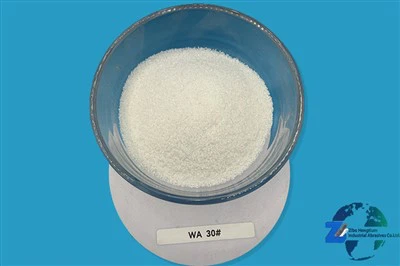
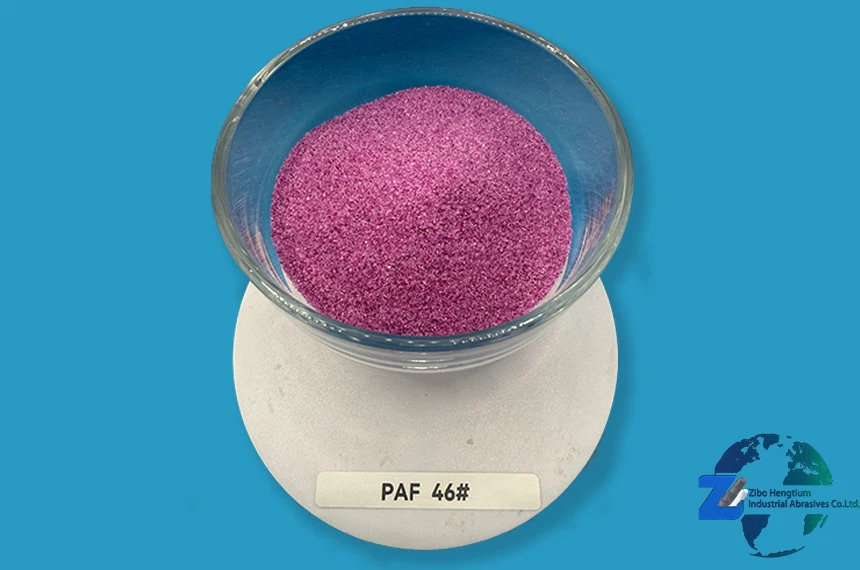
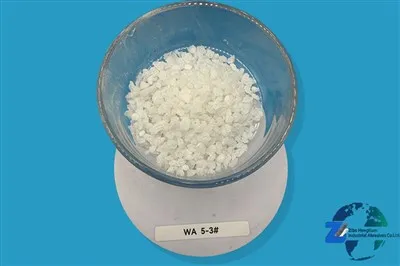
Chrome corundum is a high - quality abrasive material widely used in the grinding industry. As a well - established supplier of Chrome Corundum for Grindings, I'm delighted to share the detailed production process of this remarkable product.
Raw Material Selection
The production of Chrome Corundum for Grindings begins with the careful selection of raw materials. The primary raw material is alumina (Al₂O₃), which serves as the base for the corundum. High - purity alumina is preferred as it ensures the quality and performance of the final product. Usually, alumina with a purity of over 99% is used.


In addition to alumina, chromium oxide (Cr₂O₃) is another crucial raw material. Chromium oxide is added to the alumina to enhance the hardness, toughness, and cutting ability of the corundum. The amount of chromium oxide added can vary depending on the specific requirements of the end - product. Generally, the proportion of chromium oxide in the mixture ranges from 2% to 8%. The quality of these raw materials is of utmost importance as any impurities can significantly affect the properties of the Chrome Corundum for Grindings.
Mixing
Once the raw materials are selected, they are thoroughly mixed in a specific ratio. This mixing process is carried out in a large - scale mixer. The goal is to ensure a homogeneous distribution of chromium oxide within the alumina matrix. A uniform mixture is essential because it guarantees consistent properties throughout the final product.
During the mixing process, additives may also be introduced. These additives can improve the sintering process, enhance the mechanical properties of the corundum, or adjust its color. For example, some additives can help reduce the sintering temperature, which saves energy and production costs. The mixing time and speed are carefully controlled to achieve the best results. Usually, the mixing process takes several hours to ensure a well - blended mixture.
Forming
After the mixing process, the homogeneous mixture is ready for forming. There are several methods for forming Chrome Corundum for Grindings, and the most common ones include pressing and granulation.
Pressing
In the pressing method, the mixed powder is placed into a mold and subjected to high pressure. This pressure compresses the powder into a desired shape, such as a block or a cylinder. The pressure applied during pressing can range from several hundred to several thousand tons, depending on the size and density requirements of the product. Pressing helps to increase the density of the green body, which is beneficial for the subsequent sintering process.
Granulation
Granulation is another important forming method. In this process, the mixed powder is sprayed with a binder solution and then formed into small granules. These granules are more free - flowing and can be easily used in subsequent processing steps. The size of the granules can be controlled by adjusting the spraying parameters and the properties of the binder. Granulation is often used when the Chrome Corundum for Grindings needs to be used in applications where a more uniform particle size distribution is required, such as in some high - precision grinding operations.
Sintering
Sintering is a critical step in the production of Chrome Corundum for Grindings. The formed green body is placed in a high - temperature furnace for sintering. The sintering temperature usually ranges from 1800°C to 2200°C. At such high temperatures, the particles in the green body start to bond together, and the material undergoes a series of physical and chemical changes.
During sintering, the chromium oxide reacts with the alumina to form a solid solution. This solid - solution formation significantly improves the hardness and toughness of the corundum. The high - temperature environment also helps to remove any remaining impurities and pores in the material, resulting in a dense and strong structure. The sintering time can vary from several hours to several days, depending on the size and complexity of the product.
Crushing and Screening
After sintering, the large blocks or granules of Chrome Corundum are crushed into smaller particles. This crushing process is carried out using crushers, such as jaw crushers, cone crushers, or impact crushers. The goal is to obtain particles with the desired size range for grinding applications.
Once the crushing is completed, the particles are screened. Screening is used to separate the particles into different size fractions. This is important because different grinding applications require Chrome Corundum with specific particle sizes. For example, fine - grinding applications may require particles in the range of a few micrometers, while coarse - grinding applications may use particles in the millimeter range. The screening process is usually carried out using vibrating screens or air classifiers.
Quality Control
Throughout the production process, strict quality control measures are implemented. Quality control starts from the raw material inspection and continues until the final product is ready for shipment.
Chemical Analysis
Chemical analysis is used to ensure that the Chrome Corundum for Grindings has the correct chemical composition. This includes analyzing the content of alumina, chromium oxide, and other additives. Various analytical techniques, such as X - ray fluorescence (XRF) and inductively coupled plasma mass spectrometry (ICP - MS), are used for this purpose.
Physical Property Testing
Physical property testing is also an important part of quality control. This includes testing the hardness, density, and particle size distribution of the Chrome Corundum. Hardness testing can be carried out using methods such as the Vickers hardness test or the Rockwell hardness test. Density measurement is used to ensure that the product has the correct density, which is related to its strength and performance. Particle size distribution analysis is crucial to ensure that the product meets the requirements of different grinding applications.
Applications
Chrome Corundum for Grindings has a wide range of applications. It is commonly used in the grinding of metals, such as steel, stainless steel, and non - ferrous metals. Its high hardness and cutting ability make it suitable for high - precision grinding operations, such as the grinding of machine parts, tools, and molds.
In addition to metal grinding, Chrome Corundum for Grindings can also be used in other industries. For example, it can be used in the Chrome Corundum for Polishing industry to achieve a smooth and shiny surface finish. It is also used in the Chrome Corundum for Coating industry to improve the wear resistance and hardness of coatings.
Conclusion
As a supplier of Chrome Corundum for Grindings, I understand the importance of producing high - quality products. The production process of Chrome Corundum for Grindings involves multiple steps, from raw material selection to quality control. Each step is carefully designed and executed to ensure that the final product meets the highest standards.
If you are in the market for Chrome Corundum for Grindings, we are here to provide you with the best - quality products. Our years of experience in the industry and strict quality control measures guarantee that you will get a product that meets your specific requirements. Whether you need Chrome Corundum for large - scale industrial grinding or for high - precision applications, we can offer you the right solution. Please feel free to contact us for more information and to discuss your procurement needs.
References
- "Ceramics Science and Technology" by R. Metselaar
- "Abrasive Technology Handbook" by R. L. Jackson
- Research papers on Chrome Corundum production from industry - related journals.