

Adjusting the rotation speed of a guideway grinding wheel is a crucial aspect in the field of grinding operations. As a supplier of Guideway Grinding Wheels, I have witnessed firsthand the significance of proper speed adjustment in achieving optimal grinding results. In this blog, I will share some insights on how to adjust the rotation speed of a guideway grinding wheel effectively.
Understanding the Basics of Guideway Grinding Wheel Rotation Speed
The rotation speed of a guideway grinding wheel is measured in revolutions per minute (RPM). This speed directly affects the grinding process, including the quality of the surface finish, the material removal rate, and the overall efficiency of the operation. A higher rotation speed generally leads to a faster material removal rate but may also result in a rougher surface finish. On the other hand, a lower rotation speed can produce a smoother surface finish but at a slower material removal rate.
Factors Affecting the Rotation Speed
Several factors need to be considered when determining the appropriate rotation speed for a guideway grinding wheel:
1. Wheel Diameter
The diameter of the grinding wheel plays a significant role in determining the rotation speed. According to the formula (v = \pi Dn), where (v) is the peripheral speed of the wheel, (D) is the wheel diameter, and (n) is the rotation speed in RPM. For a given peripheral speed, a larger wheel diameter requires a lower rotation speed, and vice versa.
2. Material Being Ground
Different materials have different hardness and abrasion resistance. Softer materials may require a lower rotation speed to prevent excessive heat generation and surface damage. In contrast, harder materials can withstand higher rotation speeds for more efficient material removal.
3. Grinding Machine Capabilities
The grinding machine's motor power and spindle design limit the maximum rotation speed it can achieve. It is essential to ensure that the selected rotation speed is within the machine's capabilities to avoid damage to the machine or the grinding wheel.
Steps to Adjust the Rotation Speed
Here are the general steps to adjust the rotation speed of a guideway grinding wheel:
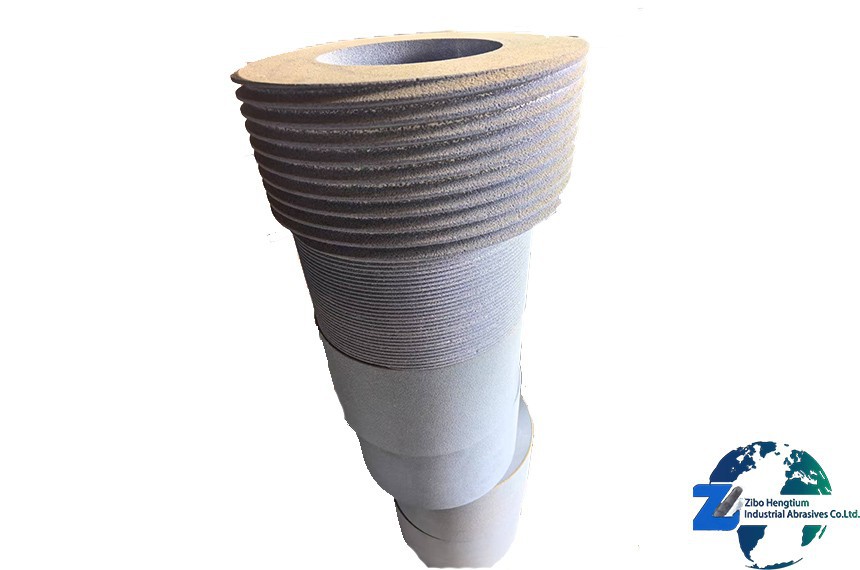

1. Determine the Required Peripheral Speed
The peripheral speed of the grinding wheel is a critical parameter that depends on the material being ground and the type of grinding operation. For example, for general-purpose grinding of steel, a peripheral speed of 35 - 40 m/s is commonly used. You can refer to grinding handbooks or consult with the grinding wheel manufacturer to determine the appropriate peripheral speed for your specific application.
2. Calculate the Required Rotation Speed
Once you have determined the required peripheral speed, you can calculate the required rotation speed using the formula (n=\frac{v}{\pi D}), where (v) is the peripheral speed in m/s, (D) is the wheel diameter in meters, and (n) is the rotation speed in RPM.
3. Adjust the Grinding Machine
Most modern grinding machines are equipped with speed control mechanisms. You can adjust the rotation speed by using the machine's control panel or by changing the pulley ratios if the machine has a belt - driven system. Make sure to follow the machine's operating manual when making adjustments.
4. Test and Optimize
After adjusting the rotation speed, it is important to conduct a test grinding operation. Check the surface finish, material removal rate, and the overall performance of the grinding process. If necessary, make further adjustments to the rotation speed to achieve the desired results.
Importance of Proper Rotation Speed Adjustment
Proper rotation speed adjustment offers several benefits:
1. Improved Surface Finish
By selecting the appropriate rotation speed, you can achieve a smoother surface finish on the workpiece. This is particularly important in applications where high - precision and a fine surface finish are required, such as in the manufacturing of precision guideways.
2. Increased Material Removal Rate
A well - adjusted rotation speed can also increase the material removal rate, which improves the productivity of the grinding operation. This is especially beneficial in mass production environments where time is of the essence.
3. Extended Wheel Life
Operating the grinding wheel at the correct rotation speed can reduce wear and tear on the wheel, extending its service life. This not only saves costs but also reduces the frequency of wheel replacements.
Other Related Grinding Wheels
In addition to Guideway Grinding Wheels, we also offer Worm Grinding Wheel and High - Precision Gear Grinding Wheel. These wheels are designed for specific applications and can provide excellent performance in their respective fields.
Conclusion
Adjusting the rotation speed of a guideway grinding wheel is a complex but essential process that requires careful consideration of various factors. By understanding the basics, following the proper steps, and optimizing the rotation speed, you can achieve better grinding results, improve productivity, and extend the life of your grinding wheels.
If you are interested in our Guideway Grinding Wheel or other grinding products, please feel free to contact us for more information and to discuss your specific requirements. We are committed to providing high - quality products and excellent customer service to meet your needs.
References
- "Grinding Technology: Theory and Applications of Machining with Abrasives" by Malkin, S.
- "Handbook of Machining with Grinding Wheels" by Klocke, F. and König, W.


