Selecting the appropriate brown corundum for abrasives grade is a crucial decision that can significantly impact the efficiency and quality of various tasks. As a trusted brown corundum for abrasives supplier, I understand the importance of this choice and am here to guide you through the process. In this blog, I'll share insights on how to make the right selection for different tasks.
Understanding Brown Corundum Basics
Brown corundum, also known as brown fused alumina, is a widely used abrasive material. It is produced by fusing high - purity bauxite in an electric arc furnace at high temperatures. The resulting product has excellent hardness, toughness, and wear - resistance properties, making it suitable for a variety of abrasive applications.
The key properties of brown corundum that affect its performance in abrasives include:
- Hardness: Measured on the Mohs scale, brown corundum has a hardness of around 9, which allows it to effectively cut and abrade various materials.
- Toughness: It can withstand high - pressure and high - speed applications without breaking down easily, ensuring long - lasting performance.
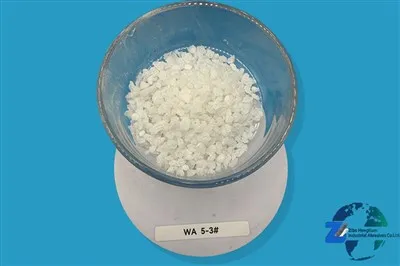
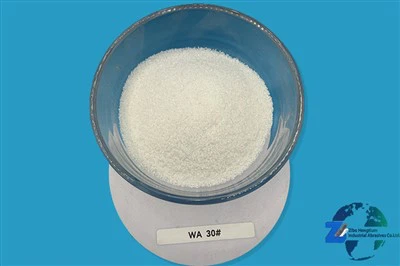
- Grain Size: Available in a wide range of grain sizes, from coarse to fine, which determines the cutting ability and surface finish of the abrasive.
Factors to Consider When Selecting Brown Corundum for Different Tasks
Material to be Abraded
The type of material you are working on is one of the most important factors in choosing the right brown corundum abrasive.
- Metals: For metalworking tasks such as grinding, polishing, and deburring, a medium - to - coarse grain size (e.g., 24 - 80 grit) is often preferred. Coarse grains are suitable for rapid material removal, while finer grains can be used for finishing operations to achieve a smooth surface. For example, when grinding steel, a 36 - 60 grit brown corundum abrasive can quickly remove excess material, and then a finer 120 - 220 grit can be used for a polished finish.
- Wood: When working with wood, a finer grain size (e.g., 100 - 220 grit) is usually better. This helps to avoid scratching the wood surface and provides a smooth finish. Brown corundum abrasives can be used for sanding, shaping, and finishing wooden furniture, cabinets, and other wood products.
- Ceramics and Glass: For Brown Corundum for Ceramics and Glass, a very fine grain size (e.g., 220 - 600 grit) is required. These materials are brittle, and using a fine - grained abrasive can prevent cracking and chipping. Brown corundum can be used for grinding, polishing, and edge - finishing of ceramic tiles, glassware, and optical lenses.
Application Method
The way you apply the abrasive also influences the choice of brown corundum.
- Coated Abrasives: Coated abrasives, such as sandpaper and abrasive belts, are widely used for hand - held and machine - operated sanding. For these applications, a uniform grain distribution and good adhesion of the grains to the backing material are essential. Different backing materials, such as paper, cloth, or film, can be selected based on the specific application. For example, cloth - backed coated abrasives are more flexible and suitable for contour sanding, while paper - backed ones are often used for flat surfaces.
- Bonded Abrasives: Bonded abrasives, like grinding wheels and cutting discs, are made by bonding brown corundum grains with a bonding agent. The type of bond (e.g., vitrified, resinoid, or rubber) and the bond strength need to be considered according to the application. Vitrified bonds are suitable for high - precision grinding, while resinoid bonds are more flexible and can be used for a wider range of applications, including cutting and rough grinding.
Desired Surface Finish
The final surface finish you want to achieve is another critical factor.
- Rough Surface Preparation: If the goal is to quickly remove a large amount of material and create a rough surface for further processing, a coarse - grained brown corundum abrasive is the way to go. For example, in metal foundries, coarse - grained grinding wheels are used to remove casting flash and scale from metal parts.
- Smooth Surface Finish: For applications where a smooth and polished surface is required, such as in the automotive and aerospace industries, a fine - grained brown corundum abrasive should be selected. Fine - grained abrasives can remove small scratches and imperfections, resulting in a high - quality surface finish.
Specific Applications and Recommended Brown Corundum Grades
General Grinding and Polishing
For general grinding and polishing tasks on a variety of materials, a medium - grain size brown corundum (e.g., 60 - 120 grit) is a good all - around choice. It can provide a balance between material removal rate and surface finish. This grade can be used for grinding metal parts, sanding wood, and polishing plastics.
Precision Grinding
In precision grinding applications, such as in the manufacturing of precision tools and components, a fine - grained brown corundum (e.g., 180 - 600 grit) is necessary. These fine grains can achieve high - precision dimensions and a smooth surface finish. For example, in the production of cutting tools, fine - grained brown corundum grinding wheels are used to sharpen the edges and ensure accurate cutting performance.
Water Jet Cutting
In water jet cutting applications, brown corundum is used as an abrasive additive to increase the cutting power of the water jet. A medium - to - coarse grain size (e.g., 80 - 120 grit) is typically used. The abrasive particles are mixed with high - pressure water, and the mixture is directed at the material to be cut. Brown corundum's hardness and toughness make it an ideal choice for this application, allowing for efficient cutting of a wide range of materials, including metals, ceramics, and composites.


Water Treatment
In water treatment applications, brown corundum can be used as a filter media. A specific grade of brown corundum with a uniform grain size and high purity is required. The grains act as a physical barrier, removing suspended solids and impurities from the water. The appropriate grain size depends on the specific water treatment requirements, but typically a medium - sized grain (e.g., 0.5 - 2 mm) is used.
Medical Industry
In the medical industry, brown corundum is used in the manufacturing of medical devices and implants. A very fine - grained and high - purity brown corundum is necessary to ensure the safety and quality of the products. For example, in the production of dental implants, fine - grained brown corundum abrasives are used for surface treatment to improve the biocompatibility of the implants.
Conclusion
Selecting the appropriate brown corundum for abrasives grade for different tasks requires a comprehensive understanding of the material to be abraded, the application method, and the desired surface finish. By considering these factors and choosing the right grain size, bond type, and other properties, you can ensure efficient and high - quality abrasive operations.
As a brown corundum for abrasives supplier, I am committed to providing high - quality products and professional advice to meet your specific needs. If you are looking for the right brown corundum abrasive for your tasks, please feel free to contact me for more information and to discuss your procurement requirements. We can work together to find the best solution for your applications.
References
- "Abrasive Materials and Their Applications" by John Smith, published by Abrasive Technology Press.
- "Handbook of Grinding Technology" edited by David Brown, available from Industrial Publishing.
- Technical data sheets provided by brown corundum manufacturers.