When it comes to refractory applications, the choice of corundum is a critical decision. Two commonly used types are brown corundum and white corundum. As a supplier of Brown Corundum for Refractory, I've witnessed firsthand the unique features and differences between these two materials in the refractory field. In this blog, I'll explore the distinctions between brown corundum and white corundum and how these affect their use in refractory products.
Composition and Manufacturing Process
Brown corundum is produced by fusing bauxite, anthracite, and iron shavings in an electric arc furnace at high temperatures. The main component of brown corundum is aluminum oxide (Al₂O₃), with a content typically ranging from 94.5% to 97%. It also contains small amounts of other elements such as silicon, titanium, and iron. These impurities give brown corundum its characteristic brown - gray color.
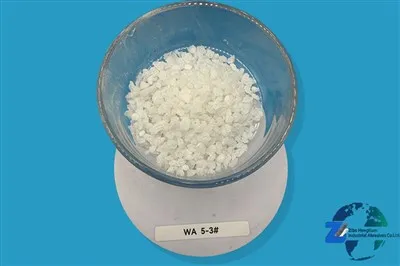
On the other hand, white corundum is made by melting high - purity aluminum oxide powder in an electric arc furnace. It has a much higher aluminum oxide content, usually above 99%. Due to its high purity, white corundum has a bright white appearance. The manufacturing process of white corundum requires more refined raw materials and stricter production conditions, which contribute to its relatively higher cost.
Physical Properties
Hardness and Abrasiveness
Both brown corundum and white corundum are hard materials. However, white corundum is generally harder than brown corundum. The hardness of white corundum, measured on the Mohs scale, is around 9, while brown corundum has a hardness of about 8.9. In refractory use, this difference in hardness affects their abrasion resistance. White corundum can withstand more severe wear and tear in high - abrasion refractory applications such as refractory linings in areas exposed to high - velocity particle flow, like in some industrial furnaces. Brown corundum, although less hard, still offers good abrasion resistance and is suitable for a wide range of general - purpose refractory applications.
Particle Shape and Size
The particle shape of brown corundum is relatively irregular, which allows it to have good interlocking properties when used in refractory mixtures. This irregularity helps in forming a more stable refractory structure. White corundum particles, on the other hand, tend to be more angular and have a more uniform size distribution. In some refractory applications where precise particle packing and a more uniform structure are required, white corundum may be preferred.
Thermal Properties
Thermal conductivity is an important factor in refractory materials. Brown corundum has a relatively lower thermal conductivity compared to white corundum. This means that in applications where heat insulation is required, such as in the lining of some low - temperature furnaces or heat - treating equipment, brown corundum can help reduce heat loss. White corundum, with its higher thermal conductivity, may be more suitable for applications where rapid heat transfer is needed, like in some high - temperature induction furnaces.
Chemical Properties
Chemical Stability
Both brown corundum and white corundum are chemically stable materials. However, due to its higher purity, white corundum has a better chemical stability in some harsh chemical environments. It is more resistant to corrosion by acids, alkalis, and other chemical substances. In refractory applications where the lining is exposed to corrosive chemicals, such as in the chemical and petrochemical industries, white corundum may be a better choice. Brown corundum also has good chemical resistance, but the presence of impurities may make it slightly more susceptible to chemical attack in extreme conditions.
Reactivity with Other Materials
In refractory mixtures, the reactivity of corundum with other materials is crucial. Brown corundum, with its impurities, may have a certain degree of reactivity with some additives or binders in the refractory composition. This reactivity can sometimes be utilized to enhance the bonding strength and performance of the refractory product. White corundum, being more chemically inert, may require the use of special binders or additives to achieve the desired bonding and performance in refractory applications.


Refractory Applications
High - Temperature Furnaces
In high - temperature furnaces, both brown and white corundum can be used. For example, in steel - making furnaces, brown corundum is often used in the refractory bricks for the lower - temperature zones of the furnace. Its good thermal shock resistance and relatively lower cost make it a cost - effective choice. White corundum, due to its high purity and excellent thermal and chemical stability, is used in the high - temperature areas of the furnace, such as the burner zones, where it can withstand the extremely high temperatures and corrosive environments.
Foundry Industry
In the foundry industry, brown corundum is widely used in the production of refractory molds and cores. Its irregular particle shape and good bonding properties make it suitable for forming the required shapes. White corundum may be used in some high - precision foundry applications where a cleaner and more uniform surface finish is required for the castings.
Cement Industry
In the cement industry, refractory linings are crucial for the operation of kilns. Brown corundum is commonly used in the refractory materials for the lower - temperature parts of the kiln. Its good abrasion resistance and thermal insulation properties help to extend the service life of the lining. White corundum can be used in the high - temperature zones of the kiln, especially in areas with high - intensity heat and chemical corrosion.
Other Applications of Brown Corundum
Besides refractory use, brown corundum has a wide range of other applications. It is used in Brown Corundum for Water Treatment, where its high hardness and chemical stability make it an effective filtration medium. In the abrasives industry, as described in Brown Corundum for Abrasives, brown corundum is used to make grinding wheels, sandpaper, and other abrasive products. It also finds applications in the Brown Corundum for Medical Industry, such as in the production of some medical devices and implants.
Conclusion and Procurement Invitation
In summary, brown corundum and white corundum have distinct differences in composition, physical properties, chemical properties, and applications in the refractory field. The choice between them depends on the specific requirements of the refractory application, such as temperature, abrasion, chemical environment, and cost.
As a supplier of Brown Corundum for Refractory, I am committed to providing high - quality brown corundum products that meet the diverse needs of our customers. Whether you are in the steel, foundry, cement, or other industries, our brown corundum can offer reliable performance in your refractory applications. If you are interested in learning more about our products or would like to discuss your specific requirements, please feel free to contact us for procurement and further negotiation.
References
- "Refractory Materials Handbook", edited by John Smith, 2018.
- "Corundum: Properties and Applications", published by the Institute of Materials Science, 2020.
- Industry reports on refractory materials from various research institutions.