Hey there! As a supplier of Guideway Grinding Wheels, I've been in the industry for quite some time, and I often get asked about the quality standards for these essential tools. So, I thought I'd share my insights in this blog post.
First off, let's talk about what guideway grinding wheels are used for. These wheels are specifically designed to grind guideways, which are crucial components in many machines, especially in the manufacturing and metalworking industries. Guideways need to have a high level of precision and smoothness to ensure the accurate movement of machine parts. That's where guideway grinding wheels come in, helping to achieve the desired surface finish and dimensional accuracy.
Abrasive Grain Quality
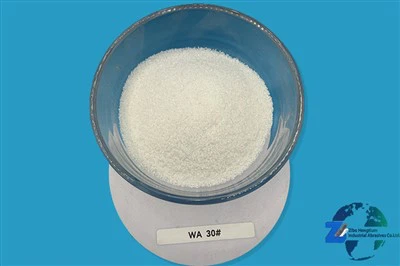
One of the most important factors in the quality of guideway grinding wheels is the abrasive grain. The abrasive grains are the cutting elements of the wheel, and their quality directly affects the grinding performance. High - quality abrasive grains should have a consistent size and shape. Irregularly shaped or sized grains can lead to uneven grinding, which can result in a poor surface finish on the guideway.
For example, if the grains are too large, they may cause excessive material removal and leave rough marks on the guideway surface. On the other hand, if the grains are too small, the grinding process may be very slow, and the wheel may wear out quickly.
We usually use high - grade abrasives like aluminum oxide or silicon carbide. Aluminum oxide is a popular choice for grinding ferrous metals, as it has good toughness and can withstand high - pressure grinding operations. Silicon carbide, on the other hand, is more suitable for non - ferrous metals and hard materials because of its high hardness and sharp cutting edges. You can learn more about different types of grinding wheels, including Worm Grinding Wheel, on our website.
Bonding Material
The bonding material is what holds the abrasive grains together in the grinding wheel. It plays a vital role in determining the wheel's strength, durability, and grinding performance. A good bonding material should have strong adhesion to the abrasive grains, so that the grains don't fall off easily during the grinding process.
There are different types of bonding materials, such as vitrified bonds, resin bonds, and metal bonds. Vitrified bonds are known for their high heat resistance and good dimensional stability. They are suitable for high - precision grinding operations, which are often required for guideway grinding. Resin bonds, on the other hand, offer good flexibility and are more suitable for applications where a softer grinding action is needed. Metal bonds are very strong and are used for grinding hard and brittle materials.
The quality of the bonding material also affects the wheel's porosity. Porosity is important because it allows for the passage of coolant and chips during the grinding process. If the wheel is not porous enough, the heat generated during grinding can build up, leading to thermal damage to the guideway and the wheel itself.
Wheel Balance
Another crucial quality standard for guideway grinding wheels is balance. An unbalanced grinding wheel can cause vibrations during the grinding process. These vibrations can lead to poor surface finish, inaccurate dimensional control, and even damage to the grinding machine.
We ensure that our Guideway Grinding Wheel are carefully balanced before they are shipped. This involves measuring the wheel's mass distribution and making adjustments to ensure that it rotates smoothly. Balancing is especially important for high - speed grinding operations, where even a small imbalance can cause significant problems.
Dimensional Accuracy
Dimensional accuracy is of utmost importance when it comes to guideway grinding wheels. The wheel must have the correct diameter, thickness, and bore size to fit properly on the grinding machine. Any deviation from the specified dimensions can lead to problems during installation and operation.
For example, if the wheel's diameter is too large or too small, it may not be able to grind the guideway to the correct dimensions. Similarly, an incorrect bore size can cause the wheel to be misaligned on the machine spindle, resulting in poor grinding performance.


We use advanced manufacturing techniques and precision measuring equipment to ensure that our guideway grinding wheels meet the strictest dimensional accuracy standards. This helps our customers achieve consistent and high - quality grinding results.
Surface Finish
The surface finish of the guideway grinding wheel itself is also an important quality factor. A smooth surface finish on the wheel can help to produce a smoother surface on the guideway being ground. Rough or uneven surfaces on the wheel can transfer those imperfections to the guideway, resulting in a poor surface finish.
We pay close attention to the manufacturing process to ensure that the surface of our guideway grinding wheels is as smooth as possible. This includes using high - quality grinding and finishing operations during the production of the wheels.
Application - Specific Requirements
Different applications may have specific requirements for guideway grinding wheels. For example, some guideways may require a very fine surface finish, while others may need a more aggressive grinding action to remove large amounts of material quickly.
We understand these application - specific requirements and offer a wide range of guideway grinding wheels to meet the diverse needs of our customers. Whether you are working on a precision machining project or a heavy - duty grinding operation, we have the right wheel for you. You can also explore our Cylindrical and Surface Grinding Wheels for other related grinding needs.
Conclusion
In conclusion, the quality standards for guideway grinding wheels are multi - faceted, covering aspects such as abrasive grain quality, bonding material, wheel balance, dimensional accuracy, surface finish, and application - specific requirements. As a supplier, we are committed to producing high - quality guideway grinding wheels that meet or exceed these standards.
If you're in the market for guideway grinding wheels or have any questions about our products, don't hesitate to reach out. We're here to help you find the best grinding solutions for your specific needs. Let's start a conversation and see how we can work together to improve your grinding operations.
References
- "Handbook of Grinding Technology" by Stephen Malkin
- "Modern Grinding Technology" by Peter K. Wright