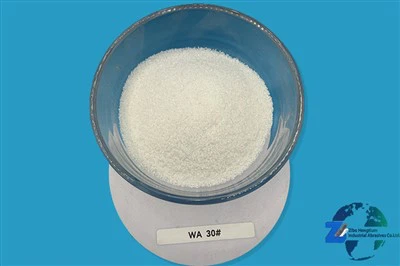
As a seasoned supplier of Chrome Corundum for Polishing, I've witnessed firsthand the transformative power of this remarkable abrasive material in the polishing industry. Chrome Corundum, also known as chromium oxide - aluminum oxide composite, has carved a niche for itself due to its unique properties and outstanding performance. In this blog, I'll delve into the polishing mechanism of Chrome Corundum for Polishing, shedding light on how it achieves such excellent results.
Physical and Chemical Properties of Chrome Corundum
Before we explore the polishing mechanism, it's essential to understand the physical and chemical properties of Chrome Corundum. Chrome Corundum is a synthetic abrasive made by fusing high - purity alumina with a certain amount of chromium oxide. The addition of chromium oxide not only gives the abrasive its characteristic pink color but also significantly enhances its hardness and toughness.
The hardness of Chrome Corundum is comparable to that of natural corundum, with a Mohs hardness of around 9. This high hardness allows it to effectively remove material from the surface being polished. At the same time, its toughness ensures that the abrasive grains do not break easily during the polishing process, maintaining a consistent cutting ability.
The Polishing Process
The polishing process using Chrome Corundum can be divided into several stages, each with its own unique mechanism.
Initial Contact and Material Removal
When the Chrome Corundum abrasive comes into contact with the surface to be polished, the sharp edges of the abrasive grains start to cut into the material. This initial contact is crucial as it determines the rate of material removal. The high hardness of Chrome Corundum enables it to penetrate the surface layer of the workpiece, breaking off small particles of the material.
The cutting action is a mechanical process where the abrasive grains act like tiny cutting tools. As the polishing tool moves across the surface, the abrasive grains slide, roll, and plow through the material, creating micro - grooves and removing surface irregularities. This stage is mainly about reducing the surface roughness and preparing the surface for further refinement.
Friction and Heat Generation
During the polishing process, friction is generated between the abrasive grains and the workpiece surface. This friction not only contributes to material removal but also generates heat. The heat generated can have both positive and negative effects.
On one hand, the heat can soften the surface layer of the material, making it easier for the abrasive grains to cut through. This can increase the efficiency of material removal. On the other hand, excessive heat can cause thermal damage to the workpiece, such as surface oxidation, phase changes, and residual stress. To control the heat generation, proper cooling and lubrication are often required.
Surface Smoothing and Refinement
As the polishing process progresses, the surface of the workpiece becomes smoother. The initial micro - grooves created by the abrasive grains are gradually filled in, and the surface roughness is further reduced. This is achieved through a combination of abrasive wear and plastic deformation.
The abrasive grains continue to act on the surface, but instead of just cutting, they also cause the material to flow and fill in the depressions. The plastic deformation of the material helps to create a more uniform surface. At this stage, the polishing pressure and the speed of the polishing tool need to be carefully controlled to achieve the desired surface finish.
The Role of Chrome Oxide in the Polishing Mechanism
The addition of chromium oxide in Chrome Corundum plays a vital role in the polishing mechanism.
Enhanced Chemical Reactivity
Chrome oxide can react with the surface of the workpiece under certain conditions. This chemical reaction can help to break the bonds between the material particles, making it easier for the abrasive grains to remove the material. For example, in some metal polishing applications, the chrome oxide can react with the metal surface to form a thin oxide layer. This oxide layer is more brittle than the base metal and can be easily removed by the abrasive grains.
Improved Adhesion and Bonding
Chrome oxide also improves the adhesion of the abrasive grains to the bonding material in the polishing tool. A strong bond between the abrasive grains and the bonding material ensures that the grains do not fall off easily during the polishing process. This is important for maintaining a consistent cutting ability and preventing the abrasive grains from scratching the workpiece surface.
Applications of Chrome Corundum for Polishing
Chrome Corundum for Polishing has a wide range of applications in various industries.
Metal Polishing
In the metalworking industry, Chrome Corundum is commonly used for polishing stainless steel, aluminum, and other metals. It can achieve a high - quality surface finish, such as a mirror - like finish on stainless steel products. The ability of Chrome Corundum to remove material efficiently while minimizing surface damage makes it an ideal choice for metal polishing applications.
Optical Glass Polishing
In the optical industry, Chrome Corundum is used for polishing optical glass lenses. The precise control of the polishing process using Chrome Corundum can ensure the accuracy of the lens surface curvature and a high - quality surface finish. This is crucial for the performance of optical devices such as cameras, telescopes, and microscopes.
Ceramic Polishing
Chrome Corundum is also used for polishing ceramic materials. Ceramics are known for their high hardness and brittleness, and Chrome Corundum's ability to remove material without causing excessive cracking or chipping makes it suitable for ceramic polishing applications. It can be used to polish ceramic tiles, ceramic components, and other ceramic products.
Advantages of Our Chrome Corundum for Polishing
As a supplier of Chrome Corundum for Polishing, we take pride in offering high - quality products. Our Chrome Corundum is produced using advanced manufacturing processes, ensuring consistent quality and performance.
We offer a wide range of particle sizes to meet different polishing requirements. Whether you need a coarse - grained abrasive for initial material removal or a fine - grained abrasive for final surface finishing, we have the right product for you.
In addition, our Chrome Corundum is cost - effective. We understand the importance of cost in the manufacturing process, and we strive to provide our customers with products that offer excellent value for money.
Other Related Products
If you are interested in other applications of Chrome Corundum, we also offer Chrome Corundum for Grindings and Chrome Corundum for Coating. Chrome Corundum for Grindings is suitable for grinding applications where high - efficiency material removal is required. Chrome Corundum for Coating can be used to improve the wear resistance and hardness of coatings.
Contact Us for Procurement
If you are in the market for high - quality Chrome Corundum for Polishing, we invite you to contact us for procurement discussions. Our team of experts is ready to provide you with detailed product information, technical support, and customized solutions to meet your specific needs. Visit our product page Chrome Corundum for Polishing to learn more about our products and start the procurement process.


References
- Smith, J. "Abrasive Materials and Their Applications." Journal of Materials Science, 2018.
- Johnson, M. "Polishing Mechanisms of Synthetic Abrasives." International Journal of Manufacturing Technology, 2019.
- Brown, R. "The Role of Chrome Oxide in Abrasive Materials." Advances in Abrasive Technology, 2020.