

When purchasing Brown Corundum, industrial buyers are usually not looking for a material simply because it is hard or abrasive.
The real question is whether the material can deliver stable performance in a specific production process while keeping abrasive consumption, production downtime, and purchasing costs under control.
Brown Corundum, also known as Brown Fused Alumina, is widely used in bonded abrasives, coated abrasives, sandblasting, grinding, refractory materials, ceramics, surface treatment, and wear-resistant applications. Its combination of hardness, toughness, thermal resistance, and relatively stable cost makes it a practical material for many industrial processes.
For B2B buyers, however, choosing the right Brown Corundum requires more than comparing product names and prices.
This guide explains what to consider before purchasing and how to evaluate a Brown Corundum supplier for long-term industrial supply.

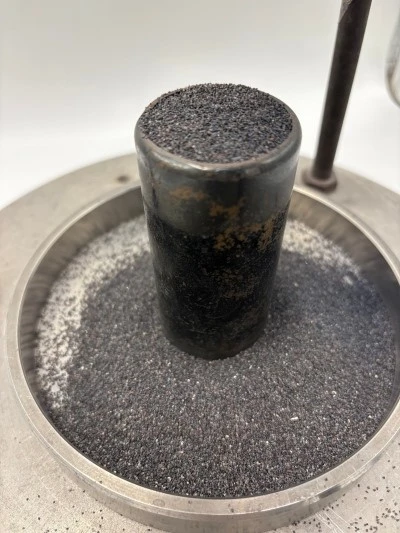
What Is Brown Corundum?
Brown Corundum is a synthetic abrasive and refractory material produced by melting bauxite-based raw materials in an electric arc furnace at high temperature.
After smelting, the fused material is cooled, crushed, screened, and processed into different grain sizes or powder grades.
The resulting material has several properties that make it useful for industrial applications:
High hardness
Good toughness
Good wear resistance
High-temperature resistance
Corrosion resistance
Stable abrasive performance
Wide range of available grain sizes
Hengtium produces Brown Corundum from abrasive-grade bauxite and uses electric arc furnace smelting as part of its production process. The company supplies different grades for abrasive and refractory applications.
Why Do Industrial Buyers Choose Brown Corundum?
For many applications, buyers need a material that can withstand mechanical stress without breaking down too quickly.
This is where Brown Corundum has an advantage.
Its combination of hardness and toughness makes it suitable for processing common steels, cast iron, hard metals, and other demanding materials. It is also used as a raw material in high-temperature refractory products.
From a purchasing perspective, this creates several practical benefits:
Good Cutting and Grinding Performance
Angular abrasive grains can provide effective cutting action during grinding and surface treatment.
Strong Wear Resistance
The material can withstand mechanical impact and friction during abrasive operations.
Suitable for High-Temperature Applications
Brown Corundum is also used in refractory systems where resistance to high temperature and mechanical wear is required.
Flexible Grain Selection
Different grit and grain sizes allow buyers to match the abrasive to different production processes.
Brown Corundum Is Not One-Grade-Fits-All
One of the most common purchasing mistakes is treating all Brown Corundum as the same product.
Abrasive-grade and refractory-grade materials may have different requirements.
Even within abrasive applications, buyers may need different:
Al₂O₃ levels
Impurity limits
Grain sizes
Particle distributions
Grain shapes
Physical properties
Packaging formats
Therefore, before requesting a Brown Corundum Price, define the application first.
The supplier can then recommend the appropriate grade instead of simply quoting a generic material.
How to Choose Brown Corundum for Different Industries?
1. Brown Corundum for Grinding Wheels
Grinding wheel manufacturers typically need abrasive grains with consistent size distribution, suitable hardness, and reliable toughness.
Brown Corundum is used in both bonded abrasive systems and grinding tools for processing steels and other metals.
When buying for grinding wheels, pay attention to:
Grit size
Grain shape
Toughness
Chemical composition
Particle distribution
Batch consistency
For high-volume production, consistency between batches can be just as important as the initial material price.
2. Brown Corundum for Cutting Discs
Resin-bonded cutting discs require abrasive grains that can withstand impact while maintaining effective cutting edges.
A suitable Brown Corundum grade can provide a balance between:
Cutting ability + toughness + abrasive life
The appropriate grit depends on the disc formulation and workpiece.
Hengtium offers Brown Fused Alumina grades for cutting disc production and also supplies a dedicated 36 grit product for resin-bonded cutting disc applications.
3. Brown Corundum for Sandblasting
Brown Corundum Abrasive is also widely used for surface preparation.
Typical applications include:
Rust removal
Scale removal
Old paint removal
Surface roughening
Deburring
General surface preparation
The main purchasing decision here is usually grit size.
A coarse grain can provide stronger material removal, while finer grades can provide more controlled surface treatment.
Do not select the grain only according to another company's specification. Your blasting pressure, nozzle size, workpiece material, and required surface profile all matter.
4. Brown Corundum for Refractory Materials
Brown Corundum is also an important raw material for refractory products.
It can be used in:
Refractory bricks
Castables
Ramming mixes
Furnace linings
Ladle-related refractory products
Nozzles
Slide gates
Wear-resistant refractory components
The reason is its combination of high hardness, thermal stability, mechanical strength, and resistance to wear and corrosion.
Hengtium specifically supplies Brown Corundum grades for refractory applications and states that the material is used in refractory products including castables, refractory bricks, ramming mixes, nozzles, ladles, and furnace linings.
For refractory manufacturers, chemical composition and grain distribution should be evaluated together with the final formulation.
Which Brown Corundum Specifications Should Buyers Check?
Before purchasing, ask the supplier for a complete specification rather than only a product name.
Important parameters include:
| Parameter | Why It Matters |
|---|---|
| Al₂O₃ | Indicates alumina content and influences material performance |
| Fe₂O₃ | Important when impurity control is required |
| SiO₂ | Relevant to chemical composition requirements |
| TiO₂ | Part of the typical composition of brown fused alumina |
| Grit Size | Determines abrasive particle size |
| Grain Distribution | Influences production consistency |
| Bulk Density | Important for material handling and formulation |
| True Density | Useful for formulation and technical comparison |
| Hardness | Relates to abrasive performance |
| Toughness | Influences grain durability |
| Packaging | Affects storage, handling, and shipping |
Hengtium's Brown Fused Aluminum Oxide products are offered in multiple grain sizes and are produced with controlled processing from bauxite through smelting and grading.
How Much Does Brown Corundum Cost?
There is no single Brown Corundum Price that applies to every industrial order.
The final quotation can depend on:
Raw Material
Bauxite quality and availability affect production costs.
Chemical Specification
Tighter requirements for Al₂O₃ and impurity levels may increase production and sorting requirements.
Grain Size
Different grit sizes require different crushing, screening, and grading processes.
Processing
Additional shaping, magnetic separation, screening, or customized processing can influence the final cost.
Order Quantity
A small trial order and a full-container order have very different logistics and production costs per ton.
Packaging
25 kg bags, palletized bags, and 1,000 kg big bags can result in different total costs.
Delivery Terms
EXW, FOB, CIF, CFR, and other terms should not be compared as if they were the same quotation.
For this reason, B2B buyers should compare landed cost and product specification, not simply the price per metric ton.
How to Evaluate a Brown Corundum Supplier?
If you purchase Brown Corundum regularly, supplier selection deserves as much attention as product selection.
A reliable supplier should be able to answer practical questions such as:
Where does the raw material come from?
What is the smelting process?
How is the grain size controlled?
Can the supplier provide a COA?
Can the specification be customized?
Can the same grade be supplied consistently for repeat orders?
What packaging options are available?
What is the normal production lead time?
Can samples be supplied before a bulk order?
These questions help separate a manufacturer with production capability from a supplier that simply resells a standard product.
Brown Corundum Manufacturer vs. Trading Supplier
For occasional purchases, working with a trading company may be sufficient.
For regular industrial consumption, however, direct communication with a Brown Corundum Manufacturer can provide several practical advantages.
Direct Technical Communication
You can communicate your application and specification directly with the production team.
Better Specification Control
The manufacturer can discuss grain size, chemical requirements, packaging, and customization.
More Stable Repeat Orders
For manufacturers consuming abrasive materials continuously, maintaining consistent specifications is important.
Better Bulk Purchasing Communication
Large orders can be discussed according to actual production and shipping requirements.
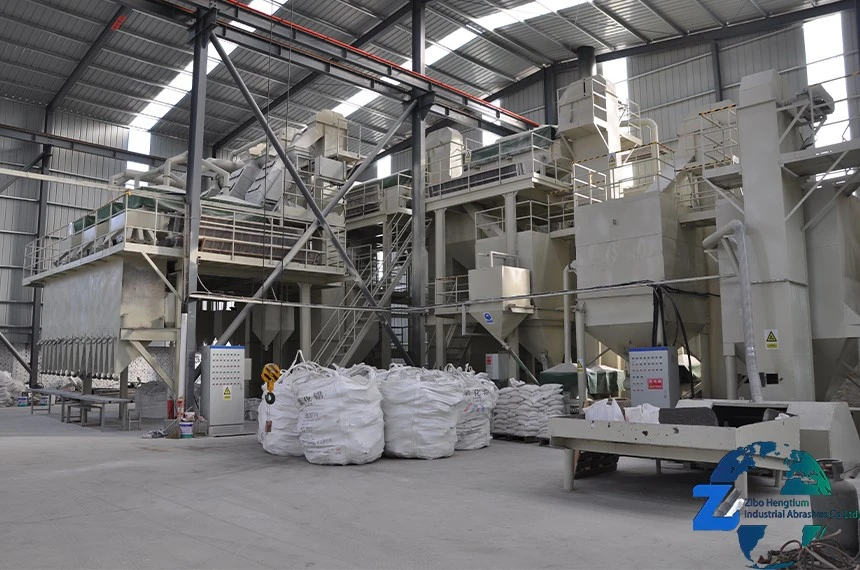
Hengtium identifies itself as a manufacturer of abrasives with production, sales, and inspection capabilities and supplies customized Brown Corundum products for industrial buyers.
Why Industrial Buyers Choose Hengtium
Hengtium focuses on industrial abrasive materials rather than treating Brown Corundum as a generic commodity.
The company has been involved in abrasive production for many years and supplies Brown Corundum for multiple industrial applications, including abrasive tools, sandblasting, grinding, refractory materials, ceramics, and wear-resistant applications.
For B2B customers, Hengtium provides several purchasing options:
Standard Brown Corundum grades
Different grit sizes
Customized specifications
Bulk packaging
Sample orders
Application-based product selection
Factory-direct communication
The company also states that customers can request customized products according to their requirements.
What Should You Send Hengtium Before Asking for a Quotation?
You don't need to prepare a complicated technical document.
For a faster quotation, simply provide:
| Information | Example |
|---|---|
| Product | Brown Corundum |
| Application | Grinding / Sandblasting / Refractory |
| Grit Size | 24 / 36 / 46 / 60 Mesh |
| Quantity | 5 MT / 20 MT |
| Al₂O₃ Requirement | ≥95% |
| Impurity Requirement | Your Current Specification |
| Packaging | 25 kg Bags / Big Bag |
| Destination | Port or Country |
| Sample | Required / Not Required |
If you already purchase Brown Corundum from another supplier, sending the existing COA or specification sheet can make the process much faster.
Instead of asking:
"What is your Brown Corundum price?"
you can ask:
"We currently use 36 grit Brown Corundum with the following specification. Can Hengtium supply an equivalent grade and quote for 20 MT?"
This gives the manufacturer enough information to respond with a more useful offer.
Brown Corundum Buying Checklist
Before placing a bulk order, check these points:
Correct application grade
Suitable grit size
Chemical composition confirmed
Particle distribution confirmed
Hardness and toughness suitable for the process
Sample tested
COA available
Packaging confirmed
MOQ confirmed
Lead time confirmed
Shipping term confirmed
Repeat-order consistency discussed
This simple checklist can prevent one of the most common B2B purchasing problems: selecting a product based only on the lowest quotation.
FAQ
Is Brown Corundum the same as Brown Fused Alumina?
Yes. Brown Corundum is commonly used as another name for Brown Fused Alumina or Brown Fused Aluminum Oxide.
What is Brown Corundum mainly used for?
It is used in grinding wheels, cutting discs, sandblasting, coated abrasives, surface preparation, refractory materials, ceramics, and wear-resistant applications.
How do I choose the right Brown Corundum grit?
Start with the application and required surface effect. Coarse grains are generally suitable for more aggressive material removal, while finer grades provide more controlled processing.
What should I compare when buying Brown Corundum?
Compare chemical composition, grit size, particle distribution, hardness, toughness, processing method, packaging, order quantity, and delivered cost.
Can Brown Corundum be customized?
Yes. Hengtium states that it can provide customized Brown Corundum according to customer requirements.
How can I get a Brown Corundum quotation from Hengtium?
Send the required application, grit size, quantity, chemical specification, packaging requirement, and destination. Hengtium can then evaluate the suitable grade and provide a quotation.

Final Thoughts
For industrial buyers, Brown Corundum is not simply an abrasive grain purchased by the ton.
The right material needs to match the actual production process.
For grinding wheels, focus on grain performance and consistency.
For sandblasting, focus on grit size, surface effect, and abrasive consumption.
For refractory products, focus more heavily on chemical composition, grain distribution, thermal stability, and application requirements.
And when comparing suppliers, look beyond the first Brown Corundum Price you receive.
A supplier that can provide consistent quality, suitable grades, customized specifications, reliable production, and direct technical communication can be much more valuable for long-term industrial purchasing.
Hengtium provides Brown Corundum for abrasive and refractory applications and supports standard as well as customized requirements. If you already have a specification or COA, sending it to Hengtium is a practical starting point for getting the right grade and a factory quotation.


