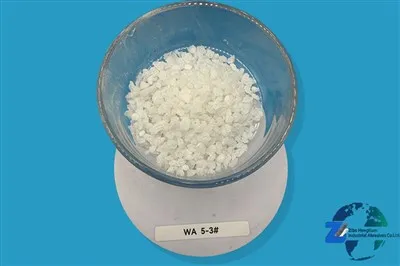
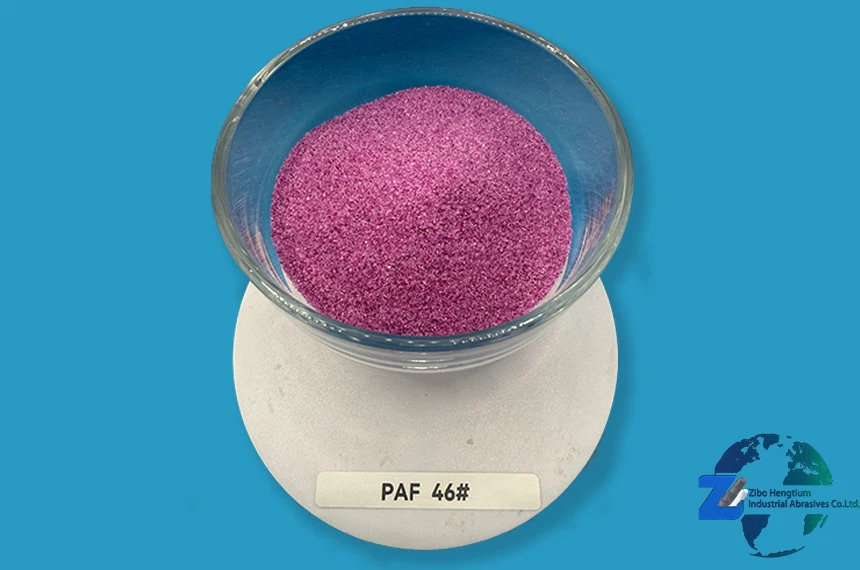
Brown corundum, a widely used material in various industrial applications, has found its way into water treatment processes. As a supplier of Brown Corundum for Water Treatment, I've been closely observing its performance and potential impacts. One question that often arises is whether brown corundum affects the dissolved oxygen level in water treatment. In this blog, we'll delve into this topic, exploring the science behind it and its practical implications.
Understanding Brown Corundum
Brown corundum, also known as Brown Fused Alumina Sandblasting, is an artificial abrasive made from bauxite, anthracite, and iron filings through a high - temperature smelting process in an electric arc furnace. It is characterized by high hardness, good toughness, and chemical stability. These properties make it suitable for a range of applications, including water treatment.
In water treatment, brown corundum is commonly used as a filter media. Its porous structure allows it to trap impurities, suspended solids, and even some microorganisms in the water. The filtration process helps to improve water clarity and quality, making it an essential component in many water treatment systems.
Dissolved Oxygen in Water Treatment
Dissolved oxygen (DO) is a crucial parameter in water treatment. It plays a vital role in maintaining the health of aquatic ecosystems, as well as in the effectiveness of many water treatment processes. Adequate levels of dissolved oxygen are necessary for the survival of fish and other aquatic organisms. In addition, DO is involved in oxidation reactions that help to break down organic matter and remove contaminants from the water.
The level of dissolved oxygen in water can be affected by various factors, such as temperature, pressure, the presence of organic and inorganic substances, and the type of treatment processes used. For example, aeration is a common method used to increase the dissolved oxygen level in water, while the decomposition of organic matter by bacteria can consume dissolved oxygen.
The Interaction between Brown Corundum and Dissolved Oxygen
When it comes to the impact of brown corundum on dissolved oxygen in water treatment, there are several aspects to consider.
Physical Filtration and DO
During the physical filtration process using brown corundum, the media traps suspended solids and particles in the water. This can have an indirect effect on the dissolved oxygen level. If the suspended solids contain a large amount of organic matter, their removal by brown corundum can reduce the demand for dissolved oxygen in the water. As the organic matter is no longer present in the water column, the bacteria that would have decomposed it no longer consume oxygen, potentially leading to an increase in the dissolved oxygen level.
On the other hand, the filtration process itself may not directly consume or produce dissolved oxygen. Brown corundum acts as a passive filter media, and its physical structure does not actively participate in oxygen - related chemical reactions.
Chemical Properties and DO
Grade 2 brown fused alumina is chemically stable. It does not react with water under normal conditions to release or consume oxygen. However, in some cases, if the brown corundum contains trace amounts of impurities or reactive substances, there could be a minor impact on the dissolved oxygen level. For example, if there are small amounts of iron compounds in the brown corundum, they may undergo oxidation reactions in the water, which could consume a small amount of dissolved oxygen. But in high - quality brown corundum used for water treatment, these impurities are usually kept at a very low level, so the impact on dissolved oxygen is negligible.


Biological Activity and DO
Brown corundum can also influence the biological activity in the water treatment system. As it traps microorganisms and provides a surface for biofilm formation, the biofilm can contain various bacteria and other microorganisms. These microorganisms can carry out aerobic and anaerobic processes. Aerobic bacteria require dissolved oxygen to break down organic matter, which can lead to a decrease in the dissolved oxygen level in the water. However, the overall effect depends on the balance between the amount of organic matter available and the activity of the aerobic bacteria. If the water has a low organic load, the impact on dissolved oxygen due to biological activity on the brown corundum may be minimal.
Practical Observations in Water Treatment Systems
In real - world water treatment systems, the impact of brown corundum on dissolved oxygen is often complex and context - dependent. In some small - scale laboratory tests, it has been observed that when brown corundum is used as a filter media in a well - designed water treatment system with a relatively low organic load, there is little to no significant change in the dissolved oxygen level. The filtration process mainly focuses on removing physical impurities, and the chemical and biological effects on dissolved oxygen are within an acceptable range.
In larger - scale industrial water treatment plants, the situation can be more complicated. For example, in a water treatment plant that treats water with a high organic content, the presence of brown corundum may initially cause a slight decrease in dissolved oxygen due to the growth of aerobic bacteria on the media. But as the filtration process continues and the organic matter is gradually removed, the dissolved oxygen level may stabilize or even increase over time.
Conclusion
In conclusion, brown corundum generally has a limited direct impact on the dissolved oxygen level in water treatment. Its main function is to improve water quality through physical filtration, and any effects on dissolved oxygen are usually indirect and related to factors such as the removal of organic matter and the biological activity on the media.
As a supplier of Brown Corundum Refractory for Water Treatment, we are committed to providing high - quality brown corundum products that meet the strict requirements of water treatment applications. Our brown corundum is carefully processed to ensure low impurity levels and optimal filtration performance.
If you are interested in using brown corundum for your water treatment needs, or if you have any questions about its impact on dissolved oxygen or other aspects of water treatment, please feel free to contact us for further discussion and procurement negotiation. We are here to offer you the best solutions and support for your water treatment projects.
References
- Sawyer, C. N., McCarty, P. L., & Parkin, G. F. (1994). Chemistry for environmental engineering and science. McGraw - Hill.
- Metcalf & Eddy, Inc. (2003). Wastewater engineering: treatment and reuse. McGraw - Hill.
- USEPA. (2000). Guidance for ambient water quality criteria for dissolved oxygen. U.S. Environmental Protection Agency.