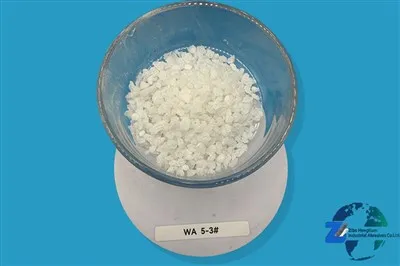
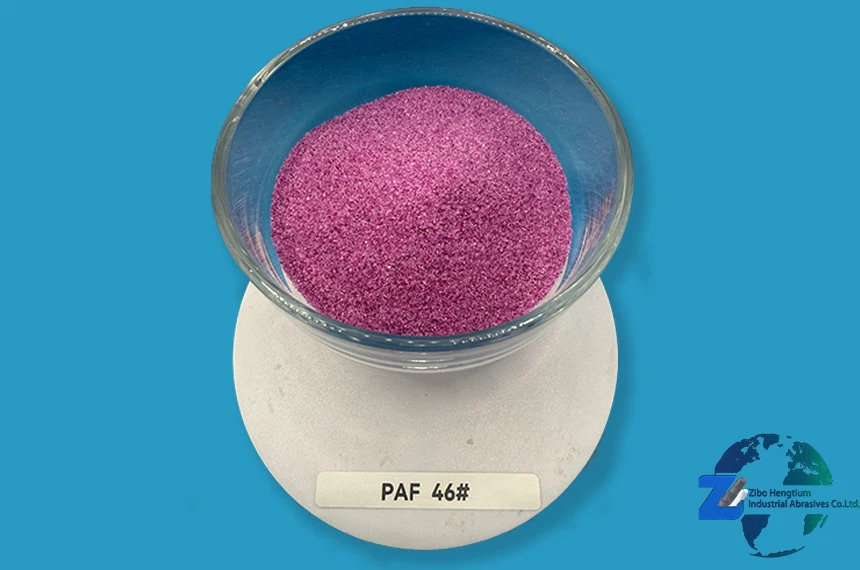
As a supplier of Brown Corundum for Water Treatment, I often encounter questions from customers regarding the potential issues associated with using brown corundum in water treatment equipment. One of the most frequently asked questions is whether brown corundum causes any scaling in water treatment equipment. In this blog post, I will delve into this topic, providing a scientific and detailed analysis to help you understand the relationship between brown corundum and scaling in water treatment systems.


Understanding Brown Corundum
Brown corundum, also known as Brown Fused Aluminum Oxide, is a widely used abrasive and refractory material. It is produced by fusing high - grade bauxite in an electric arc furnace at extremely high temperatures. The resulting product is a hard, durable, and chemically stable material with excellent abrasive properties.
In water treatment applications, brown corundum is often used as a filter media. Its high hardness and irregular shape make it an effective medium for removing suspended solids, sediment, and other impurities from water. The porous structure of brown corundum allows water to flow through while trapping contaminants on its surface and within its pores.
The Mechanism of Scaling in Water Treatment Equipment
Scaling in water treatment equipment is primarily caused by the precipitation of dissolved minerals in water. When water contains high concentrations of calcium, magnesium, and other metal ions, along with anions such as carbonate, sulfate, and phosphate, these ions can react under certain conditions to form insoluble salts. These salts then deposit on the surfaces of pipes, valves, heat exchangers, and other components of the water treatment system, leading to scaling.
The factors that influence scaling include water temperature, pH, pressure, and the concentration of dissolved minerals. For example, as water is heated, the solubility of calcium carbonate decreases, causing it to precipitate out of solution and form scale. Similarly, changes in pH can also affect the solubility of minerals, promoting scale formation.
Does Brown Corundum Cause Scaling?
The short answer is no, brown corundum itself does not cause scaling in water treatment equipment. Brown corundum is a chemically stable material composed mainly of aluminum oxide (Al₂O₃). It does not release any substances that would contribute to the formation of scale.
In fact, brown corundum can play a positive role in preventing scaling to some extent. As a filter media, it can remove suspended particles and colloids from water, which may act as nuclei for scale formation. By reducing the number of potential nucleation sites, brown corundum can help delay the onset of scaling.
However, it is important to note that the water quality entering the water treatment system can still lead to scaling, regardless of the use of brown corundum. If the incoming water has a high scaling potential, proper water pretreatment measures, such as softening, acidification, or the use of anti - scaling agents, should be implemented to prevent scale formation.
Benefits of Using Brown Corundum in Water Treatment
Apart from its potential role in preventing scaling, brown corundum offers several other benefits in water treatment applications:
- High Filtration Efficiency: Brown corundum has a large surface area and a porous structure, which allows it to effectively trap a wide range of contaminants, including fine particles, silt, and organic matter.
- Durability: Due to its high hardness and chemical stability, brown corundum can withstand the harsh conditions in water treatment systems, such as high flow rates and pressure differentials, without significant wear or degradation.
- Cost - Effectiveness: Brown corundum is relatively inexpensive compared to some other filter media, making it a cost - effective choice for large - scale water treatment projects.
- Versatility: It can be used in various types of water treatment systems, including sand filters, multimedia filters, and pressure filters.
Applications of Brown Corundum in Water Treatment
Brown corundum is used in a variety of water treatment applications, including:
- Drinking Water Treatment: It is used to remove turbidity, suspended solids, and other impurities from raw water, ensuring the safety and quality of drinking water.
- Industrial Water Treatment: In industrial settings, brown corundum can be used to treat process water, cooling water, and wastewater. It helps to protect industrial equipment from fouling and corrosion by removing contaminants.
- Swimming Pool Water Treatment: Brown corundum filters are commonly used in swimming pool water treatment systems to keep the water clear and free of debris.
Related Products and Their Applications
In addition to its use in water treatment, brown corundum has other important applications. For example, Brown Corundum Refractory is widely used in the refractory industry. It can withstand high temperatures and is used to line furnaces, kilns, and other high - temperature equipment.
BFA for Bonded Abrasives is another important application. Brown corundum is used as an abrasive in grinding wheels, sandpaper, and other abrasive products due to its excellent cutting ability and durability.
Conclusion
In conclusion, brown corundum does not cause scaling in water treatment equipment. Instead, it can be a valuable component in water treatment systems, offering high filtration efficiency, durability, and cost - effectiveness. However, to ensure the long - term performance of water treatment equipment, it is essential to address the root cause of scaling by implementing appropriate water pretreatment measures.
If you are interested in using brown corundum for your water treatment needs, or if you have any questions about our products, please feel free to contact us for more information and to discuss your specific requirements. We are committed to providing high - quality brown corundum products and excellent customer service to meet your water treatment challenges.
References
- ASTM International. Standard test methods for abrasives. ASTM Committee G05 on Wear and Erosion.
- Water Treatment Handbook. Various authors, McGraw - Hill Professional.
- Industrial Water Treatment Technology. Editors: W. Stumm and J. J. Morgan, Wiley - Interscience.