Hey there! As a supplier of brown corundum for abrasives, I often get asked how it stacks up against white corundum in terms of performance. Well, let's dive right in and break it down.
First off, let's talk about what these two types of corundum are. Both brown corundum and white corundum are forms of aluminum oxide, which are widely used in the abrasive industry. They're made by fusing bauxite or other aluminum - rich materials in an electric arc furnace, but the differences in their raw materials and manufacturing processes lead to distinct performance characteristics.
Hardness and Abrasiveness
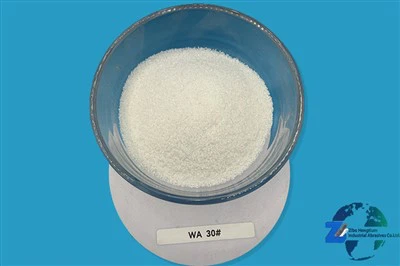
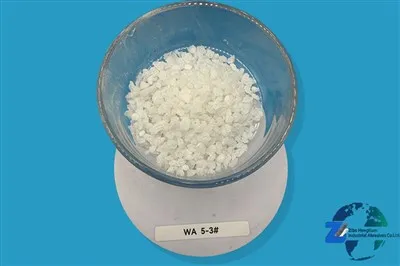
One of the key aspects when comparing abrasives is hardness. White corundum is known for its high purity and relatively higher hardness compared to brown corundum. It has a Mohs hardness of around 9, which makes it extremely effective at cutting through hard materials. It's great for precision grinding and finishing operations on materials like tool steels, high - speed steels, and alloys. The sharp edges of white corundum grains can quickly remove material, leaving a smooth surface finish.
On the other hand, brown corundum has a Mohs hardness of about 8.5. While it's not as hard as white corundum, it still packs a punch. Brown corundum is more versatile in terms of the materials it can handle. It's excellent for grinding ferrous metals, such as cast iron and carbon steel. The slightly lower hardness also means that the grains break down more easily during the grinding process, exposing new sharp edges. This self - sharpening characteristic allows brown corundum to maintain a consistent cutting performance over time.
Grain Structure and Shape
The grain structure and shape also play a big role in the performance of these abrasives. White corundum grains are typically more angular and have a more uniform shape. This uniformity makes them ideal for applications where a consistent and fine finish is required. For example, in the production of precision components for the aerospace or automotive industries, white corundum can ensure that the parts meet the strict dimensional and surface finish requirements.


Brown corundum grains, however, are more irregular in shape. This irregularity gives them better grip on the workpiece, which is beneficial for heavy - duty grinding operations. When you're dealing with large - scale metal fabrication or removing a significant amount of material quickly, the irregular grains of brown corundum can dig in and get the job done efficiently.
Cost - effectiveness
Cost is always a consideration in any manufacturing or industrial process. White corundum is generally more expensive than brown corundum. The higher cost is mainly due to the purer raw materials and more complex manufacturing process required to produce it. For applications where precision and a high - quality finish are essential, the extra cost of white corundum may be justified. But for many general - purpose grinding tasks, brown corundum offers a much more cost - effective solution. You can achieve good results at a lower price, which is a big plus for businesses looking to keep their production costs down.
Heat Resistance
Heat generation is a common issue in grinding operations. Excessive heat can damage the workpiece and reduce the lifespan of the abrasive. White corundum has better heat resistance than brown corundum. It can withstand higher temperatures without losing its cutting ability or deforming. This makes it suitable for high - speed grinding operations where a lot of heat is generated.
Brown corundum, while not as heat - resistant as white corundum, still performs well in most normal grinding applications. Its self - sharpening property helps to dissipate heat by constantly exposing new cutting edges. In many cases, proper cooling and lubrication can compensate for its relatively lower heat resistance, allowing it to be used effectively in a wide range of grinding processes.
Applications
White corundum is often used in applications that require high precision and a fine surface finish. Some common uses include:
- Precision grinding of cutting tools, such as drills and end mills.
- Finishing operations on high - value components in the electronics and medical industries.
- Polishing of optical lenses and other precision glass products.
Brown corundum, with its versatility and cost - effectiveness, has a broader range of applications. It's commonly used in:
- Heavy - duty grinding of metals in the automotive, shipbuilding, and construction industries.
- Surface preparation for welding and painting, where a rough finish is acceptable or even desirable.
- Grinding of non - ferrous metals, although its performance may not be as optimal as on ferrous metals.
Moreover, brown corundum has applications beyond just abrasives. You can check out more about its uses in other industries: Brown Corundum for Ceramics and Glass, Brown Corundum for Medical Industry, and Brown Corundum for Refractory.
Conclusion
In conclusion, both brown corundum and white corundum have their own strengths and weaknesses. White corundum shines in precision and high - end applications where hardness, heat resistance, and a fine finish are crucial. Brown corundum, on the other hand, offers versatility, cost - effectiveness, and good performance in a wide range of grinding tasks.
If you're in the market for abrasives and are not sure which one is right for your specific application, I'd be more than happy to help. I've got years of experience as a brown corundum for abrasives supplier, and I can provide you with the best advice and high - quality products. Whether you need a small quantity for a one - off project or a large - scale supply for continuous production, I'm here to assist. So, don't hesitate to reach out and start a conversation about your abrasive needs. Let's work together to find the perfect solution for your business!
References
- "Abrasive Technology Handbook", Industrial Abrasives Association
- "Materials Science and Engineering: An Introduction", William D. Callister Jr.
- Industry reports on abrasive materials and their applications